Like many American cities, Lansing, Michigan, has been afflicted with sprawl since the end of World War II. Locals have identified the culprit: separate-use zoning.


"For now, we are stuck with this environment. Single zone development is misguided, though popular, and needs to be replaced immediately with a return to traditional neighborhoods where one can live, work and shop all within a five-minute walk.
Lansing is in an excellent position to cast off the separate-use mentality of the last half-century. The city has piqued the interest of developers - some of whom helped build sprawl - to start looking at the city as a place to build up rather than abandon. Lansing is embarking on its first meaningful master plan revision since 1958 (coincidentally, around the time that cities started to be destroyed). And the City Council, spurred by a large group of committed citizens, recently passed a "complete streets" ordinance, which could help calm some of our more dangerous thoroughfares for walkers and bikers (and save room for the precious cars)."
This article offers ideas for updating the city's zoning rules and development patterns to move away from sprawl.
Read the full story: Curing sprawlitis
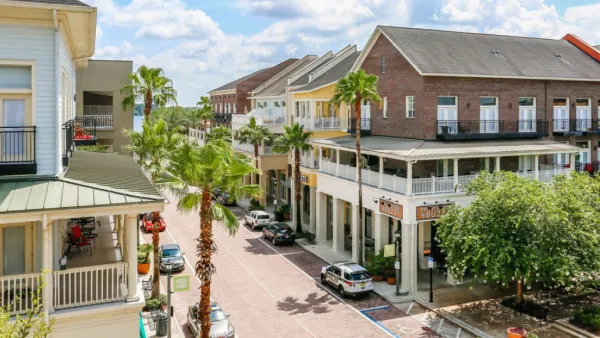
Orange County, Florida Adopts Largest US “Sprawl Repair” Code
The ‘Orange Code’ seeks to rectify decades of sprawl-inducing, car-oriented development.
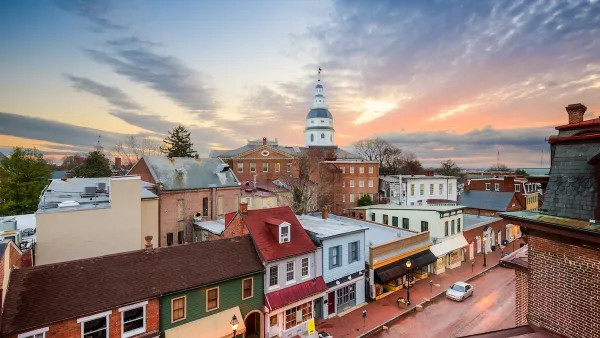
Commentary: We Need a Return to the Adaptability of Traditional Urban Form
How the rigidity of modern suburban development fails to prepare cities for the future.

To Build More Housing, Cities Must Be Smarter in How They Use Land
How strategic land use policy decisions can alleviate the housing crisis and limit unsustainable sprawl.

Washington state to charge fee to drivers with fuel-efficient cars
Revenue from the fee will go towards supporting the state’s highways.

Illinois considers spending $1 billion in taxpayer money on data center
A quantum computing campus and data center are currently under construction in Chicago.

Trump to blast ‘hydrocarbon highway’ through ‘world’s longest art gallery’
Environmental and historic preservation groups are suing to stop the project.

Boston City Council votes to no longer mandate parking in residential developments
The Boston Zoning Commission still needs to approve the proposal.

Passengers in New York, California lift off in air taxis
Two air taxi companies have received a Special Airworthiness Market Survey Certificate, which allows them to service passengers.

MTA to upgrade subway signals for entire network by 2050
This is the first time New York City has planned to modernize subway signals in the Bronx.

FREE Course: Walkable City 1: Why Walkability?
After describing his path towards focusing on walkability as the essence of good planning, Jeff Speck marches through his five principal reasons for making more walkable places.
Reinventing Malls: Planning Alchemy—Turning Gray Fields Into Gold
The course focuses on the opportunities and imperatives that shape reinvention of mall sites.

City of Charlotte
City of Rosemead
Rutgers University, Edward J. Bloustein School of Planning and Public Policy
University of Michigan School for Environment and Sustainability (SEAS)
Hunter College, City University of New York (CUNY)
The Architects Foundation
University District Partnership