For the first time since the Carter administration, Washington is in the position of paying for seemingly everything. But how will the federal government's spending affect growth in California? Not in the way you might think, says Bill Fulton.


"The $800 billion federal stimulus contains $7 billion for transit capital improvements, money for energy efficiency projects and planning, and increased community development block grant funding. But the biggest chunk of interest to the planning and development community is $30 billion devoted to highways.
Given the fact that the Obama administration wants that money spent within 120 days, there is little reason to believe any sort of "smart growth" criteria will be used. In fact, California Gov. Arnold Schwarzenegger reduced or eliminated environmental review of a number of highway widening projects to make them eligible for federal funding.
'It is much more plausible to see the inside-the-Beltway smart growth crowd winning some successes on the coming transportation and climate change bills, which are much more policy-driven,' Fulton writes."
Read the full story: Washington Stimulates Old-Style Growth

Opinion: California Must Walk the Walk on Transportation Emissions
While state leaders tout their climate goals at COP28, residents back home continue to fight highway expansion projects that induce traffic and increase emissions.
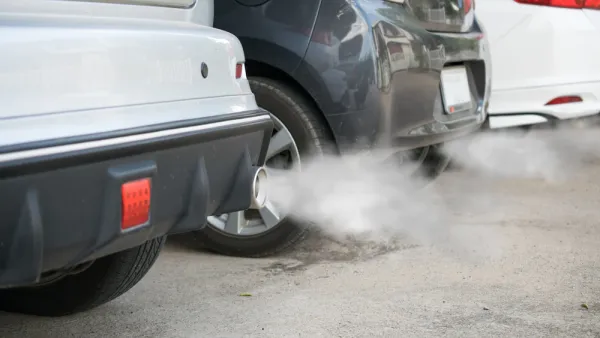
Republican States Challenge Highway Emissions Plan
A federal proposal that would require states to monitor and set targets to cut greenhouse gas emissions, praised by Democrats, is being called “unworkable” by many Republican states.
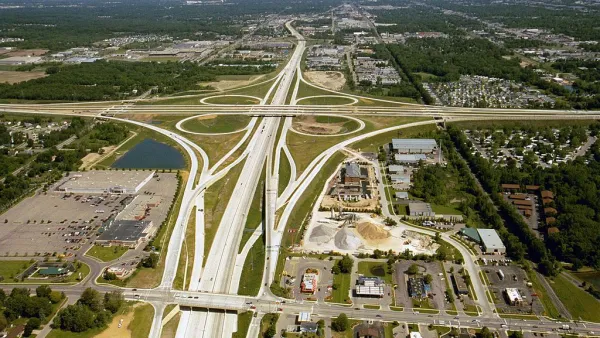
Op-Ed: Michigan Needs a New Transportation Strategy
One writer calls on the state to stop expanding roads and channel funding to projects that support Michigan’s sustainability goals.

Planetizen Federal Action Tracker
A weekly monitor of how Trump’s orders and actions are impacting planners and planning in America.

Washington state to charge fee to drivers with fuel-efficient cars
Revenue from the fee will go towards supporting the state’s highways.

Trump to blast ‘hydrocarbon highway’ through ‘world’s longest art gallery’
Environmental and historic preservation groups are suing to stop the project.

A data center developer is going back on its promises to nearby residents
Data center developer HostDime originally promised free at-home Wi-Fi to residents of Eatonville, Florida.

Trump administration takes another swing at Solar for All
Since the Environmental Protection Agency announced its intent to end Solar for All in August 2025, two federal judges have ruled in favor of protecting it.

The MTA wants to entice international bus manufacturers to set up shop in America
The MTA hopes to create more competition for better bus options while still "buying American."

FREE Course: Walkable City 1: Why Walkability?
After describing his path towards focusing on walkability as the essence of good planning, Jeff Speck marches through his five principal reasons for making more walkable places.
Reinventing Malls: Planning Alchemy—Turning Gray Fields Into Gold
The course focuses on the opportunities and imperatives that shape reinvention of mall sites.

City of Charlotte
City of Rosemead
Rutgers University, Edward J. Bloustein School of Planning and Public Policy
University of Michigan School for Environment and Sustainability (SEAS)
Hunter College, City University of New York (CUNY)
The Architects Foundation
University District Partnership