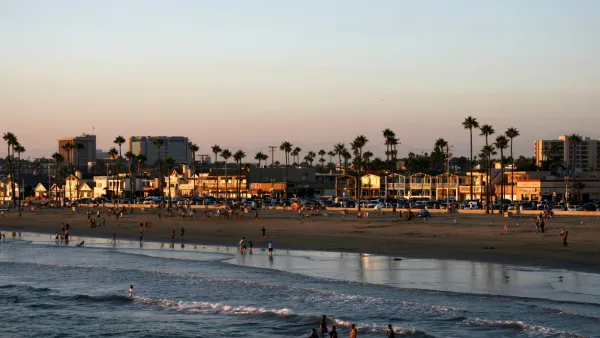
Drops in tourism and luxury car sales are among the reasons why the ritziest cities in Southern California are not impervious to the recession.


"The fact that famous revenue generators such as Beverly Hills, Santa Monica and Newport Beach are trimming their expenditures and considering service cutbacks underscores the extent of the meltdown in California municipal finances.
Such places are usually shielded from downturns because they cater to the very rich, have diversified their economies and draw high-spending foreign visitors, even when Americans start watching their wallets.
But with property values, incomes and spending plunging across the country -- and the global economy in serious trouble as well -- few places remain unscathed, said Christopher Hoene, director of policy and research at the National League of Cities in Washington, D.C. A survey of city finance officers conducted by the league in December and January found that 83% were cutting services and expenditures, and 80% expected to make further cutbacks in the 12 months beginning in July."
Read the full story: Wealthy cities discovering they're not recession-proof

Report: California's Affordable Housing Allocation Favors Wealthy Coastal Cities
A combination of factors including a lengthy appeals process and the cost of construction have led to huge disparities in the number of units allocated to each community.

What Will Los Angeles Will Do Next On Housing & Water? Look To Their Neighbors
The cities of Santa Monica, Culver CIty, West Hollywood, and Malibu are championing stormwater infrastructure, new public transit, affordable housing, and action on homelessness prevention.
Westside Mayors to California: Leave Redevelopment Alone!
The Mayors of West Hollywood, Santa Monica, Culver City, and the Vice Mayor of Beverly Hills discuss local redevelopment and planning in the face of state intervention. The conversation centers on politics, projects, transportation, and parking.

Planetizen Federal Action Tracker
A weekly monitor of how Trump’s orders and actions are impacting planners and planning in America.

Amtrak, CN end decades-long dispute with eight-year agreement
The new operating agreement establishes an updated framework for the companies to work together, including processes to resolve disputes.

Northwest rail fans eager for Sept. 30 debut of Amtrak’s Airo fleet
Get ready for that new train smell and more seats. But they won’t go faster or run more frequently on the Cascades route in Washington and Oregon.

Brightline Florida files for bankruptcy
The transit company is over $5 billion in debt.

St. Louis Metro to test if single-car trains can reduce operating costs, maintain rider satisfaction
The pilot program will run from October to spring 2027, and begin with one single-car train operating on Metrolink’s Red and Blue lines.

Pennsylvania is building data centers in abandoned mines
Housing data centers in mines provides an alternative to destroying local forests and may spare residents from data centers’ noise and air pollution.

FREE Course: Walkable City 1: Why Walkability?
After describing his path towards focusing on walkability as the essence of good planning, Jeff Speck marches through his five principal reasons for making more walkable places.
Reinventing Malls: Planning Alchemy—Turning Gray Fields Into Gold
The course focuses on the opportunities and imperatives that shape reinvention of mall sites.

City of Thousand Oaks
City of Wisconsin Rapids
Harvard University Graduate School of Design
The Architects Foundation
University of Cincinnati Online
The Pocatello Development Authority
The Urban Renewal Agency of the City of Pocatello