James Howard Kunstler predicts the Dow falling to 4000 by the end of the year, more dramatic swings in oil prices, and an overall contraction of services and the economy.


"We'll turn around early in 2009 and discover that we are a much poorer nation than we thought because from now on credit will be extremely hard to get for anyone for anything. The businesses that survive will have to keep going on the basis of accounts receivable. This is the area where the crash of giants will be heard. I've been saying since publication of The long Emergency that comprehensive downscaling in all our activities, from farming to business to schooling to governance, will be the categorical imperative of the years ahead. Giant enterprises requiring giant loans to get from quarter to quarter will tend to not make it. Borrowing from the future will become a practical impossibility as past bad debts from previous borrowings continue to unwind, cease performing, and get written off. This argument implies that the federal government will tend to flounder just as General Motors, Citicorp, Target Stores and other gigantic enterprises will tend to flounder. It would be sad to see a President Obama so hamstrung and helpless, and it is largely why I see his role as largely symbolic -- as a reassuring presence encouraging the distressed public to bravely bear their hardships, and to be kind and helpful among their neighbors."
Read the full story: James Howard Kunstler: Forecast for 2009
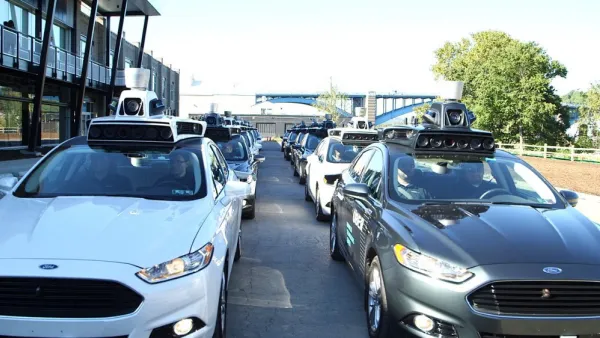
What the Future Looked Like Before the Coronavirus
Common Edge surveyed mayors and urban designers for ideas about what the next decade holds in store for cities. There were plenty of challenges in facing the world before the pandemic.
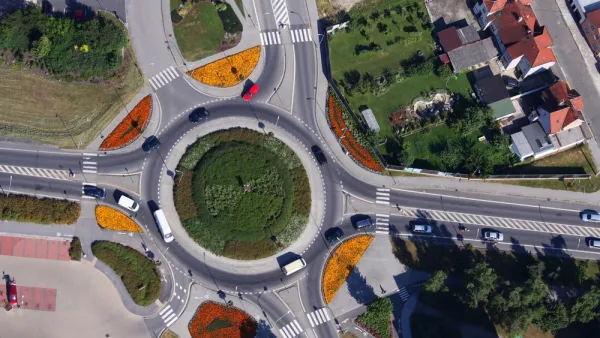
USDOT and Waze Partner to Predict Fatal Crashes
USDOT hopes to put decades of data collection to new use preventing fatal collisions by predicting when they might occur.
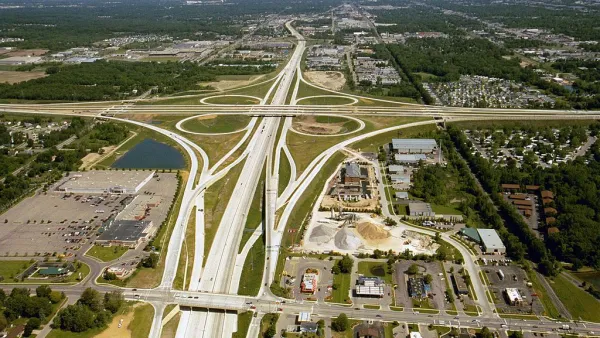
Study Finds Traffic Forecasts Consistently Overestimating Congestion
Researchers from Denmark and Norway have looked at the accuracy of traffic forecasts for road projects. Their conclusion is that the forecasts systematically overestimate traffic growth rates and the resulting congestion effects.

Planetizen Federal Action Tracker
A weekly monitor of how Trump’s orders and actions are impacting planners and planning in America.

Eastern Nebraska is running out of electricity
Data centers and electrification are straining eastern Nebraska’s grid, throttling economic development.

Study reveals best places in the U.S. for cycling, walking
New research from Streetlight Data examines bicycle and pedestrian miles per capita in the 100 largest U.S. cities by population.

DSA members accuse Mamdani of 'abandoning values' over housing redevelopment
New York City's mayor plans to replace about 2,000 units of public housing with private, mixed-income housing.

All sides of BRT debate unhappy with CDOT’s most recent move
The Colorado Department of Transportation is no longer considering center-running bus lanes for Colorado Boulevard.

Massachusetts bogs generate both power, and cranberries
Putting solar panels above farmland is one way Massachusetts is advancing toward its goal of net-zero carbon emissions by 2050.

FREE Course: Walkable City 1: Why Walkability?
After describing his path towards focusing on walkability as the essence of good planning, Jeff Speck marches through his five principal reasons for making more walkable places.
Reinventing Malls: Planning Alchemy—Turning Gray Fields Into Gold
The course focuses on the opportunities and imperatives that shape reinvention of mall sites.

City of Rosemead
Rutgers University, Edward J. Bloustein School of Planning and Public Policy
One Hundred Miles
University of Michigan School for Environment and Sustainability (SEAS)
Hunter College, City University of New York (CUNY)
The Architects Foundation
City of Cambridge
The Pocatello Development Authority
The Urban Renewal Agency of the City of Pocatello