The CA Senate voted to approve the HOT lane/transit investment plan of the LA MTA for two freeways, making LA eligible for $210 million in federal congestion pricing funds if the governor signs the bill.


State Sen. Mark Ridley-Thomas (D-Los Angeles) has written legislation to authorize conversion of high occupancy vehicle (carpool) lanes on two southern CA freeways to allow single-occupant-vehicles to use carpool lanes – for a fee that would vary with the rate of congestion. That legislation, SB 1422, was approved Saturday, August 30, one day before the legislative deadline to send bills to the governor for signature.
Legislative enabling authorization is necessary in order for project manager Los Angeles County Metropolitan Transportation Authority to receive "a $210.6 million federal grant that would pay for toll plazas, road and rail improvements, and a fleet of clean-fuel buses that would run as a rapid line along the route."
After the NY State Assembly rejected a $350 congestion pricing plan for NYC in April, 2007 those funds become eligible for other regions. Chicago received $153 million for their congestion pricing parking plan (see related link).
The conversions of the high occupancy vehicle lanes to so-called high occupancy toll (HOT) lanes would apply to "one carpool lane in each direction on a 16.5-mile-stretch of the 110 Freeway and the two carpool lanes in each direction on a 14-mile stretch of the 10 Freeway."
"SB 1422 would require the MTA to provide a system for discounting tolls for low-income commuters.
Toll revenue would pay for mass transit improvements to further reduce gridlock, said Richard Katz, an MTA board member and former assemblyman."
However, the CA legislature reacted as its NY counterpart - wary of the tolling concept, and was even controversial within the party sponsoring the bill.
"This reflects a view that if you have money, you get to go in the fast lane and if you don't you are stuck in congestion," Sen. Jenny Oropeza (D-Long Beach) said during a Senate debate." She abstained from voting, amounting to a 'no' vote.
"Another Los Angeles Democrat, Sen. Gloria Romero, voted no, saying the toll lanes would create "an undue burden on low-income people."
Unlike an earlier rendition of the plan (before the project was eligible to receive the Urban Partner Agreement grant), 2+ person carpoolers would not be charged. [See related link].
Thanks to Bay Area Transportation News
Read the full story: Deadline nears on proposed L.A. County toll lanes
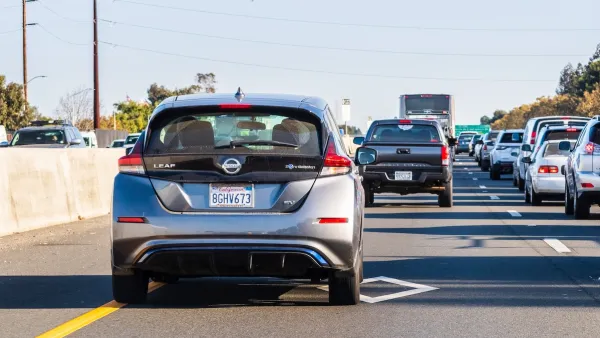
When Carpool Lanes Cause Mayhem
A newly widened Bay Area freeway serves as a reminder of the futility of HOV lanes. There are better ways to manage and mitigate traffic.
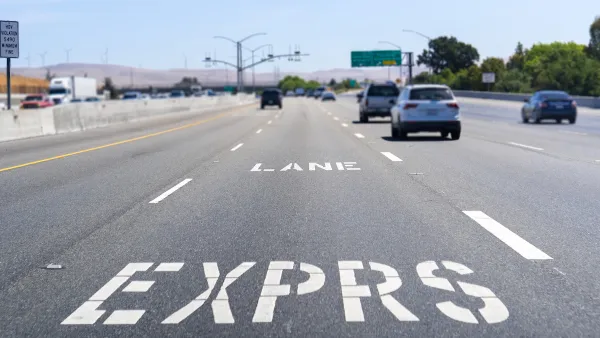
Congestion Pricing in the San Francisco Bay Area
Planners call them “express lanes,” but make no mistake, they are congestion pricing in action, and they're successful. The Bay Area network of what the Federal Highway Administration calls “high-occupancy toll (HOT) lanes” is growing.
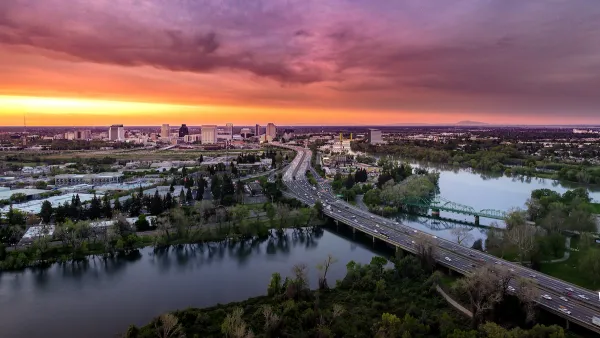
Tollways for Sacramento?
Road pricing terminology can be confusing, particularly since Californians see so little of it. For example, a Sacramento TV station calls proposed express lanes on Interstate 80 from Solano County to Sacramento a ‘tollway.’

Desperate measures: Advocates weigh draining Lake Powell to fill Colorado River
Draining the reservoir could reduce evaporation losses by a couple hundred thousand acre-feet.

Eastern Nebraska is running out of electricity
Data centers and electrification are straining eastern Nebraska’s grid, throttling economic development.

Move over, LA: St. Louis gears up for Olympics, invests millions in downtown redevelopment
The Missouri city will host the 2028 Olympic soccer group stage and knockout matches.

Mass. votes against statewide minimum lot size for single-family homes
Over 2 million residents voted on Question 7; it was decided by just over 30,000 votes.

Maryland’s $15 billion bridge project gains key approval
The Maryland Transit Authority said the project will create over 60,000 jobs and add $23 billion to the local economy.

‘No clear next steps’ for Chicago's permanent festival grounds
Eleventh Ward Ald. Nicole Lee has suggested Soldier Field as a possible location for the permanent event space.

FREE Course: Walkable City 1: Why Walkability?
After describing his path towards focusing on walkability as the essence of good planning, Jeff Speck marches through his five principal reasons for making more walkable places.
Reinventing Malls: Planning Alchemy—Turning Gray Fields Into Gold
The course focuses on the opportunities and imperatives that shape reinvention of mall sites.

City of Rosemead
Rutgers University, Edward J. Bloustein School of Planning and Public Policy
One Hundred Miles
University of Michigan School for Environment and Sustainability (SEAS)
Hunter College, City University of New York (CUNY)
The Architects Foundation
City of Cambridge
Montrose County
The Pocatello Development Authority