Six weeks after taking office, Raul Castro has lifted the ban on Cubans staying in local hotels.


"Cuba's so-called 'tourism apartheid' -- which has long prohibited locals from staying at hotels -- ends midnight Monday, according to news agencies in Havana.
The move ends a ban that many Cubans had fixated on as a prime example of the inequities and hardships they faced under Fidel Castro's regime. The lifting comes five weeks after Fidel Castro's brother, Raúl, took over the nation's presidency, and just days after he ended the ban on Cubans owning personal mobile phones, computers and household appliances.
But the measure is largely symbolic: a night's stay at a luxury hotel in Cuba can cost more than $200 -- which is just about what the average Cuban earns in a year.
Cubans were prohibited from staying at hotels even if someone else paid the tab.
Reuters news agency reported Monday that now Cubans can also rent cars and go to beaches once restricted to tourists."
Read the full story: Cuba lifts ban on locals staying in hotels

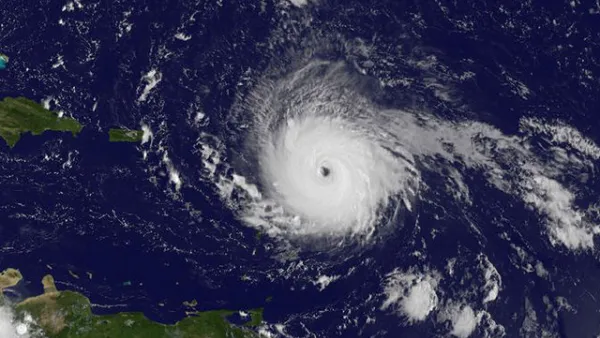
Caribbean Islands Brace for Irma as Florida Prepares
As Houston and East Texas recover from Hurricane Harvey, an even stronger hurricane has formed in the Atlantic Ocean, headed to the Caribbean Sea, and likely Florida by this weekend, though there is uncertainty where it goes next.
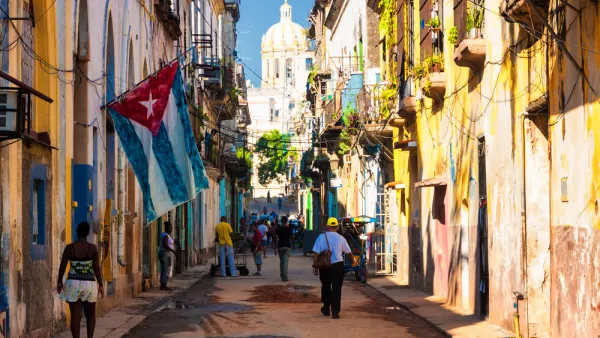
In Pictures: Havana's Public Spaces
The recent thaw in U.S. relations with Cuba, as well as President Obama's visit last month, have spurred conversations about Havana's future. Its public spaces are worn, but they're busy and well-designed.
Everyone Wants a Piece of Havana—Can Cuba Keep Up?
Cuba and its capital city of Havana are experiencing several, simultaneous revolutions. The opportunity for residents is also an opportunity for developers and architects, as well as a challenge for planners.

Planetizen Federal Action Tracker
A weekly monitor of how Trump’s orders and actions are impacting planners and planning in America.

Amtrak, CN end decades-long dispute with eight-year agreement
The new operating agreement establishes an updated framework for the companies to work together, including processes to resolve disputes.

Judges permit Denver to divert 77,000 acre feet from the Colorado River for reservoir expansion
Overuse and climate change have caused the Colorado River’s water levels to plummet.

NYC DOT wants faster, more permanent street upgrades
The city is examining ways to build more concrete infrastructure without getting entangled in 'decades-long' projects.

'Something we’ve never seen before:' rising utility rates could strain city finances nationwide
Data centers, climate change and other factors have caused utility rates in the United States to increase by 38% since 2020.

Trump to overrule local leaders, lease millions of acres of America’s Pacific Island territories’ seafloors to mining companies
International law says that the Indigenous people of America’s territories have a right to prior and informed consent regarding projects that impact their countries.

FREE Course: Walkable City 1: Why Walkability?
After describing his path towards focusing on walkability as the essence of good planning, Jeff Speck marches through his five principal reasons for making more walkable places.
Reinventing Malls: Planning Alchemy—Turning Gray Fields Into Gold
The course focuses on the opportunities and imperatives that shape reinvention of mall sites.

Harvard University Graduate School of Design
KFH Group Inc.
Greater Baltimore Committee
The Architects Foundation
University of Cincinnati Online
The Pocatello Development Authority
The Urban Renewal Agency of the City of Pocatello