Neighbors engage in a practice known as “tegelwippen,” picking up paving stones and replacing them with permeable surfaces, often with the support of local governments.


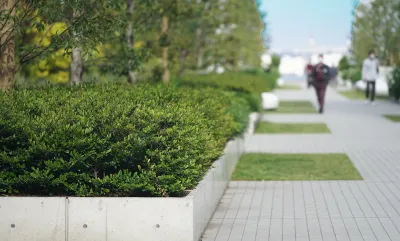
A Dutch practice known as “tegelwippen” lets urban residents take climate mitigation into their own hands. As Klaus Sieg explains in a piece for Reasons to be Cheerful, “The aim is to unseal as many surfaces as possible, whether in private gardens, schoolyards, driveways, public squares or sidewalks, as in the Katendrechtse Lagendijk.”
Residents are seizing on the movement to organize neighborhood Tegelwippen events, in which people work on replacing impermeable surfaces with plants. Dutch cities support the efforts by, for example, offering a free service to take away pavers and stones removed through these projects.
The concept was developed by an Amsterdam creative agency, which first organized a Tegelwippen competition during Covid-19. Since then, the equivalent of roughly 235 soccer fields has been transformed from pavement to permeable, green space.
The phenomenon is starting to take hold in neighboring Germany. “There are now lawns, flower beds, park benches and even some boules courts on former parking lots, abandoned areas, dog waste grounds and traffic islands” in Düsseldorf, and Hamburg is also funding similar projects this year.
FULL STORY: In the Netherlands, Anyone Can Turn a Slice of Sidewalk Into a Garden

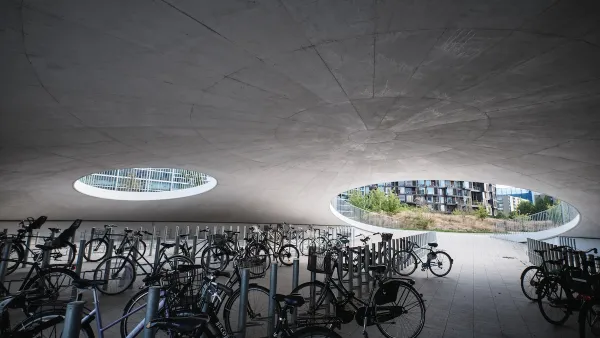
How Copenhagen Became a ‘Sponge City’
The Danish capital is implementing a massive, multi-pronged strategy to build resilience against flooding and shore up water supplies during drought periods.
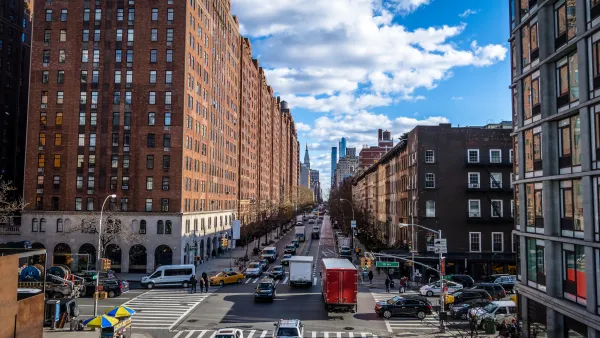
Could Permeable Pavement Ease Flooding in New York City?
It can’t help cities control the weather, but by slowing the flow of stormwater, permeable pavement can lessen flooding from big storms.
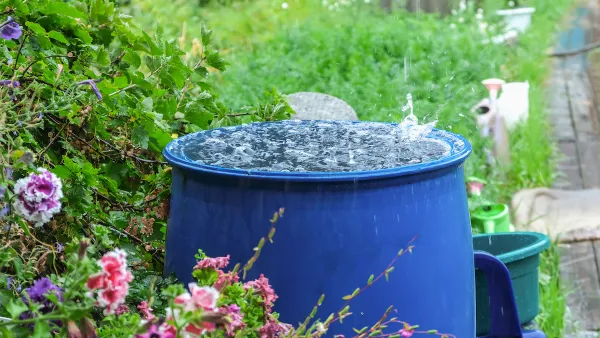
Flood Resilience Through Green Infrastructure
Cities like New York and Los Angeles are moving to build green infrastructure as the need for spongier urban spaces becomes more apparent.

The state-sanctioned urbicide of Austin
People don’t kill cities. Freeways do.

US to reduce Colorado River water deliveries to Mexico
A new Colorado Treaty amendment reduces Mexico’s Colorado River water allocation by 250,000 acre feet.

New Jersey’s second-largest city bans standalone data centers
Jersey City will continue to allow co-location facilities, such as those meant for research institutions that store their own data.

Amtrak not solely to blame for New Jersey commuter rail's unreliability, report finds
A new study from the Garden State Initiative found that NJ Transit’s budget grew 20% across a 4 year period, but reliability declined significantly over the same period.

EPA erases limits on planet-warming pollution from power plants
Under Monday’s plan, power plants would still have some limits on how much mercury, arsenic and other contaminants they can emit.

Phoenix announces new on-demand transit service, more frequent RAPID buses
Both new services will launch in October, and are part of Phoenix's Project Effective Access Solutions for Easing Congestion.

FREE Course: Walkable City 1: Why Walkability?
After describing his path towards focusing on walkability as the essence of good planning, Jeff Speck marches through his five principal reasons for making more walkable places.
Reinventing Malls: Planning Alchemy—Turning Gray Fields Into Gold
The course focuses on the opportunities and imperatives that shape reinvention of mall sites.

Eagle County Government
Harvard University Graduate School of Design
Nashville Planning Department
The Architects Foundation
University of Cincinnati Online
The Pocatello Development Authority
The Urban Renewal Agency of the City of Pocatello
Journal of the American Planning Association