This year’s round of Safe Streets for All grant criteria come with some changes.


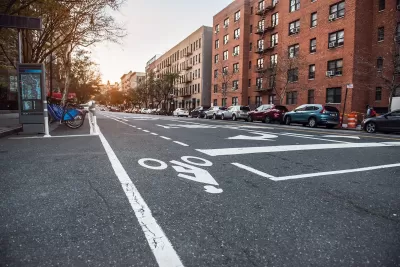
Wondering what’s going on with the Safe Streets and Roads for All (SS4A) grant program? An explainer from Transportation for America outlines changes to the program, which released its Notice of Funding Opportunity (NOFO) for the FY2025 round earlier this month.
According to the article, “Of the available funding, $580 million is intended for implementation grants, while $402.3 million (or 40 percent) is set aside for planning and demonstration grants. Applicants can seek planning funds for road safety action plans, supplemental planning, or quick-build demonstration projects.”
The program has eliminated some prior criteria related to “Economic competitiveness, equity considerations, workforce, and the climate.” The program will also take a negative view of projects that would reduce car lanes or capacity.
SS4A’s funding has been instrumental in helping cities deploy quick-build pilot projects that can provide data before cities make permanent changes. The article also includes some strategies for applicants seeking out these grants.
Read the full story: What to know about this year’s SS4A funding

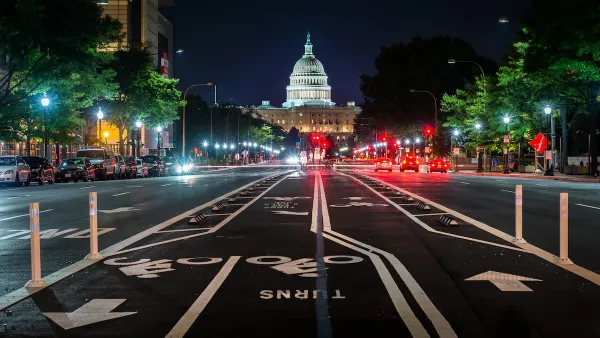
Safe Streets Funding in Jeopardy
The Trump administration is specifically targeting bike infrastructure and other road safety projects in its funding cuts.
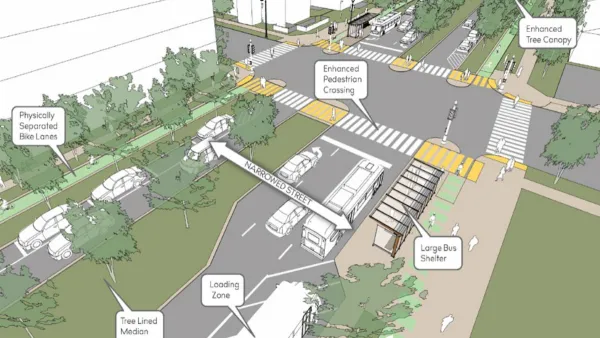
Trump Killed Funding for Milwaukee's Dreamy Multimodal Street. They're Determined to Make it Happen Anyway.
The administration rescinded a $36 million Reconnecting Communities grant aimed at redesigning a 2.6-mile segment of 6th Street.

USDOT secretary plans to pull $1.73B from 'DEI bike lanes'
The move jeopardizes dozens of road safety projects around the country.

Planetizen Federal Action Tracker
A weekly monitor of how Trump’s orders and actions are impacting planners and planning in America.

California plans to bury El Niño’s downpour
If the state plays its cards right, it may be able to store a billion acre-feet of El Niño’s water in aquifers.

Chicago breaks ground on $3 billion megadevelopment
The new neighborhood, titled Foundry Park, will one day host 3,700 residences.

California High-Speed Rail Authority CEO resigns after $600,000 scandal
Under Ian Choudri, the authority used taxpayer dollars to fund first class flights and trips to nightclubs.

Want to study the Missouri River? Soon, you may need unanimous approval from 10 states
Legislation would require 10 governors’ permission to study or build projects moving water outside the basin.

Desperate measures: Advocates weigh draining Lake Powell to fill Colorado River
Draining the reservoir could reduce evaporation losses by a couple hundred thousand acre-feet.

FREE Course: Walkable City 1: Why Walkability?
After describing his path towards focusing on walkability as the essence of good planning, Jeff Speck marches through his five principal reasons for making more walkable places.
Reinventing Malls: Planning Alchemy—Turning Gray Fields Into Gold
The course focuses on the opportunities and imperatives that shape reinvention of mall sites.

City of Rosemead
Rutgers University, Edward J. Bloustein School of Planning and Public Policy
One Hundred Miles
Hunter College, City University of New York (CUNY)
The Architects Foundation
University of Cincinnati Online
City of Cambridge
Montrose County
The Pocatello Development Authority