The Building Resilient Infrastructure and Communities program funded projects from flood prevention to power station upgrades.


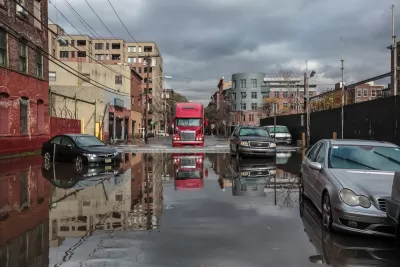
The Federal Emergency Management Agency (FEMA) has been directed to dismantle the Building Resilient Infrastructure and Communities (BRIC) program which helps communities prepare for future weather disasters, report Jake Bittle and Zoya Teirstein in an article for Grist republished in Fast Company. The agency announced it is canceling $750 million in grants that were announced in January, as well as other BRIC grants that were not yet disbursed.
According to FEMA staffers, “BRIC awards have helped communities bury power lines, build culverts, protect wastewater facilities from being inundated by flooding, and upgrade power stations. If BRIC is frozen, communities will no longer be able to apply for the grants for fiscal year 2024 made available in January.” The program is widely popular: “In fiscal year 2023, FEMA received more than 1,200 subapplications across all 50 states, 35 tribes, five territories, and Washington, D.C., totaling more than $5.6 billion in requests. It was able to provide less than a fifth of the money requested.”
Rescinding grants funded by congressional appropriations is technically illegal, so this decision, like many others in recent months, will likely face legal challenges.
FULL STORY: As tornados and flooding hit the U.S., Trump is ending a program that helps cities prepare for disasters

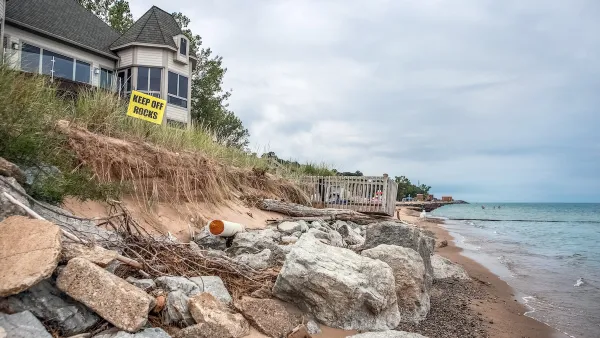
How US Cities Can Prepare for Climate Disasters
Resilience, encompassing infrastructure, governance, economic strength, and social cohesion, is critical for cities to mitigate rising climate risks like flooding, wildfires, and heat, ensuring long-term recovery and adaptability.
Trump's proposed budget slashes EPA funding by 52%
The budget also reduces funding for FEMA, climate resilience projects, and water infrastructure programs.
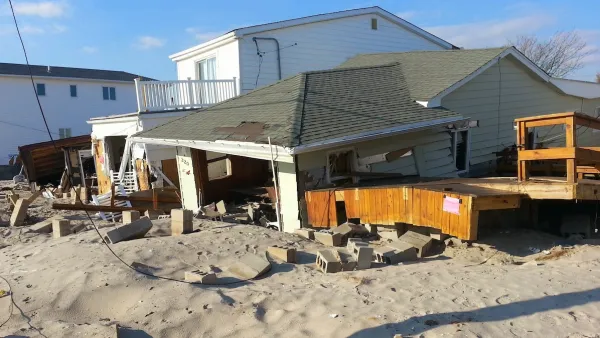
FEMA Rule Calls for Updated Flood Modeling
Agency-funded projects will be required to be elevated at least 2 feet above the projected local flood level.

Planetizen Federal Action Tracker
A weekly monitor of how Trump’s orders and actions are impacting planners and planning in America.

The state-sanctioned urbicide of Austin
People don’t kill cities. Freeways do.

US to reduce Colorado River water deliveries to Mexico
A new Colorado Treaty amendment reduces Mexico’s Colorado River water allocation by 250,000 acre feet.

Mamdani overhauls NYC's Vision Zero plan with 100 new policy goals
The overhaul aims to reduce traffic deaths and make streets safer for pedestrians, cyclists and drivers through lower speed limits, new safety infrastructure and more.

Amtrak not solely to blame for New Jersey commuter rail's unreliability, report finds
A new study from the Garden State Initiative found that NJ Transit’s budget grew 20% across a 4 year period, but reliability declined significantly over the same period.

EPA erases limits on planet-warming pollution from power plants
Under Monday’s plan, power plants would still have some limits on how much mercury, arsenic and other contaminants they can emit.

FREE Course: Walkable City 1: Why Walkability?
After describing his path towards focusing on walkability as the essence of good planning, Jeff Speck marches through his five principal reasons for making more walkable places.
Reinventing Malls: Planning Alchemy—Turning Gray Fields Into Gold
The course focuses on the opportunities and imperatives that shape reinvention of mall sites.

Eagle County Government
Harvard University Graduate School of Design
Nashville Planning Department
The Architects Foundation
University of Cincinnati Online
The Pocatello Development Authority
The Urban Renewal Agency of the City of Pocatello
Journal of the American Planning Association