New bike infrastructure is encouraging more people to take to the streets on two wheels, but advocates say safety challenges remain.


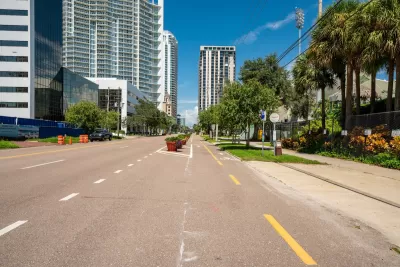
In a piece for The Crow’s Nest, Alisha Durosier describes St. Petersburg, Florida’s burgeoning bike scene, which has only been growing since the city implemented its first Complete Streets plan in 2015. “As Vanessa Wheeler, a pedestrian and bicycle specialist for the Center for Urban Transportation Research (CUTR), puts it, the shift in how people think about getting from point A to point B parallels St. Petersburg’s evolving infrastructure.”
Thanks in large part to the work of bike advocates in the city, St. Petersburg has added more bike infrastructure and focused on connecting trails to major destinations. “On top of the Pinellas Trail, which to bicyclists is the “artery” of the city, St. Petersburg has implemented policy and infrastructure in recent years to further accommodate riders.”
However, the city remains dangerous to bicyclists, with 801 bike crashes reported in 2024. Pinellas County ranked as the “most dangerous place to bicycle in America” in 2018, according to the Wall Street Journal. “We still got a long way to go,” said Brian Peret, a ride leader for the bike group St. Pete Critical Mass.
FULL STORY: The future on two wheels: A comprehensive look at the St. Petersburg bike scene

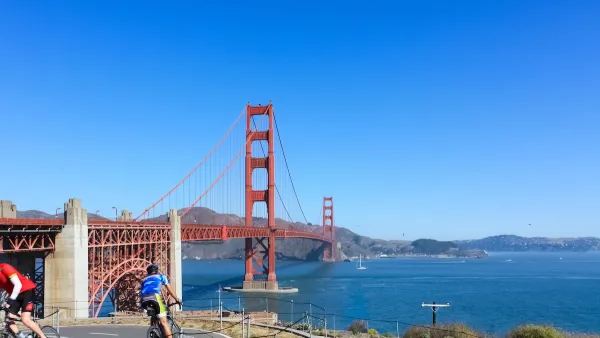
San Francisco Reveals New Bike Plan
The draft plan targets improvements on 385 road segments.
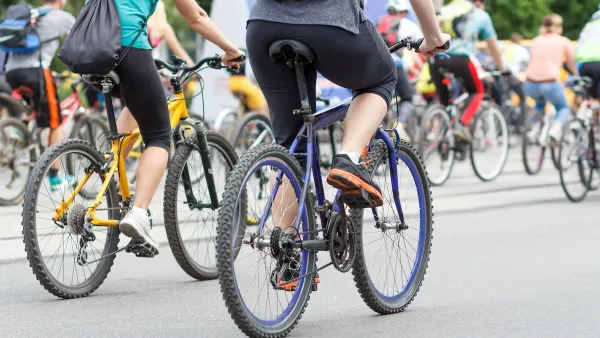
Bike Resolutions for the New Year
A list of ways people can enhance their biking experience, appreciate the joy of cycling, and support safer bike infrastructure.
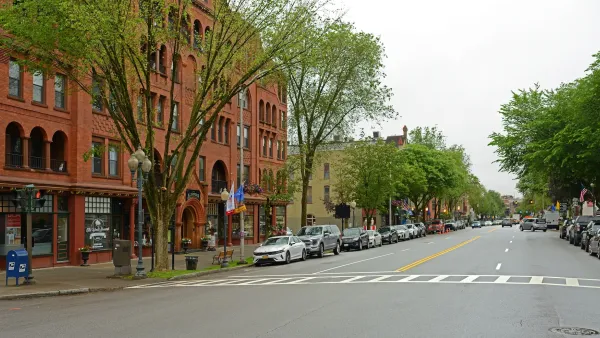
Saratoga Springs bike advocates say city is ignoring its Complete Streets plan
Despite a commitment to improving its multimodal infrastructure, the city has no plans to install bike lanes or curb cuts as part of repaving projects on two streets.

Planetizen Federal Action Tracker
A weekly monitor of how Trump’s orders and actions are impacting planners and planning in America.

The state-sanctioned urbicide of Austin
People don’t kill cities. Freeways do.

US to reduce Colorado River water deliveries to Mexico
A new Colorado Treaty amendment reduces Mexico’s Colorado River water allocation by 250,000 acre feet.

Mamdani overhauls NYC's Vision Zero plan with 100 new policy goals
The overhaul aims to reduce traffic deaths and make streets safer for pedestrians, cyclists and drivers through lower speed limits, new safety infrastructure and more.

Amtrak not solely to blame for New Jersey commuter rail's unreliability, report finds
A new study from the Garden State Initiative found that NJ Transit’s budget grew 20% across a 4 year period, but reliability declined significantly over the same period.

EPA erases limits on planet-warming pollution from power plants
Under Monday’s plan, power plants would still have some limits on how much mercury, arsenic and other contaminants they can emit.

FREE Course: Walkable City 1: Why Walkability?
After describing his path towards focusing on walkability as the essence of good planning, Jeff Speck marches through his five principal reasons for making more walkable places.
Reinventing Malls: Planning Alchemy—Turning Gray Fields Into Gold
The course focuses on the opportunities and imperatives that shape reinvention of mall sites.

Eagle County Government
Harvard University Graduate School of Design
Nashville Planning Department
The Architects Foundation
University of Cincinnati Online
The Pocatello Development Authority
The Urban Renewal Agency of the City of Pocatello
Journal of the American Planning Association