Unlike other efforts to prevent cars from parking near intersections to improve visibility and road safety, San Francisco has no plans to install physical infrastructure to keep vehicles out of danger zones.


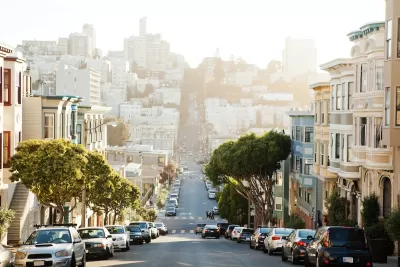
In a piece for Streetsblog San Francisco, Roger Rudick writes that San Francisco’s new ‘daylighting’ policy — which prohibits vehicles from parking within 20 feet of an intersection as a safety measure — could be “setting itself up for failure” by relying only on painted curbs — if that — to indicate where drivers are not allowed to park.
In Hoboken, New Jersey, a city that hasn’t had a traffic death in seven years, daylighting includes “protective infrastructure” such as planters and concrete barriers that physically block drivers from parking in prohibited areas. “Hoboken, and New York City, have actually reduced fatal and serious crashes and saved lives not just by writing citations, but, in many cases, by making it impossible in the first place to park near a crosswalk.”
Rudick notes that protective infrastructure is much more effective than paint and citations. “Boulders, bricks, and concrete blocks are not expensive. Unlike parking enforcement officers, they don't take breaks and don't discriminate. They also effectively block city vehicles, delivery drivers, and others undeterred by the threat of fines.”
FULL STORY: Commentary: Will San Francisco Succeed at Daylighting?

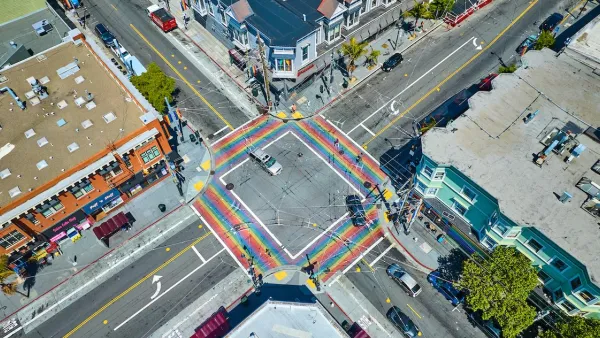
San Francisco Implements ‘Daylighting’ at Intersections
Vehicles are prohibited from parking within 20 feet of a crosswalk as part of the city’s Vision Zero efforts to eliminate traffic deaths and make roads safer.
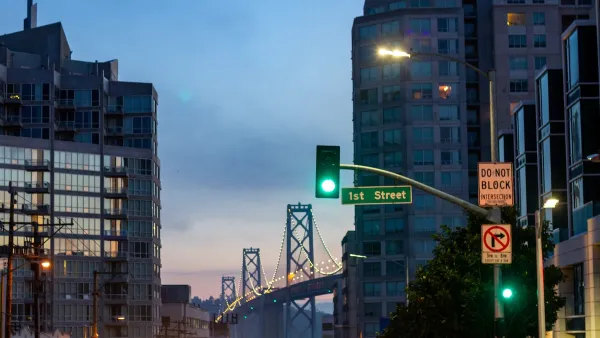
San Francisco Officials Call for Citywide Ban on Right Turns on Red
A proposal to prohibit turns on red at some downtown intersections prompted calls for a blanket ban for the entire city.
SF Street Safety Act Replaces Expired Vision Zero Plan
In 2025, 15 people have died in crashes in San Francisco, putting the city far behind its goal of eliminating traffic deaths by 2024.

The state-sanctioned urbicide of Austin
People don’t kill cities. Freeways do.

US to reduce Colorado River water deliveries to Mexico
A new Colorado Treaty amendment reduces Mexico’s Colorado River water allocation by 250,000 acre feet.

New Jersey’s second-largest city bans standalone data centers
Jersey City will continue to allow co-location facilities, such as those meant for research institutions that store their own data.

Amtrak not solely to blame for New Jersey commuter rail's unreliability, report finds
A new study from the Garden State Initiative found that NJ Transit’s budget grew 20% across a 4 year period, but reliability declined significantly over the same period.

EPA erases limits on planet-warming pollution from power plants
Under Monday’s plan, power plants would still have some limits on how much mercury, arsenic and other contaminants they can emit.

Phoenix announces new on-demand transit service, more frequent RAPID buses
Both new services will launch in October, and are part of Phoenix's Project Effective Access Solutions for Easing Congestion.

FREE Course: Walkable City 1: Why Walkability?
After describing his path towards focusing on walkability as the essence of good planning, Jeff Speck marches through his five principal reasons for making more walkable places.
Reinventing Malls: Planning Alchemy—Turning Gray Fields Into Gold
The course focuses on the opportunities and imperatives that shape reinvention of mall sites.

Eagle County Government
Harvard University Graduate School of Design
Nashville Planning Department
The Architects Foundation
University of Cincinnati Online
The Pocatello Development Authority
The Urban Renewal Agency of the City of Pocatello
Journal of the American Planning Association