Encouraging Americans to drive less — and supporting cities where it’s possible to do so — could save the country trillions more than just electrifying the transportation sector.


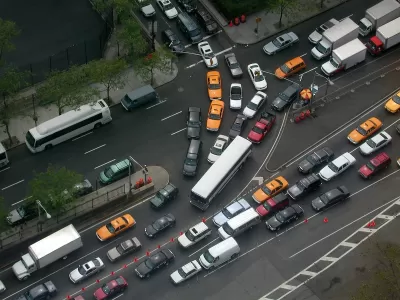
A new study finds that reducing private car ownership and miles driven in the United States could save a collective $6.2 trillion more than just focusing on shifting to electric vehicles.
As Kea Wilson explains in Streetsblog USA, the report from the Union of Concerned Scientists “states that giving Americans the freedom to choose among multiple modes of travel is "key to the climate transition" — and that making ‘visionary but feasible’ changes, like shifting land use patterns and investing in walking, biking, and transit, could get our country to the critical net zero milestone.”
According to the report, reducing vehicle miles traveled by roughly 27 percent by 2050 could eliminate the need for $201 billion in new infrastructure and save the nation $128 billion in public health costs. “And then there's the staggering costs of car crash deaths themselves, 250,000 of which could be avoided if VMT was cut, along with 3.7 million crash injuries that often cost far more than a fatality.”
Americans would also save almost $6 trillion on car payments, fuel, insurance, and other costs associated with vehicle ownership.
Kevin Shen, the lead author of the report, highlights the need for options, saying, “if you look into the more recent research [about] what actually benefits people in the U.S., it is not automobility. Providing a multitude of options — that's what actually benefits people.”
FULL STORY: Report: Confronting Car Dependence Won’t Just Help With Climate Change; It’s a $6.2 Trillion Opportunity

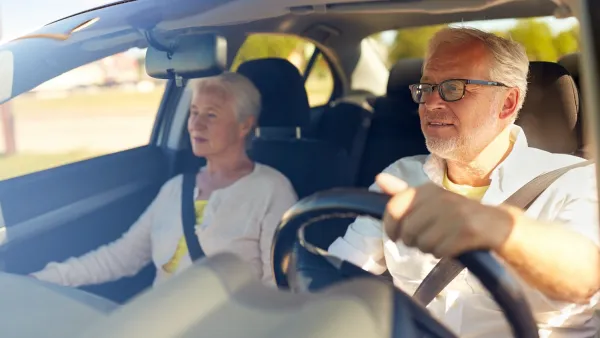
Preparing Transportation Systems for the ‘Silver Tsunami’
More Americans than ever will age beyond their safe ability to drive. How will they meet their mobility needs in a car-centric society?
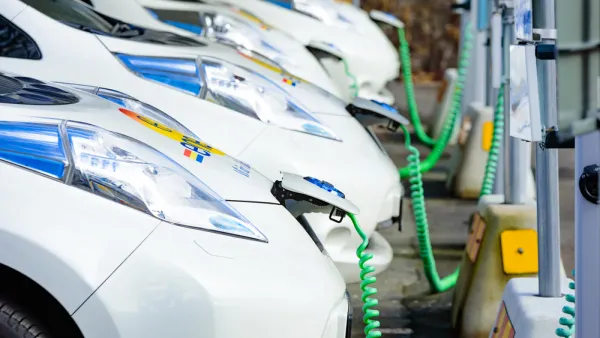
Report: Transportation Equity Requires More Than Electrification
Lower-income households often lack the resources to buy electric cars, signaling a need for a more holistic approach to improving mobility and lowering transportation costs.
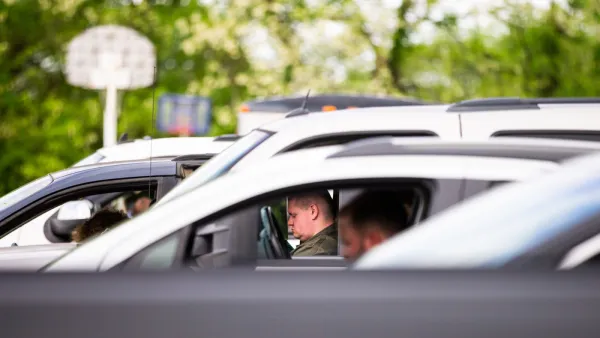
Study: Automobile Dependency Reduces Life Satisfaction
Automobile dependency has negative implications for wellbeing. This academic study finds that relying on a car for more than 50 percent of out-of-home travel is associated with significant reductions in life satisfaction.

Planetizen Federal Action Tracker
A weekly monitor of how Trump’s orders and actions are impacting planners and planning in America.

The state-sanctioned urbicide of Austin
People don’t kill cities. Freeways do.

US to reduce Colorado River water deliveries to Mexico
A new Colorado Treaty amendment reduces Mexico’s Colorado River water allocation by 250,000 acre feet.

5 New England states march closer to 800 megawatt wind energy project
Securing federal approval for the project may be complicated under the Trump administration, which has historically been hostile towards domestic wind power.

Baltimore to break ground on $50 million Transit Priority Project
The project will bring faster bus trips, safer streets and better bike connections to Baltimore.

Airbnb launches $250 million 'last-dollar financing' housing accelerator, makes first investment in Austin
The company will put $6.4 million towards affordable housing development in Texas’ capital.

FREE Course: Walkable City 1: Why Walkability?
After describing his path towards focusing on walkability as the essence of good planning, Jeff Speck marches through his five principal reasons for making more walkable places.
Reinventing Malls: Planning Alchemy—Turning Gray Fields Into Gold
The course focuses on the opportunities and imperatives that shape reinvention of mall sites.

Eagle County Government
Harvard University Graduate School of Design
Nashville Planning Department
The Architects Foundation
University of Cincinnati Online
The Pocatello Development Authority
The Urban Renewal Agency of the City of Pocatello
Journal of the American Planning Association