Legislators are considering extending the deadline for new oil well safety regulations by up to 54 months, sparking controversy over whether the delay benefits the oil industry at the expense of public health.


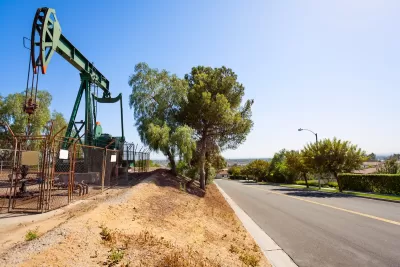
The California Legislature is deliberating a proposal by the Newsom administration to delay by up to 54 months the implementation of new safety regulations for oil wells near residential areas and schools. Initially set to be enforced by January 2027, the amendments would push this deadline to July 2031. Enacted in 2022, the law mandates that oil companies monitor for leaks and manage environmental impacts around existing wells, aiming to protect communities, particularly those in low-income and minority areas.
As reported by Julie Cart, this proposed extension has faced criticism from legislators and public health advocates who argue that it benefits the oil industry at the expense of public safety. They highlight the health risks associated with oil operations, including respiratory issues and other serious conditions, particularly for those living near wells. The delay would extend the timeline for critical safety measures, such as leak detection, which could further endanger communities already exposed to harmful pollutants.
The delay proposal follows a campaign by the oil industry to challenge the original law, which included a costly ballot measure that was later withdrawn. Advocates and some legislators argue that the additional time requested by state agencies for implementation reflects an effort to accommodate industry needs rather than addressing the urgent health concerns of affected residents. The debate continues as the legislative session nears its end, with ongoing discussions about balancing industry regulations and public health protections.
Read the full story: California legislators debate giving oil companies until 2031 to monitor wells for leaks

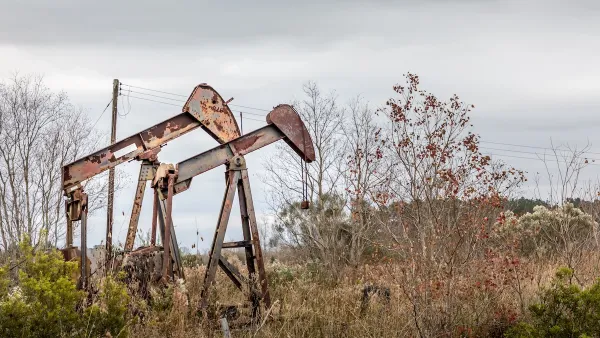
Addressing Orphan Wells for Environmental Justice
Remediating and repurposing some orphan oil and gas wells into parks can turn environmental hazards into community assets, promoting health, environmental justice, and accessible green space for underserved areas.
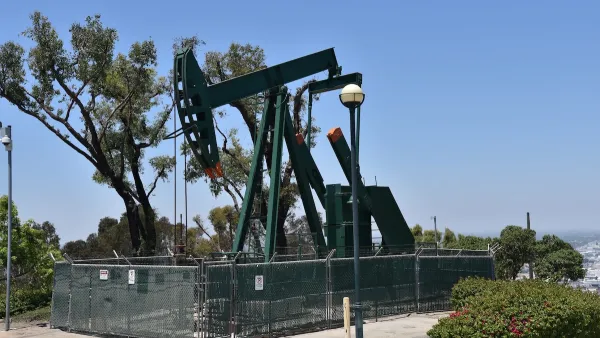
Governor Newsom Signs Bills to Restrict Oil and Gas Operations Near Communities
The signed legislation grants local communities more authority to restrict oil and gas operations near sensitive areas and address the environmental risks of idle wells, while also ensuring the permanent shutdown of low-production wells.
Los Angeles To Phase Out Oil Drilling
The city has banned new wells and will end all extraction within two decades.

Planetizen Federal Action Tracker
A weekly monitor of how Trump’s orders and actions are impacting planners and planning in America.

California plans to bury El Niño’s downpour
If the state plays its cards right, it may be able to store a billion acre-feet of El Niño’s water in aquifers.

Chicago breaks ground on $3 billion megadevelopment
The new neighborhood, titled Foundry Park, will one day host 3,700 residences.

Satanic Place Names
From streams and lakes to valleys and canyons, I mapped more than 1,000 places named after the Devil.

California High-Speed Rail Authority CEO resigns after $600,000 scandal
Under Ian Choudri, the authority used taxpayer dollars to fund first class flights and trips to nightclubs.

Want to study the Missouri River? Soon, you may need unanimous approval from 10 states
Legislation would require 10 governors’ permission to study or build projects moving water outside the basin.

FREE Course: Walkable City 1: Why Walkability?
After describing his path towards focusing on walkability as the essence of good planning, Jeff Speck marches through his five principal reasons for making more walkable places.
Reinventing Malls: Planning Alchemy—Turning Gray Fields Into Gold
The course focuses on the opportunities and imperatives that shape reinvention of mall sites.

City of Rosemead
Rutgers University, Edward J. Bloustein School of Planning and Public Policy
One Hundred Miles
Hunter College, City University of New York (CUNY)
The Architects Foundation
University of Cincinnati Online
City of Cambridge
Montrose County
The Pocatello Development Authority