While traffic fatalities remain far above zero, the city saw fewer injuries compared to areas without Vision Zero initiatives.


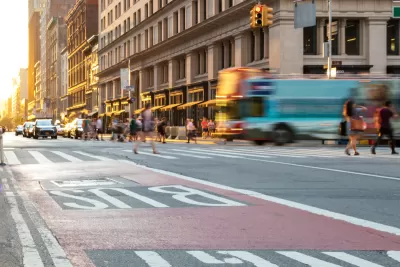
In a piece for The New York Times, James Barron assesses the progress made since New York City first announced its Vision Zero pledge 10 years ago.
According to a new study in The American Journal of Public Health, Vision Zero did more than save lives: it saved Medicaid over $90 million in reimbursements in its first five years. The study found that traffic-related injuries fell significantly compared to counties without Vision Zero programs. “The study also found that low-income New Yorkers had fewer injuries from crashes involving automobiles, bicycles, motorcycles and pedestrians. The sharpest drop in traffic-related injuries, the study said, was among Black New Yorkers.”
The Vision Zero initiative reduced speed limits from 30 miles per hour to 25 mph, made physical safety improvements on city streets, and boosted traffic enforcement, including red light cameras. “The state authorization for red-light cameras will expire this year unless the State Legislature reauthorizes the program. The city has asked to expand it, noting that the cameras have reduced red-light running by 73 percent.”
FULL STORY: How Vision Zero Made New Yorkers Safer and Saved Money

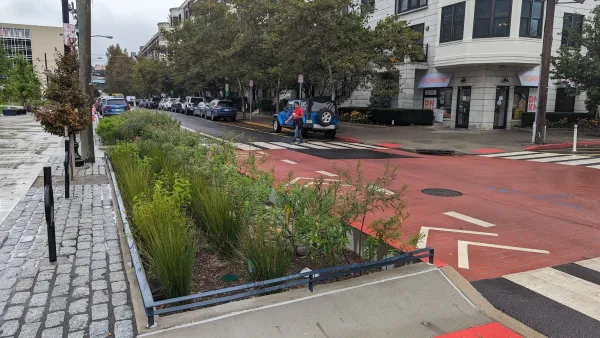
Hoboken's $20 Vision Zero fix
The New Jersey city eliminated traffic deaths for the last nine years in a row.
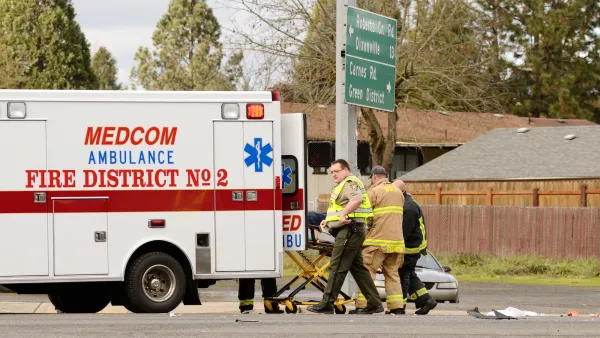
'Dangerous by Design' 2026 report highlights 72% increase in pedestrian deaths since 2009
Although US traffic deaths dropped in the last two years, the number of people killed on US roads remains much higher than two decades ago.
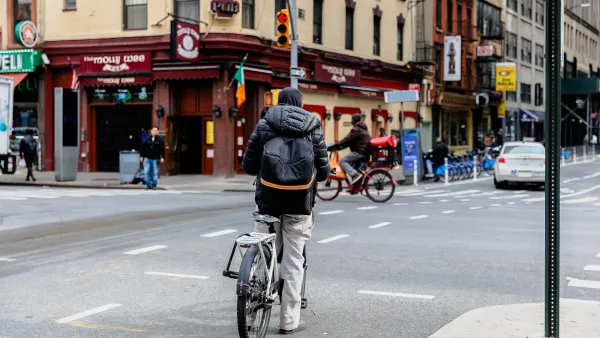
NYC e-bike injury study highlights 'critical infrastructure deficiencies'
The sharp rise in e-mobility injuries points to a need for safer roads, not more punitive laws.

Planetizen Federal Action Tracker
A weekly monitor of how Trump’s orders and actions are impacting planners and planning in America.

The state-sanctioned urbicide of Austin
People don’t kill cities. Freeways do.

US to reduce Colorado River water deliveries to Mexico
A new Colorado Treaty amendment reduces Mexico’s Colorado River water allocation by 250,000 acre feet.

5 New England states march closer to 800 megawatt wind energy project
Securing federal approval for the project may be complicated under the Trump administration, which has historically been hostile towards domestic wind power.

Baltimore to break ground on $50 million Transit Priority Project
The project will bring faster bus trips, safer streets and better bike connections to Baltimore.

Airbnb launches $250 million 'last-dollar financing' housing accelerator, makes first investment in Austin
The company will put $6.4 million towards affordable housing development in Texas’ capital.

FREE Course: Walkable City 1: Why Walkability?
After describing his path towards focusing on walkability as the essence of good planning, Jeff Speck marches through his five principal reasons for making more walkable places.
Reinventing Malls: Planning Alchemy—Turning Gray Fields Into Gold
The course focuses on the opportunities and imperatives that shape reinvention of mall sites.

Eagle County Government
Harvard University Graduate School of Design
Nashville Planning Department
The Architects Foundation
University of Cincinnati Online
The Pocatello Development Authority
The Urban Renewal Agency of the City of Pocatello
Journal of the American Planning Association