The city wants to accelerate small-scale safety improvements that use low-cost equipment to make an impact at dangerous intersections.


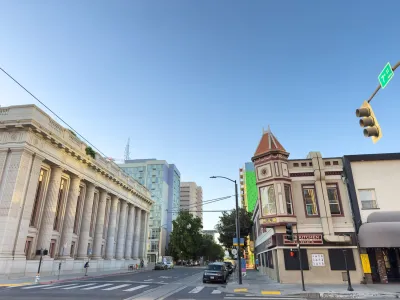
The city of Sacramento is taking action to fix dangerous roads by pledging to install as many as 40 “quick-build” safety projects per year, reports Ariane Lange in The Sacramento Bee.
To mitigate the slow pace of large-scale improvements, the city’s Department of Public Works has created a Transportation Safety Team tasked with small-scale projects that can be implemented on a more compressed timeline to help reach the city’s goal of achieving zero traffic deaths by 2027. “Over the eight years since the pledge, more than 300 people have died on city streets, and Sacramento has not been on track to meet the goal,” Lange adds.
The team will identify priority intersections that can be improved with quick-build interventions as well as one to three “interim versions of already-planned large corridor projects.” These interim projects will use “cheaper, less durable materials” to implement existing plans before new permanent infrastructure is installed.
FULL STORY: Sacramento eyes 40+ quick-build fixes yearly as new safety team forms

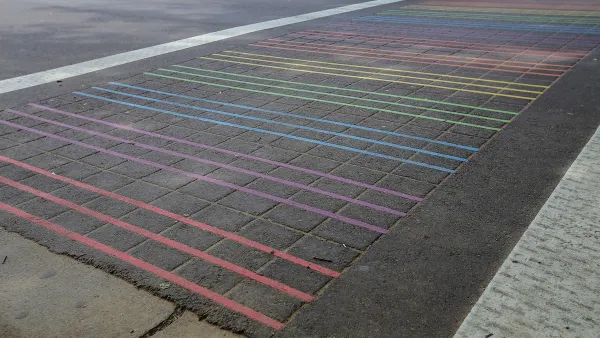
Sacramento Isn’t Giving up on Rainbow Crosswalks
A city program will fund artist-created crosswalks near two elementary schools as part of its effort to eliminate traffic deaths.

Pedestrian Deaths Drop, Remain Twice as High as in 2009
Fatalities declined by 4 percent in 2024, but the U.S. is still nowhere close to ‘Vision Zero.’
Vehicle-related Deaths Drop 29% in Richmond, VA
The seventh year of the city's Vision Zero strategy also cut the number of people killed in alcohol-related crashes by half.

Planetizen Federal Action Tracker
A weekly monitor of how Trump’s orders and actions are impacting planners and planning in America.

The state-sanctioned urbicide of Austin
People don’t kill cities. Freeways do.

US to reduce Colorado River water deliveries to Mexico
A new Colorado Treaty amendment reduces Mexico’s Colorado River water allocation by 250,000 acre feet.

5 New England states march closer to 800 megawatt wind energy project
Securing federal approval for the project may be complicated under the Trump administration, which has historically been hostile towards domestic wind power.

Baltimore to break ground on $50 million Transit Priority Project
The project will bring faster bus trips, safer streets and better bike connections to Baltimore.

Airbnb launches $250 million 'last-dollar financing' housing accelerator, makes first investment in Austin
The company will put $6.4 million towards affordable housing development in Texas’ capital.

FREE Course: Walkable City 1: Why Walkability?
After describing his path towards focusing on walkability as the essence of good planning, Jeff Speck marches through his five principal reasons for making more walkable places.
Reinventing Malls: Planning Alchemy—Turning Gray Fields Into Gold
The course focuses on the opportunities and imperatives that shape reinvention of mall sites.

Eagle County Government
Harvard University Graduate School of Design
Nashville Planning Department
The Architects Foundation
University of Cincinnati Online
The Pocatello Development Authority
The Urban Renewal Agency of the City of Pocatello
Journal of the American Planning Association