New cars will be required to include automatic detection and braking technology for vehicles and pedestrians by 2029.


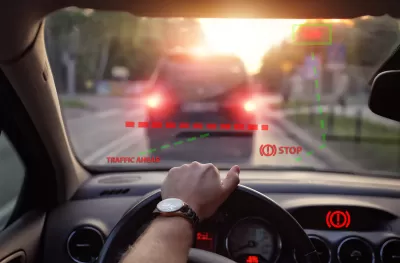
The U.S. Department of Transportation’s National Highway Traffic Safety Administration (NHTSA) issued its final update to federal regulations that govern vehicle design, mandating new features to protect pedestrians and prevent crashes. The new Federal Motor Vehicle Safety Standard calls for automatic emergency braking (AEB) technology for vehicles and pedestrians on all passenger cars and light trucks by 2029.
According to a press release from the NHTSA, “The new standard requires all cars be able to stop and avoid contact with a vehicle in front of them up to 62 miles per hour and that the systems must detect pedestrians in both daylight and darkness. In addition, the standard requires that the system apply the brakes automatically up to 90 mph when a collision with a lead vehicle is imminent, and up to 45 mph when a pedestrian is detected.” The technology is designed to detect pedestrians and vehicles during daylight and darker conditions.
The agency estimates this could save over 360 lives each year, based on fatality statistics. The standard fulfills a provision in the Bipartisan Infrastructure Law and advances the National Roadway Safety Strategy, a federal effort to reduce traffic fatalities and injuries.
FULL STORY: NHTSA Finalizes Key Safety Rule to Reduce Crashes and Save Lives

NHTSA Cuts Could Make Roads More Dangerous
The agency is losing almost half of the team that oversees autonomous vehicle safety, among dozens of other key personnel.

Proposed NHTSA Rule Takes Aim at Dangerously Large Trucks and SUVs
Nearly half of pedestrians who died after being hit by the front of a vehicle were struck by SUVs or trucks.

Ted Cruz Blames Safety Features for the Rising Cost of Cars; Senate Could Roll Back Regulations
A Senate committee will hear testimony by automakers in a hearing that could determine whether autonomous emergency braking and other safety features will be mandatory on new cars.

Planetizen Federal Action Tracker
A weekly monitor of how Trump’s orders and actions are impacting planners and planning in America.

The state-sanctioned urbicide of Austin
People don’t kill cities. Freeways do.

US to reduce Colorado River water deliveries to Mexico
A new Colorado Treaty amendment reduces Mexico’s Colorado River water allocation by 250,000 acre feet.

Mamdani overhauls NYC's Vision Zero plan with 100 new policy goals
The overhaul aims to reduce traffic deaths and make streets safer for pedestrians, cyclists and drivers through lower speed limits, new safety infrastructure and more.

Amtrak not solely to blame for New Jersey commuter rail's unreliability, report finds
A new study from the Garden State Initiative found that NJ Transit’s budget grew 20% across a 4 year period, but reliability declined significantly over the same period.

EPA erases limits on planet-warming pollution from power plants
Under Monday’s plan, power plants would still have some limits on how much mercury, arsenic and other contaminants they can emit.

FREE Course: Walkable City 1: Why Walkability?
After describing his path towards focusing on walkability as the essence of good planning, Jeff Speck marches through his five principal reasons for making more walkable places.
Reinventing Malls: Planning Alchemy—Turning Gray Fields Into Gold
The course focuses on the opportunities and imperatives that shape reinvention of mall sites.

Eagle County Government
Harvard University Graduate School of Design
Nashville Planning Department
The Architects Foundation
University of Cincinnati Online
The Pocatello Development Authority
The Urban Renewal Agency of the City of Pocatello
Journal of the American Planning Association