So far, the department has allocated 90 percent of its federal transportation funding to road projects and less than 1 percent to transit.


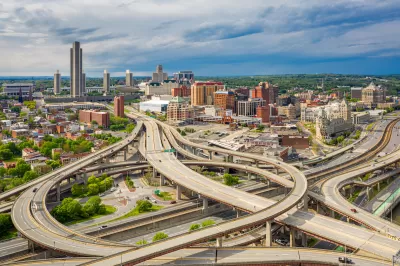
New York State expects roughly $36 billion in funding from the Bipartisan Infrastructure Law to upgrade its transportation system, but so far, the state has largely directed the funds to road projects rather than more climate-friendly projects, reports Sam Mellins in New York Focus.
According to Mellins, the state Department of Transportation has already allocated over $1 billion in funding to transportation projects, with 90 percent of it going to road projects. Meanwhile, “A single highway widening project in Queens is slated to use over $700 million in federal funds.”
In some cases, the department has redirected funds away from bike, transit, and pedestrian projects. “Last year, Hochul and state lawmakers used over $20 million from a fund meant to boost options in New York City’s transit deserts to offer free bridge tolls to some drivers in the Bronx and Queens, Gothamist reported.”
While the infrastructure law was in part designed to shift the transportation sector away from fossil fuels, “If states continue to pursue highway expansions, the resulting emissions from car trips could cancel out the climate-friendly aspects of the infrastructure law, potentially making it a net cause of increased emissions, a Georgetown study found.”

Freedom to Move: Investing in Transportation Choices for a Clean, Prosperous, and Just Future
This Union of Concerned Scientists study examines why and how to improve resource-efficient travel options to achieve diverse goals. It estimates that more efficient transport could save up to $201 billion in energy and $128 billion in health costs.
Opinion: Federal Infrastructure Plan Must Prioritize Transit Investment
The Biden administration must combine increased funding with policies that mandate and encourage transit-oriented planning.
Washington State Considering New Gas Tax, Transit and Bike Fees
The state legislature is weighing three proposals that seek to fund improvements to aging infrastructure and upgrade the state's transportation network.

The state-sanctioned urbicide of Austin
People don’t kill cities. Freeways do.

US to reduce Colorado River water deliveries to Mexico
A new Colorado Treaty amendment reduces Mexico’s Colorado River water allocation by 250,000 acre feet.

New Jersey’s second-largest city bans standalone data centers
Jersey City will continue to allow co-location facilities, such as those meant for research institutions that store their own data.

Amtrak not solely to blame for New Jersey commuter rail's unreliability, report finds
A new study from the Garden State Initiative found that NJ Transit’s budget grew 20% across a 4 year period, but reliability declined significantly over the same period.

EPA erases limits on planet-warming pollution from power plants
Under Monday’s plan, power plants would still have some limits on how much mercury, arsenic and other contaminants they can emit.

Phoenix announces new on-demand transit service, more frequent RAPID buses
Both new services will launch in October, and are part of Phoenix's Project Effective Access Solutions for Easing Congestion.

FREE Course: Walkable City 1: Why Walkability?
After describing his path towards focusing on walkability as the essence of good planning, Jeff Speck marches through his five principal reasons for making more walkable places.
Reinventing Malls: Planning Alchemy—Turning Gray Fields Into Gold
The course focuses on the opportunities and imperatives that shape reinvention of mall sites.

Eagle County Government
Harvard University Graduate School of Design
Nashville Planning Department
The Architects Foundation
University of Cincinnati Online
The Pocatello Development Authority
The Urban Renewal Agency of the City of Pocatello
Journal of the American Planning Association