A measure on the local ballot in March could force the city to implement its own mobility plan, which city officials call “a guide, not a mandate.”


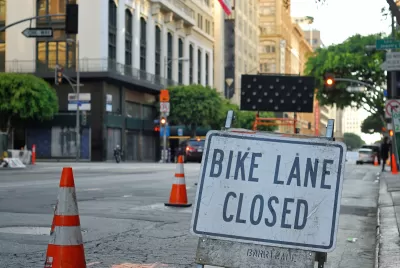
In an article for the Los Angeles Times, Rachel Uranga explains a Los Angeles ballot measure, Measure HLA, which could have a major impact on mobility and multimodal infrastructure in the city.
The measure would force the city to implement the mobility plan it created in 2015, which calls for more bike lanes, pedestrian improvements, and transit lanes. But, as Uranga explains, “So far, little of the plan has been implemented. City officials note that the document is a guide, not a mandate.” Measure HLA would change that.
Mobility Plan 2035 aims to eliminate traffic deaths and bring protected bike and pedestrian infrastructure to all parts of the city. “If the ballot measure passes, residents could sue over instances when Los Angeles fails to implement the plan. And to make sure city officials are doing the task, the measure calls for a public portal where residents can check up on its progress.” Angelenos will vote on the measure in March.
Read the full story: Your guide to Los Angeles’ citizen ballot Measure HLA: Mobility plan

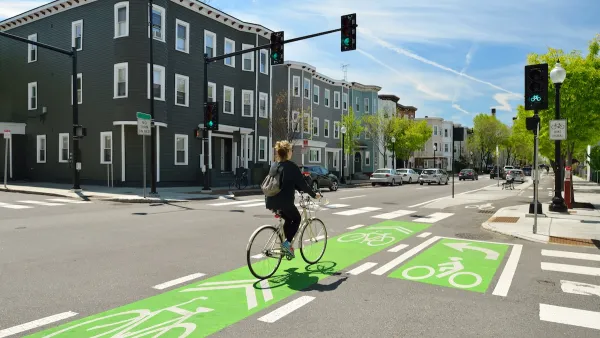
NACTO Releases Updated Urban Bikeway Guide
The third edition of the nationally recognized road design guide includes detailed design advice for roads that prioritize safety and accessibility for all users.

Los Angeles Approves Road Safety Measure
Voters expressed strong support for road safety improvements.
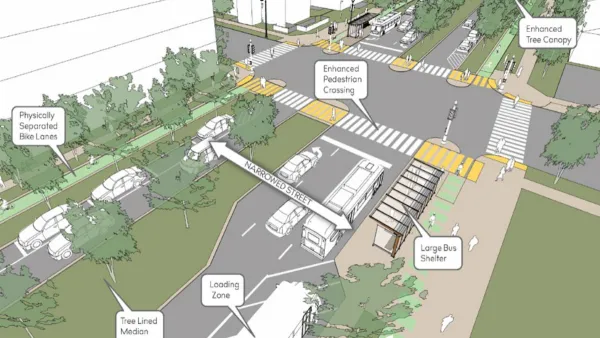
Trump Killed Funding for Milwaukee's Dreamy Multimodal Street. They're Determined to Make it Happen Anyway.
The administration rescinded a $36 million Reconnecting Communities grant aimed at redesigning a 2.6-mile segment of 6th Street.

Planetizen Federal Action Tracker
A weekly monitor of how Trump’s orders and actions are impacting planners and planning in America.

Amtrak, CN end decades-long dispute with eight-year agreement
The new operating agreement establishes an updated framework for the companies to work together, including processes to resolve disputes.

Judges permit Denver to divert 77,000 acre feet from the Colorado River for reservoir expansion
Overuse and climate change have caused the Colorado River’s water levels to plummet.

Boston has spent millions making the Green Line more accessible — and there’s no end in sight
While the city has invested millions into expanding and adding platforms to the Green Line to make it more accessible, new train cars set to arrive next year will be too tall for disabled passengers to board without raising the current platforms.

Idaho may see an 18% drop in federal surface transit funding — the largest estimated cut in the US
Transit systems in rural communities are much more reliant on federal funding to provide their services.

How ‘post-disaster gentrification’ alters neighborhoods after natural calamities
After hurricanes, fires or other calamities, the original residents of a community are often replaced by younger, wealthier residents.

FREE Course: Walkable City 1: Why Walkability?
After describing his path towards focusing on walkability as the essence of good planning, Jeff Speck marches through his five principal reasons for making more walkable places.
Reinventing Malls: Planning Alchemy—Turning Gray Fields Into Gold
The course focuses on the opportunities and imperatives that shape reinvention of mall sites.

City of Wisconsin Rapids
Harvard University Graduate School of Design
KFH Group Inc.
The Architects Foundation
University of Cincinnati Online
The Pocatello Development Authority
The Urban Renewal Agency of the City of Pocatello