While adding new bike lanes can be a long and contentious process, removing them in favor of parking requires no public process.


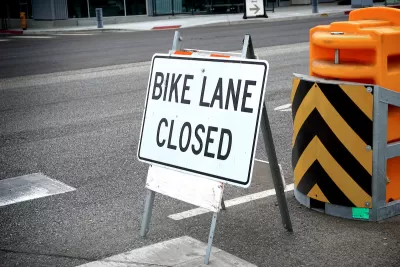
In an article in Streetsblog LA, Joe Linton reveals six streets where Los Angeles Department of Transportation officials recently removed bike lanes to install curbside car parking. According to Linton, removing bike lanes to add parking, unlike the onerous process of approving new bike lanes, “can be done with no public process whatsoever.”
Linton notes that the city also frequently removes or blocks bike lanes temporarily for construction projects, and that “There are also LADOT parking expansion projects that effectively blocked future planned or proposed bike lanes (including bikeway upgrades).”
Linton lists several specific examples, explaining that “These are just the examples that Streetsblog has come across. But these are difficult to find. Cities rarely announce when they remove bike infrastructure.”
FULL STORY: Where L.A. City Is Quietly Removing Bike Lanes and Adding On-Street Car Parking


Olympian-in-Training Operates New Googly-Eyed Hollywood Bike Lane Sweeper
A bike-towed sweeper will clean Hollywood Boulevard bike lanes twice a month.
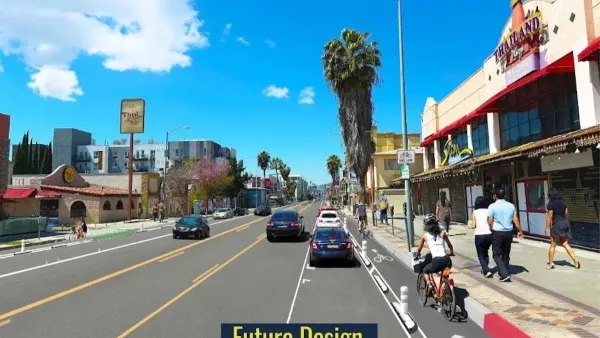
New Bike Lanes Coming to Hollywood Boulevard
Los Angeles is adding 3.6 miles of new protected bike lanes in East Hollywood.
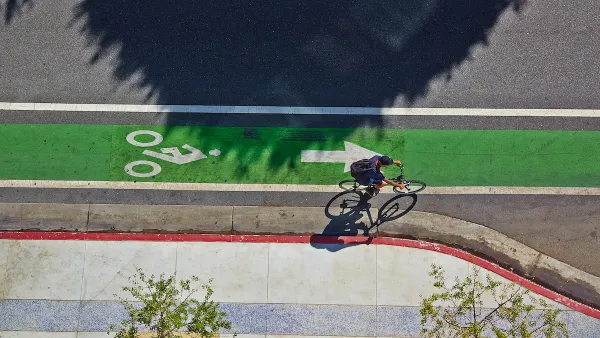
LA’s Mobility Plan Implementation Faces Opposition
The city’s firefighters’ union claims that bike and bus lanes would slow response times and impede access for first responders.

Planetizen Federal Action Tracker
A weekly monitor of how Trump’s orders and actions are impacting planners and planning in America.

The state-sanctioned urbicide of Austin
People don’t kill cities. Freeways do.

US to reduce Colorado River water deliveries to Mexico
A new Colorado Treaty amendment reduces Mexico’s Colorado River water allocation by 250,000 acre feet.

Mamdani overhauls NYC's Vision Zero plan with 100 new policy goals
The overhaul aims to reduce traffic deaths and make streets safer for pedestrians, cyclists and drivers through lower speed limits, new safety infrastructure and more.

Amtrak not solely to blame for New Jersey commuter rail's unreliability, report finds
A new study from the Garden State Initiative found that NJ Transit’s budget grew 20% across a 4 year period, but reliability declined significantly over the same period.

EPA erases limits on planet-warming pollution from power plants
Under Monday’s plan, power plants would still have some limits on how much mercury, arsenic and other contaminants they can emit.

FREE Course: Walkable City 1: Why Walkability?
After describing his path towards focusing on walkability as the essence of good planning, Jeff Speck marches through his five principal reasons for making more walkable places.
Reinventing Malls: Planning Alchemy—Turning Gray Fields Into Gold
The course focuses on the opportunities and imperatives that shape reinvention of mall sites.

Eagle County Government
Harvard University Graduate School of Design
Nashville Planning Department
The Architects Foundation
University of Cincinnati Online
The Pocatello Development Authority
The Urban Renewal Agency of the City of Pocatello
Journal of the American Planning Association