A new report highlights the need to go beyond traditional equity metrics to assess how public transit systems are serving the lowest-income and most disadvantaged riders.



A new report from the Mineta Institute identifies ways to assess transit service equity to help California transit agencies understand their equity challenges and needs.
The report “identifies and evaluates policies and practices associated with equity measurement in public transit from extant academic and professional literature sources.” Using a test case from Santa Cruz, California, the report assesses the need for new equity metrics.
According to the study, “Findings suggest that these traditional Title VI measures do not correlate well with other potential measures of inequity. Hence, transit inequity is a multifaceted problem with several potential different measures, each revealing an aspect of inequity.” Transit agencies should reach beyond the usual measures to “address the specific, context-appropriate equity conditions of the communities they are measuring to ensure fair and equal public transportation for all.”
FULL STORY: Defining and Measuring Equity in Public Transportation


‘Week Without Driving’ Highlights Needs of Non-Drivers
The event encourages public officials to use their local public transit and engage with the people who rely on it every day.

APTA Report Documents Transit Equity Efforts
Transit agencies around the country are boosting their efforts to serve historically marginalized communities and make transit work better for the households that rely on it the most.
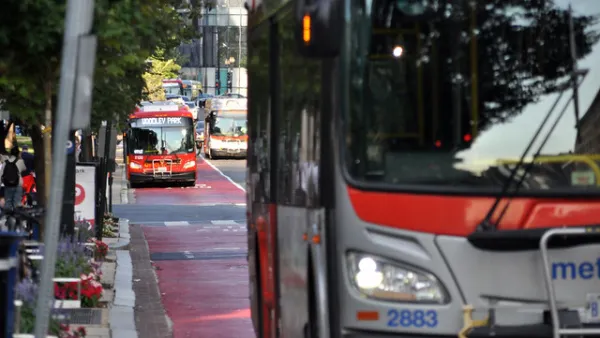
DC Improving Transit Equity
The Transit Equity Dashboard reveals a more marked improvement in transit access in the District of Columbia than in other metro areas.

Planetizen Federal Action Tracker
A weekly monitor of how Trump’s orders and actions are impacting planners and planning in America.

The state-sanctioned urbicide of Austin
People don’t kill cities. Freeways do.

US to reduce Colorado River water deliveries to Mexico
A new Colorado Treaty amendment reduces Mexico’s Colorado River water allocation by 250,000 acre feet.

Colorado’s Largest Data Center Could Rise Next to Homes — Without a Public Hearing
The proposed campus would consume 11 times the power of Denver International Airport; as it has across the country, opposition mounts.

5 New England states march closer to 800 megawatt wind energy project
Securing federal approval for the project may be complicated under the Trump administration, which has historically been hostile towards domestic wind power.

Baltimore to break ground on $50 million Transit Priority Project
The project will bring faster bus trips, safer streets and better bike connections to Baltimore.

FREE Course: Walkable City 1: Why Walkability?
After describing his path towards focusing on walkability as the essence of good planning, Jeff Speck marches through his five principal reasons for making more walkable places.
Reinventing Malls: Planning Alchemy—Turning Gray Fields Into Gold
The course focuses on the opportunities and imperatives that shape reinvention of mall sites.

Eagle County Government
Harvard University Graduate School of Design
Nashville Planning Department
The Architects Foundation
University of Cincinnati Online
The Pocatello Development Authority
The Urban Renewal Agency of the City of Pocatello
Journal of the American Planning Association