Two of the nation’s largest transit agencies outline how they are integrating equity concerns into their work.


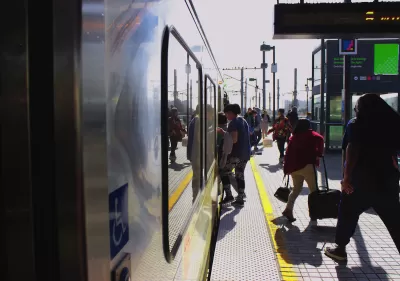
Officials from the Southeastern Pennsylvania Transportation Authority (SEPTA) and the Los Angeles County Metropolitan Transportation Authority (Metro) advised their peers on how major transit agencies can support equity initiatives in a webinar this week, reports Dan Zukowski in Smart Cities Dive.
Emmanuella Myrthil, chief equity and inclusion officer at SEPTA, “advised agencies to clearly define equity goals and specific outcomes and to include a broad set of stakeholders, including community members, small businesses and the agency’s workforce in conversations around new projects and programs.”
Metro CEO Stephanie Wiggins said the L.A. agency has developed equity assessment tools for programs, services, capital projects and budgets that help ensure equity is incorporated into “all facets of Metro’s work.” Wiggins also cautioned, “there’s no set of plans that we can give you to do it well. It really needs to be custom built for your community.”
Read the full story: How 2 big US transit agencies approach equity

‘Week Without Driving’ Highlights Needs of Non-Drivers
The event encourages public officials to use their local public transit and engage with the people who rely on it every day.

The Link Between Public Transit and Justice
The chancellor of the Philadelphia Bar Association argues that a robust transit system is key to ensuring people on all sides of the justice system can access courts and resources.

APTA Report Documents Transit Equity Efforts
Transit agencies around the country are boosting their efforts to serve historically marginalized communities and make transit work better for the households that rely on it the most.

Planetizen Federal Action Tracker
A weekly monitor of how Trump’s orders and actions are impacting planners and planning in America.

Eastern Nebraska is running out of electricity
Data centers and electrification are straining eastern Nebraska’s grid, throttling economic development.

Study reveals best places in the U.S. for cycling, walking
New research from Streetlight Data examines bicycle and pedestrian miles per capita in the 100 largest U.S. cities by population.

San Antonio is using environmental review to stall ICE detention center
San Antonio sued last month to pause work on the new detention center until the federal government studied its effect on the surrounding area.

Austin plans light rail extension — before breaking ground on light rail
The planned extension is three miles long and will take riders straight to Austin-Bergstrom International Airport.

Chicago cuts ribbon on $300,000, self-cleaning public toilet
The public toilet is the city’s first, and may pave the way for a rollout of similar facilities.

FREE Course: Walkable City 1: Why Walkability?
After describing his path towards focusing on walkability as the essence of good planning, Jeff Speck marches through his five principal reasons for making more walkable places.
Reinventing Malls: Planning Alchemy—Turning Gray Fields Into Gold
The course focuses on the opportunities and imperatives that shape reinvention of mall sites.

City of Charlotte
City of Rosemead
Rutgers University, Edward J. Bloustein School of Planning and Public Policy
University of Michigan School for Environment and Sustainability (SEAS)
Hunter College, City University of New York (CUNY)
The Architects Foundation
City of Cambridge
The Pocatello Development Authority
The Urban Renewal Agency of the City of Pocatello