The ride-hailing giant posted an operating profit for the first time in its history, thanks largely in part to its successful food delivery business.


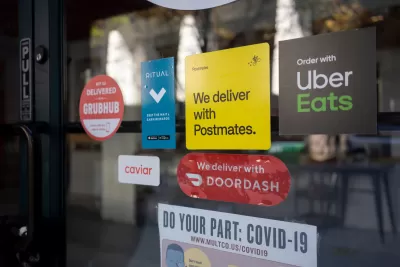
Long known as a poster child for venture capitalism gone wild, with years upon years of losses buoyed only by massive investments, Uber has finally posted an operating profit, according to a Bloomberg article published in Crain’s New York. “Uber posted a second-quarter operating profit according to generally accepted accounting principles of $326 million and free-cash-flow of $1.14 billion.”
“After struggling with a driver shortage that caused fares and wait times to increase, Uber said the number of active drivers were up 33% in the second quarter compared with last year. The number of trips taken increased 26% from a year earlier to a record high.” Meanwhile, the company’s food delivery sector has shown strong growth.
Uber’s main competitor, Lyft—which now operates some of the country’s biggest bike share programs—isn’t doing as well: “Uber accounted for 74% of the US consumer ride-share sales at the end of June, while Lyft had 26%, according to Bloomberg Second Measure.”
FULL STORY: Uber posts first operating profit as ridership hits new record

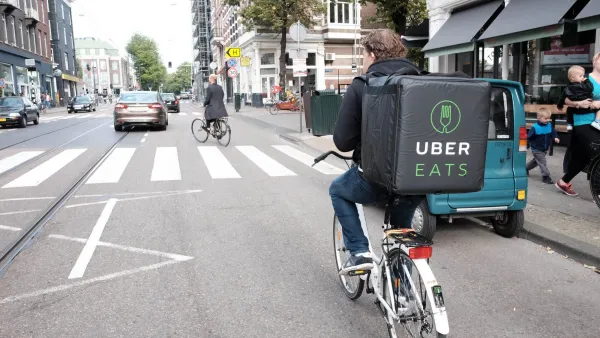
Food Delivery Could Be the Secret to Uber's Success
While Uber's ride hailing services are famously unprofitable, food delivery is quickly gaining traction for the troubled transportation network company.
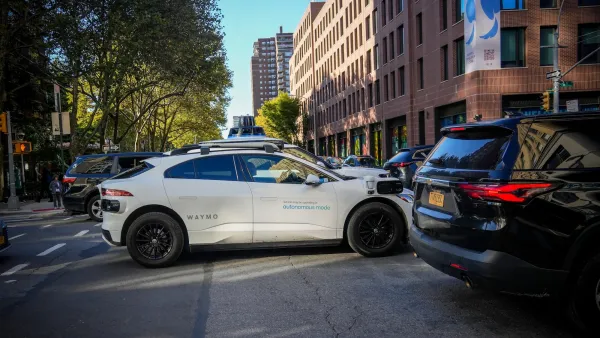
Uber says more Waymos are good for Uber too
The company believes robotaxis are spurring growth in the ride-hailing sector as a whole.

New Uber Feature Lets Riders Request Women Drivers — and Vice Versa
The feature debuted in Saudi Arabia in 2019 and is now available in 41 countries where Uber operates.

Planetizen Federal Action Tracker
A weekly monitor of how Trump’s orders and actions are impacting planners and planning in America.

The state-sanctioned urbicide of Austin
People don’t kill cities. Freeways do.

US to reduce Colorado River water deliveries to Mexico
A new Colorado Treaty amendment reduces Mexico’s Colorado River water allocation by 250,000 acre feet.

5 New England states march closer to 800 megawatt wind energy project
Securing federal approval for the project may be complicated under the Trump administration, which has historically been hostile towards domestic wind power.

Baltimore to break ground on $50 million Transit Priority Project
The project will bring faster bus trips, safer streets and better bike connections to Baltimore.

Airbnb launches $250 million 'last-dollar financing' housing accelerator, makes first investment in Austin
The company will put $6.4 million towards affordable housing development in Texas’ capital.

FREE Course: Walkable City 1: Why Walkability?
After describing his path towards focusing on walkability as the essence of good planning, Jeff Speck marches through his five principal reasons for making more walkable places.
Reinventing Malls: Planning Alchemy—Turning Gray Fields Into Gold
The course focuses on the opportunities and imperatives that shape reinvention of mall sites.

Eagle County Government
Harvard University Graduate School of Design
Nashville Planning Department
The Architects Foundation
University of Cincinnati Online
The Pocatello Development Authority
The Urban Renewal Agency of the City of Pocatello
Journal of the American Planning Association