While Uber's ride hailing services are famously unprofitable, food delivery is quickly gaining traction for the troubled transportation network company.


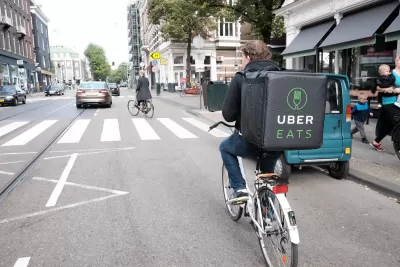
Mike Isaac reports on the traction of transportation network company Uber in one perhaps surprising arena: food delivery.
Uber has "barreled into the crowded, cutthroat space of food delivery," according to Isaac, winning over restaurant owners in the process. While Uber has made headlines for all the wrong reasons in recent years, some are expecting that UberEats, the delivery arm of the transportation network company, could be primed for growth.
UberEats stands out even from the rest of the company’s fast-growing — and unprofitable — business. The delivery service, available in more than 120 markets globally, sometimes eclipses Uber’s main ride-hailing business in markets like Tokyo; Taipei, Taiwan; and Seoul, South Korea, the company said. The number of trips taken by UberEats drivers grew by more than 24 times between March 2016 and March 2017. As of July, UberEats was profitable in 27 of the 108 cities where it operated.
Isaac takes a closer look at the food delivery marketplace, which includes companies like Postmates and Grubhub, and could include new threats from Amazon.
FULL STORY: One Surprise Standout for Uber: Food Delivery

Uber Sees Record Ridership, Finally Posts a Profit
The ride-hailing giant posted an operating profit for the first time in its history, thanks largely in part to its successful food delivery business.
Uber and Lyft: A Tale of Two Companies
After years of resisting efforts by cities to regulate their business and constant—but unprofitable—growth, Uber and Lyft are homing in on their unique strengths.
Uber says more Waymos are good for Uber too
The company believes robotaxis are spurring growth in the ride-hailing sector as a whole.

Planetizen Federal Action Tracker
A weekly monitor of how Trump’s orders and actions are impacting planners and planning in America.

The state-sanctioned urbicide of Austin
People don’t kill cities. Freeways do.

US to reduce Colorado River water deliveries to Mexico
A new Colorado Treaty amendment reduces Mexico’s Colorado River water allocation by 250,000 acre feet.

Colorado’s Largest Data Center Could Rise Next to Homes — Without a Public Hearing
The proposed campus would consume 11 times the power of Denver International Airport; as it has across the country, opposition mounts.

5 New England states march closer to 800 megawatt wind energy project
Securing federal approval for the project may be complicated under the Trump administration, which has historically been hostile towards domestic wind power.

Baltimore to break ground on $50 million Transit Priority Project
The project will bring faster bus trips, safer streets and better bike connections to Baltimore.

FREE Course: Walkable City 1: Why Walkability?
After describing his path towards focusing on walkability as the essence of good planning, Jeff Speck marches through his five principal reasons for making more walkable places.
Reinventing Malls: Planning Alchemy—Turning Gray Fields Into Gold
The course focuses on the opportunities and imperatives that shape reinvention of mall sites.

Eagle County Government
Harvard University Graduate School of Design
Nashville Planning Department
The Architects Foundation
University of Cincinnati Online
The Pocatello Development Authority
The Urban Renewal Agency of the City of Pocatello
Journal of the American Planning Association