The low-cost monthly ticket is a boon for some commuters and urban travelers, but critics of the program question the lack of investment in expanding train service to underserved rural parts of the country.


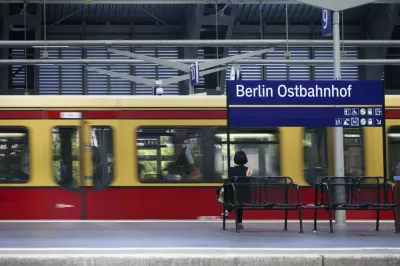
A new nationwide transit pass will allow people in Germany to ride any of the country’s local and regional buses and trains for €49, or $54, per month. As Josefine Fokuhl, Wilfried Eckl-Dorna and Feargus O'Sullivan outline in an article for Bloomberg CityLab, “That means with one ticket — which breaks down to less than the cost on one espresso a day — you can ride buses along the shores of Lake Constance on the Swiss border and traverse Hamburg’s harbor on the North Sea.”
The article notes that the plan doesn’t include any new funding for expanded transit operations, which could limit the impact of the new pass, with rail access in many rural parts of Germany still extremely limited or nonexistent. Other critics point out that encouraging more trips on “Germany’s already-overloaded networks” could lead to more disruptions in service without other improvements.
Supporters are optimistic that the ticket will be a positive influence on transit Europe-wide. “The impact of the ticket could ripple through to other countries by taking the potentially radical step of positioning transit systems as a public good to which all deserve affordable access. It could also be a model for others in the European Union, as the bloc aims to become climate neutral by 2050.”
FULL STORY: Germany Sets the New Standard for Cheap, National Mass Transit

Fair Fares Program Criticized for Eligibility Threshold
Critics of the city's transit assistance program say limiting eligibility to people living at or below the federal poverty line excludes many low-income New Yorkers who depend on public transit.
D.C. Transit Implementing Major Changes, Hopes to Boost Ridership
Flat fares, reduced wait times, and extended late-night service are all part of a package of changes meant to bring riders back and adjust to post-pandemic travel patterns.
What's Hindering Regional Transportation in the U.S.?
Public transportation that serves regional areas makes sense, but the United States has been slow to pursue strategies and policies that foster these types of systems.

Planetizen Federal Action Tracker
A weekly monitor of how Trump’s orders and actions are impacting planners and planning in America.

The state-sanctioned urbicide of Austin
People don’t kill cities. Freeways do.

US to reduce Colorado River water deliveries to Mexico
A new Colorado Treaty amendment reduces Mexico’s Colorado River water allocation by 250,000 acre feet.

Mamdani overhauls NYC's Vision Zero plan with 100 new policy goals
The overhaul aims to reduce traffic deaths and make streets safer for pedestrians, cyclists and drivers through lower speed limits, new safety infrastructure and more.

Amtrak not solely to blame for New Jersey commuter rail's unreliability, report finds
A new study from the Garden State Initiative found that NJ Transit’s budget grew 20% across a 4 year period, but reliability declined significantly over the same period.

EPA erases limits on planet-warming pollution from power plants
Under Monday’s plan, power plants would still have some limits on how much mercury, arsenic and other contaminants they can emit.

FREE Course: Walkable City 1: Why Walkability?
After describing his path towards focusing on walkability as the essence of good planning, Jeff Speck marches through his five principal reasons for making more walkable places.
Reinventing Malls: Planning Alchemy—Turning Gray Fields Into Gold
The course focuses on the opportunities and imperatives that shape reinvention of mall sites.

Eagle County Government
Harvard University Graduate School of Design
Nashville Planning Department
The Architects Foundation
University of Cincinnati Online
The Pocatello Development Authority
The Urban Renewal Agency of the City of Pocatello
Journal of the American Planning Association