After receiving complaints about parking loss and loading zone access, the city will consider revisions to a plan to make Connecticut Avenue safer for people on bikes, pedestrians, and transit users.


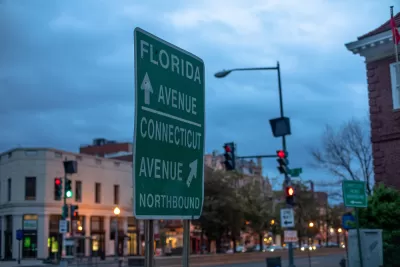
According to an article by Luz Lazo in The Washington Post, Washington, D.C. transportation officials are backing down on a plan to add bike lanes and safer pedestrian infrastructure to Connecticut Avenue. “D.C. transportation officials said they will work on design changes to address concerns about the loss of parking, effects on businesses, and access for people with disabilities and seniors along the busy commuter route in Northwest Washington.”
As Luz explains, “The planned transformation of Connecticut Avenue includes a northbound and southbound bike lane, new left- and right-turn lanes at some intersections, the relocation of bus stops to safer spots, pedestrian refuge islands, curb extensions and the prohibition of right turns on red lights.” While the revision is yet to be determined, “Officials said the city probably will stick with its original plan of a bike lane in each direction, with adjustments that include better loading access and parking alternatives.”
People who use Connecticut Avenue for biking say the street is “extremely dangerous and unsafe” for cyclists. One resident, Eztra Deutsch-Feldman, told the Post, “I know that for every rider brave enough to ride on [Connecticut Avenue] now, there are dozens more who want to ride on it but don't feel safe doing so.”
FULL STORY: In D.C., Connecticut Avenue bike lane plan to be revised

Why Bike Lanes Are Good: An Explainer for the US Transportation Secretary
Sean Duffy says there’s no evidence that bike lanes have benefits. Streetsblog — and federal agencies’ own data — beg to differ.
NACTO Releases Updated Urban Bikeway Guide
The third edition of the nationally recognized road design guide includes detailed design advice for roads that prioritize safety and accessibility for all users.
Southeast LA Road Safety Advocates Call for Improved Infrastructure
Streets in southeastern Los Angeles County have a severe lack of protected bike lanes and traffic safety measures, leading to high numbers of fatalities in a community where many residents depend on walking and biking for daily needs.

Planetizen Federal Action Tracker
A weekly monitor of how Trump’s orders and actions are impacting planners and planning in America.

The state-sanctioned urbicide of Austin
People don’t kill cities. Freeways do.

US to reduce Colorado River water deliveries to Mexico
A new Colorado Treaty amendment reduces Mexico’s Colorado River water allocation by 250,000 acre feet.

5 New England states march closer to 800 megawatt wind energy project
Securing federal approval for the project may be complicated under the Trump administration, which has historically been hostile towards domestic wind power.

Baltimore to break ground on $50 million Transit Priority Project
The project will bring faster bus trips, safer streets and better bike connections to Baltimore.

Airbnb launches $250 million 'last-dollar financing' housing accelerator, makes first investment in Austin
The company will put $6.4 million towards affordable housing development in Texas’ capital.

FREE Course: Walkable City 1: Why Walkability?
After describing his path towards focusing on walkability as the essence of good planning, Jeff Speck marches through his five principal reasons for making more walkable places.
Reinventing Malls: Planning Alchemy—Turning Gray Fields Into Gold
The course focuses on the opportunities and imperatives that shape reinvention of mall sites.

Eagle County Government
Harvard University Graduate School of Design
Nashville Planning Department
The Architects Foundation
University of Cincinnati Online
The Pocatello Development Authority
The Urban Renewal Agency of the City of Pocatello
Journal of the American Planning Association