An automated traffic enforcement pilot program caught drivers illegally using transit lanes more than 110,000 times in less than a year.


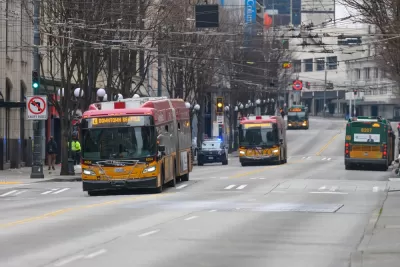
After installing traffic cameras aimed at catching drivers illegally entering transit-only lanes at five intersections, the city of Seattle issued 84,076 warnings and 26,092 tickets for bus lane violations between March and December 2022.
According to an article by Melissa Santos in Axios, “That amounted to about $825,000 in revenue, a small part of which goes toward the cost of running the cameras. Half of the remaining revenue goes to a state fund dedicated to bike and pedestrian improvements.”
Santos adds that “The city also started using cameras last year to catch people illegally blocking crosswalks and intersections, sometimes called ‘blocking the box.’” These cameras only issued 58 citations over roughly eight months.
The state legislature will decide in January 2025 whether to allow the city to continue using automated enforcement, which supporters say can improve road safety and help reduce violent interactions between citizens and law enforcement.
Read the full story: Cameras caught drivers illegally using bus lanes 110,000 times

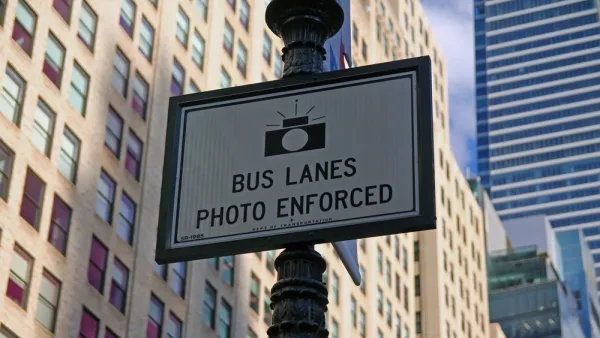
New York To Crack Down on Bus Lane Blocking Violations
The city hopes to improve the speed of its notoriously slow buses by using traffic cameras to ticket drivers who drive or park in dedicated bus lanes.
Traffic Camera Revenues to Fund Capacity-Building Programs in Washington State
Revenue from Washington's traffic enforcement cameras will go in part toward efforts to assist small communities in applying for grants and accessing funding opportunities.
Editorial Calls for Automated Enforcement for Bus Lanes
The Seattle Times Editorial Board argues that automated enforcement would remove scofflaws from blocking bus commuters.

Planetizen Federal Action Tracker
A weekly monitor of how Trump’s orders and actions are impacting planners and planning in America.

California plans to bury El Niño’s downpour
If the state plays its cards right, it may be able to store a billion acre-feet of El Niño’s water in aquifers.

Chicago breaks ground on $3 billion megadevelopment
The new neighborhood, titled Foundry Park, will one day host 3,700 residences.

Satanic Place Names
From streams and lakes to valleys and canyons, I mapped more than 1,000 places named after the Devil.

California High-Speed Rail Authority CEO resigns after $600,000 scandal
Under Ian Choudri, the authority used taxpayer dollars to fund first class flights and trips to nightclubs.

Want to study the Missouri River? Soon, you may need unanimous approval from 10 states
Legislation would require 10 governors’ permission to study or build projects moving water outside the basin.

FREE Course: Walkable City 1: Why Walkability?
After describing his path towards focusing on walkability as the essence of good planning, Jeff Speck marches through his five principal reasons for making more walkable places.
Reinventing Malls: Planning Alchemy—Turning Gray Fields Into Gold
The course focuses on the opportunities and imperatives that shape reinvention of mall sites.

City of Rosemead
Rutgers University, Edward J. Bloustein School of Planning and Public Policy
One Hundred Miles
Hunter College, City University of New York (CUNY)
The Architects Foundation
University of Cincinnati Online
City of Cambridge
Montrose County
The Pocatello Development Authority