But using armed police to enforce fare payment is less than ideal in the eyes of the top court in the state of Washington.


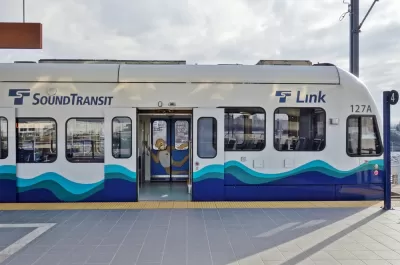
Transit fare enforcement is still legal in Washington, according to a recent ruling by the Washington State Supreme Court, but transit agencies have been advised to rethink their use of armed police officers on public transit.
Donna Gordon Blakenship reports on the ruling for Crosscut, noting the mixed-bag for transit agencies. On the one hand, the ruling “does not prohibit transit agencies from using armed officers for fare enforcement,” but on the other hand, “it does explain at length why plaintiff Zachery Kyle Meredith should not have been handcuffed and arrested for not paying to ride a bus in Snohomish County in 2018.”
“‘Many transit systems have already discontinued similar practices due to their known, racially disproportionate impact,’ Justice Mary Yu wrote in the beginning of the lead ruling,” according to the article. Still, according to the ruling, transit agencies have the authority to ensure fare payment.
FULL STORY: WA Supreme Court upholds the legality of transit fare enforcement

'Freedom to Move Act' Would Provide Federal Support for Free Transit Programs
New legislation by Rep. Ayanna Pressley (D-Mass.) would also target fare enforcement on the nation's transit systems.
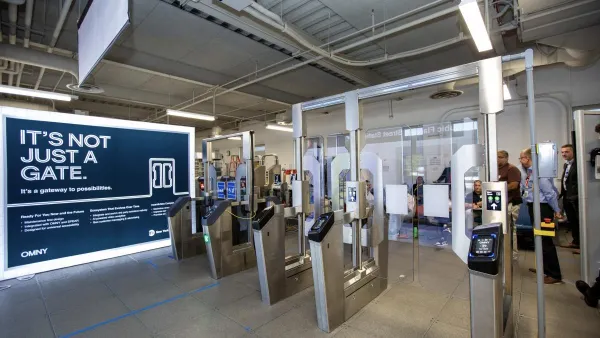
New York MTA Installs ‘Smart’ Fare Gates to Stop Turnstile Hoppers
New fare gates use sensors and higher panels to prevent people from passing without paying, but the tech had a “bumpy rollout” on its first day.
Commentary: By Quietly Ignoring Fare Evasion, LA Metro Inadvertently Became the Nation’s Largest Free Transit Experiment
Since the agency switched to in-house security, fare enforcement citations have plummeted.

Planetizen Federal Action Tracker
A weekly monitor of how Trump’s orders and actions are impacting planners and planning in America.

The state-sanctioned urbicide of Austin
People don’t kill cities. Freeways do.

US to reduce Colorado River water deliveries to Mexico
A new Colorado Treaty amendment reduces Mexico’s Colorado River water allocation by 250,000 acre feet.

Colorado’s Largest Data Center Could Rise Next to Homes — Without a Public Hearing
The proposed campus would consume 11 times the power of Denver International Airport; as it has across the country, opposition mounts.

5 New England states march closer to 800 megawatt wind energy project
Securing federal approval for the project may be complicated under the Trump administration, which has historically been hostile towards domestic wind power.

Baltimore to break ground on $50 million Transit Priority Project
The project will bring faster bus trips, safer streets and better bike connections to Baltimore.

FREE Course: Walkable City 1: Why Walkability?
After describing his path towards focusing on walkability as the essence of good planning, Jeff Speck marches through his five principal reasons for making more walkable places.
Reinventing Malls: Planning Alchemy—Turning Gray Fields Into Gold
The course focuses on the opportunities and imperatives that shape reinvention of mall sites.

Eagle County Government
Harvard University Graduate School of Design
Nashville Planning Department
The Architects Foundation
University of Cincinnati Online
The Pocatello Development Authority
The Urban Renewal Agency of the City of Pocatello
Journal of the American Planning Association