While some cities are reverting back to pre-pandemic street configurations, others are taking advantage of the momentum for bike and pedestrian infrastructure to make pandemic-era projects permanent.


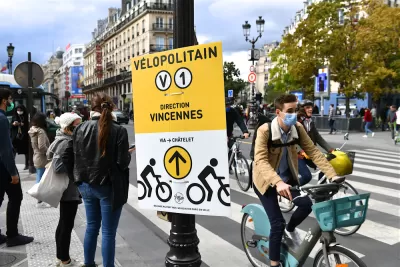
Writing in Momentum Magazine, Ron Johnson highlights three cities where pandemic-era bike infrastructure projects have become permanent.
In Toronto, Yonge Street, a busy north-south corridor, received separated bike lanes. “After 18 months of installation, the data demonstrates increases (ranging between 57 percent and 250 percent) in cycling trips and increases in pedestrian trips (ranging between 59 percent and 145 percent) on the corridor, as well as support for local business including an increase from 10 CaféTO patios in 2020 to 21 patios on the corridor in 2022.” City staff is recommending making the lanes permanent and did so for two other pandemic bike projects in the city.
In San Francisco, thanks to consistent lobbying from bike activists, Golden Gate Park’s John F. Kennedy Drive has had intermittent closures for decades. San Francisco Bicycle Coalition executive director Janelle Wong says “the emergency order shutting it down, I think for the first time allowed people to see what seven days a week, 24 hours a day of closing that street looks like and what it feels like,” making it easier to gain support for permanently implementing the change.
Across the Atlantic, Paris has been pouring massive effort into building bike infrastructure and creating more multimodal and car-free streets. The transformation of the city’s famous Rue de Rivoli into a bike and pedestrian road during the pandemic signaled a turning point for the French capital. “In 2021, one lane of traffic for transit, emergency vehicles and the like was added back and the new configuration is now permanent.”
FULL STORY: Three cities making pandemic-inspired bike expansion permanent


Paris Voters Approve More Car-Free Streets
Paris Mayor Anne Hidalgo says the city will develop a plan to close 500 streets to car traffic and add new bike and pedestrian infrastructure after a referendum on the proposal passed with 66 percent of the vote.

Battle Over San Francisco's Pedestrianized 'Great Highway'
Although the project has been hugely successful with local residents, the mayor and some county supervisors wanted to revert the road to vehicle use.
Study: Induced Demand Works for Bikes and Transit, too
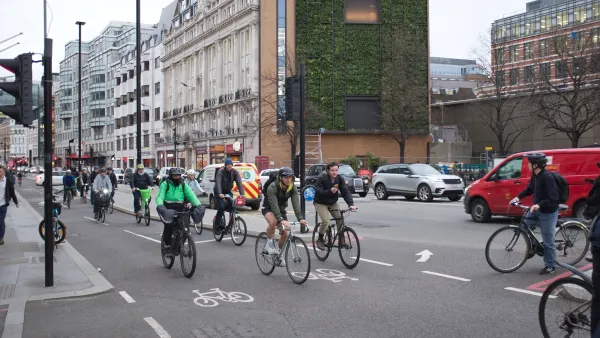
If you build it — bike infrastructure, bus lanes, and sidewalks, that is — they will come.

Planetizen Federal Action Tracker
A weekly monitor of how Trump’s orders and actions are impacting planners and planning in America.

The state-sanctioned urbicide of Austin
People don’t kill cities. Freeways do.

US to reduce Colorado River water deliveries to Mexico
A new Colorado Treaty amendment reduces Mexico’s Colorado River water allocation by 250,000 acre feet.

5 New England states march closer to 800 megawatt wind energy project
Securing federal approval for the project may be complicated under the Trump administration, which has historically been hostile towards domestic wind power.

Baltimore to break ground on $50 million Transit Priority Project
The project will bring faster bus trips, safer streets and better bike connections to Baltimore.

Airbnb launches $250 million 'last-dollar financing' housing accelerator, makes first investment in Austin
The company will put $6.4 million towards affordable housing development in Texas’ capital.

FREE Course: Walkable City 1: Why Walkability?
After describing his path towards focusing on walkability as the essence of good planning, Jeff Speck marches through his five principal reasons for making more walkable places.
Reinventing Malls: Planning Alchemy—Turning Gray Fields Into Gold
The course focuses on the opportunities and imperatives that shape reinvention of mall sites.

Eagle County Government
Harvard University Graduate School of Design
Nashville Planning Department
The Architects Foundation
University of Cincinnati Online
The Pocatello Development Authority
The Urban Renewal Agency of the City of Pocatello
Journal of the American Planning Association