Texas Transportation Commissioners must have a hangover—backing off its highway building ambitions just a few months after approving the $85 billion Unified Transportation Plan in August 2022.


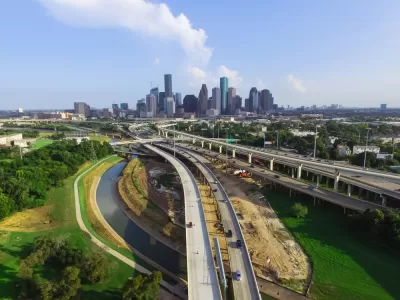
Just a few months after approving $85 billion in road building projects as part of a ten-year Unified Transportation Plan approved in August, Texas Transportation Commission officials warned the public that some of the state’s massive highway building plans might have to wait.
“Rising labor and material costs prompted a warning from the Texas Transportation Commission Tuesday that some highway projects could have to wait,” reports Dug Begley in a paywalled article for the Houston Chronicle. Inflation is already pushing the cost of some of the projects in the Unified Transportation Plan by more than 30 percent, according to commissioners and data cited in the article.
“For November the state's highway cost index — which tracks the average cost of materials and labor based on recent bids on construction work — was 31.3 percent higher than it was a year ago and 37.5 percent above November 2019,” writes Begley.
Transportation Commissioner Alvin New is quoted in the article suggesting that there might be a point where the state finally has to say “no” to road building projects. Despite the sudden sobriety on the Texas Transportation Commission, the state did recently decided to move forward with the controversial North Houston Highway Improvement Project to widen Interstate 45 in Houston.
The source article below digs into more detail about the potential risks of building too much, too fast as a response to inflation, and what the state stands to lose if inflation takes a chunk out of the plan.
FULL STORY: TxDOT officials, citing rising costs, predict they will need to say 'no' to some highway projects

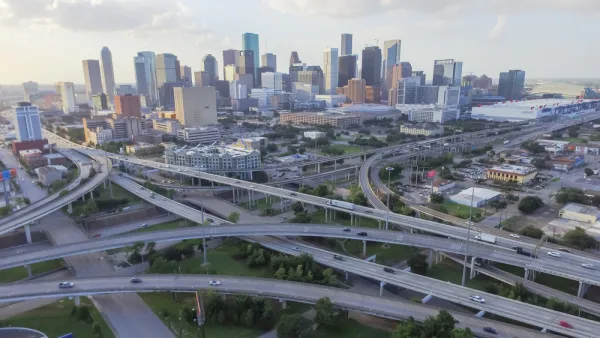
TxDOT Approves I-45 Widening Despite Local Opposition
Despite every manner of local opposition, the Texas Department of Transportation is pushing forward with a plan to widen Interstate 45 north of the city of Houston, demolishing and displacing thousands of homes, businesses, and community facilities.
A Freeway Rebellion Rises in the Unlikeliest of States: Texas
“There’s no train, there’s no bus, there’s no anything that supports mass transportation. It doesn’t exist.” -Houston resident Fabian Ramirez.
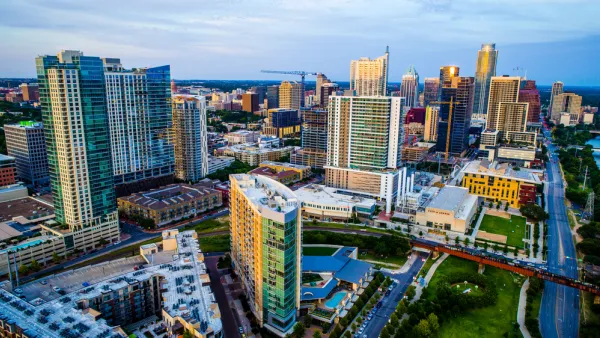
Austin City Council Urges TxDOT to Reconsider I-35 Expansion
In a letter to the department, the city called for an increased focus on shifting demand away from single-occupancy vehicles and boosting other forms of transportation.

Planetizen Federal Action Tracker
A weekly monitor of how Trump’s orders and actions are impacting planners and planning in America.

The state-sanctioned urbicide of Austin
People don’t kill cities. Freeways do.

US to reduce Colorado River water deliveries to Mexico
A new Colorado Treaty amendment reduces Mexico’s Colorado River water allocation by 250,000 acre feet.

5 New England states march closer to 800 megawatt wind energy project
Securing federal approval for the project may be complicated under the Trump administration, which has historically been hostile towards domestic wind power.

Baltimore to break ground on $50 million Transit Priority Project
The project will bring faster bus trips, safer streets and better bike connections to Baltimore.

Airbnb launches $250 million 'last-dollar financing' housing accelerator, makes first investment in Austin
The company will put $6.4 million towards affordable housing development in Texas’ capital.

FREE Course: Walkable City 1: Why Walkability?
After describing his path towards focusing on walkability as the essence of good planning, Jeff Speck marches through his five principal reasons for making more walkable places.
Reinventing Malls: Planning Alchemy—Turning Gray Fields Into Gold
The course focuses on the opportunities and imperatives that shape reinvention of mall sites.

Eagle County Government
Harvard University Graduate School of Design
Nashville Planning Department
The Architects Foundation
University of Cincinnati Online
The Pocatello Development Authority
The Urban Renewal Agency of the City of Pocatello
Journal of the American Planning Association