The beleaguered project is not bringing in the expected toll revenue, leaving the Washington Transportation Commission on the hook for construction costs.


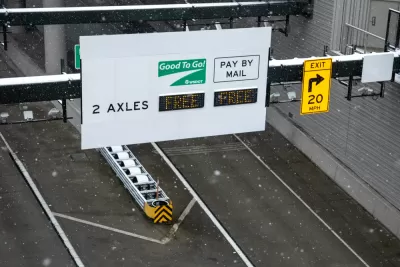
The Washington Transportation Commission plans to ask the state for funds to make up the growing revenue gap of the SR 99 tunnel in Seattle, reports Ryan Packer in The Urbanist.
Tolls on the deep bore tunnel underneath downtown Seattle were originally set to contribute $200 million toward the cost of the $1.35 billion construction cost plus cover upkeep, but earlier this year the state treasurer’s office came before the commission and warned of a ‘permanent reduction in revenues’ following the onset of the Covid-19 pandemic that likely could not be made up for in toll rate increases, which increase traffic diversion to toll-free surface streets.
Traffic in the tunnel is expected to drop next year with the opening of a four-lane overpass near Pike Place Market, Packer notes. “Even with the autumn surge, toll revenue trajectory is well below the level required to make the tunnel’s financial plan sustainable.”
Meanwhile, efforts to put the city on the hook for cost overruns have failed in the state legislature. Commenting on the tunnel’s long history of being passed around by various authorities, Packer concludes, “Just a few years after the tunnel’s grand opening, it looks like it has become a White Elephant that no one wants to keep in their stocking.”
FULL STORY: Transportation Commission Seeks SR 99 Tunnel Bailout from State Legislature


Planetizen Federal Action Tracker
A weekly monitor of how Trump’s orders and actions are impacting planners and planning in America.

The state-sanctioned urbicide of Austin
People don’t kill cities. Freeways do.

US to reduce Colorado River water deliveries to Mexico
A new Colorado Treaty amendment reduces Mexico’s Colorado River water allocation by 250,000 acre feet.

5 New England states march closer to 800 megawatt wind energy project
Securing federal approval for the project may be complicated under the Trump administration, which has historically been hostile towards domestic wind power.

Baltimore to break ground on $50 million Transit Priority Project
The project will bring faster bus trips, safer streets and better bike connections to Baltimore.

Airbnb launches $250 million 'last-dollar financing' housing accelerator, makes first investment in Austin
The company will put $6.4 million towards affordable housing development in Texas’ capital.

FREE Course: Walkable City 1: Why Walkability?
After describing his path towards focusing on walkability as the essence of good planning, Jeff Speck marches through his five principal reasons for making more walkable places.
Reinventing Malls: Planning Alchemy—Turning Gray Fields Into Gold
The course focuses on the opportunities and imperatives that shape reinvention of mall sites.

Eagle County Government
Harvard University Graduate School of Design
Nashville Planning Department
The Architects Foundation
University of Cincinnati Online
The Pocatello Development Authority
The Urban Renewal Agency of the City of Pocatello
Journal of the American Planning Association