A long simmering debate over how to deal with a damaged inner city freeway has seemingly found a conclusion as voters in Seattle have approved a plan to begin work on replacing the freeway with a tunnel.


More than 60% of voters are in favor of replacing the Alaskan Way Viaduct with a tunnel beneath the city -- a plan opposed by many, including the current mayor.
"Councilmember Mike O'Brien, a tunnel foe, called it a "decisive" result, and said "the people of Seattle are ready to move forward." He called on tunnel opponents to take the loss graciously and work to make the tunnel the best possible project for the city.
But not all opponents were satisfied. Anti-tunnel activist Elizabeth Campbell issued a statement calling the Referendum 1 vote "far from a decisive victory" and vowed to continue her efforts.
The $2 billion tunnel is the most controversial part of the $3.1 billion state project to replace Seattle's creaky double-decker waterfront highway that was damaged in the 2001 Nisqually earthquake."
Read the full story: Voters backing Seattle tunnel; fight may finally be over
Controversy Still Surrounds Seattle Tunnel Project
What future lies ahead for the damaged Alaskan Way Viaduct in Seattle continues to stir controversy in the city. An upcoming ballot measure will ask voters to again weigh the project's feasibility.
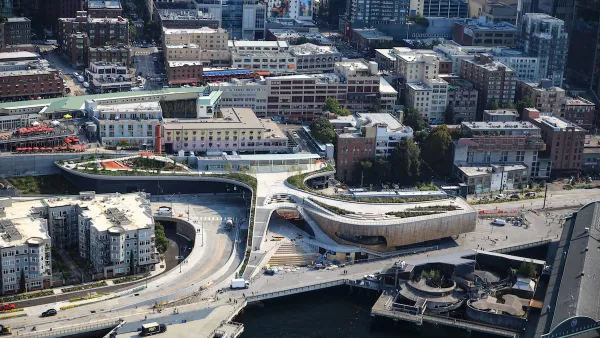
Seattle’s New Overlook Walk Offers Ample Park Space Near Pike Place Market
The elevated park and event space replaces part of the demolished Alaskan Way Viaduct, connecting the city’s famous Pike Place Market to the waterfront.
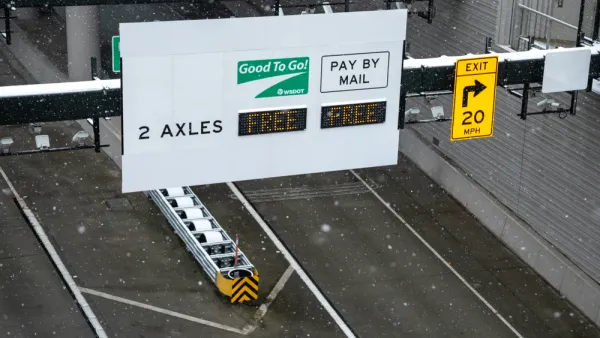
Seattle’s SR 99 Tunnel Seeking State Bailout
The beleaguered project is not bringing in the expected toll revenue, leaving the Washington Transportation Commission on the hook for construction costs.

Planetizen Federal Action Tracker
A weekly monitor of how Trump’s orders and actions are impacting planners and planning in America.

Eastern Nebraska is running out of electricity
Data centers and electrification are straining eastern Nebraska’s grid, throttling economic development.

Washington state to charge fee to drivers with fuel-efficient cars
Revenue from the fee will go towards supporting the state’s highways.

Instead of building new housing, LA developers are turning mansions into mega-mansions
In the richest areas, the number of houses valued at $30 million with demolition permits has skyrocketed since 2018.

Illinois considers spending $1 billion in taxpayer money on data center
A quantum computing campus and data center are currently under construction in Chicago.

As development costs rise, Boston moves to lessen affordable housing requirements
The Boston Zoning Commission and the City Council still need to approve Boston Mayor Michelle Wu’s proposed changes

FREE Course: Walkable City 1: Why Walkability?
After describing his path towards focusing on walkability as the essence of good planning, Jeff Speck marches through his five principal reasons for making more walkable places.
Reinventing Malls: Planning Alchemy—Turning Gray Fields Into Gold
The course focuses on the opportunities and imperatives that shape reinvention of mall sites.

City of Charlotte
City of Rosemead
Rutgers University, Edward J. Bloustein School of Planning and Public Policy
University of Michigan School for Environment and Sustainability (SEAS)
Hunter College, City University of New York (CUNY)
The Architects Foundation
University District Partnership
City of Cambridge
The Pocatello Development Authority