What future lies ahead for the damaged Alaskan Way Viaduct in Seattle continues to stir controversy in the city. An upcoming ballot measure will ask voters to again weigh the project's feasibility.


The big question is whether the project should be replaced by a planned tunnel through downtown, which the mayor had originally opposed, then went agnostic and is now opposing again.
"Even as residents say they disapprove of Mr. McGinn, most seem to like his idea of holding a vote on whether the City Council was right to have approved the tunnel contracts. (The Council vote was eight to one, the one also being a former Sierra Club leader.)
The matter is scheduled to go on the ballot in August, except that the city attorney, the City Council, the governor and pretty much every other member of the exasperated political establishment say it has no business being on a ballot. They have gone to court to try to stop it from getting there. The decision on the tunnel, they say, has been made.
'Social engineering works in some places, like banning cigarettes in some places,' said Gov. Christine Gregoire, a Democrat. 'Telling people you no longer can ride in your car isn't going to work because this city is going to grow.'"
Read the full story: Seattle Ponders (Some More) the Wisdom of Replacing a Roadway
Tunnel Wins Vote in Seattle
A long simmering debate over how to deal with a damaged inner city freeway has seemingly found a conclusion as voters in Seattle have approved a plan to begin work on replacing the freeway with a tunnel.
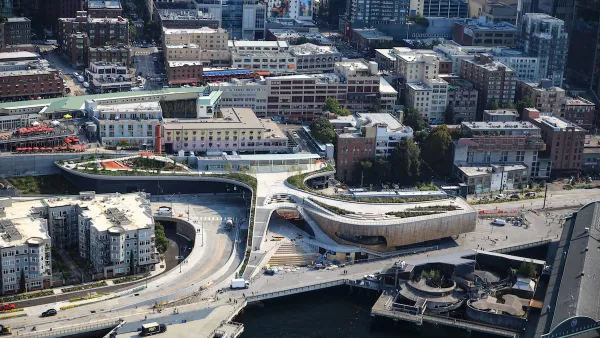
Seattle’s New Overlook Walk Offers Ample Park Space Near Pike Place Market
The elevated park and event space replaces part of the demolished Alaskan Way Viaduct, connecting the city’s famous Pike Place Market to the waterfront.
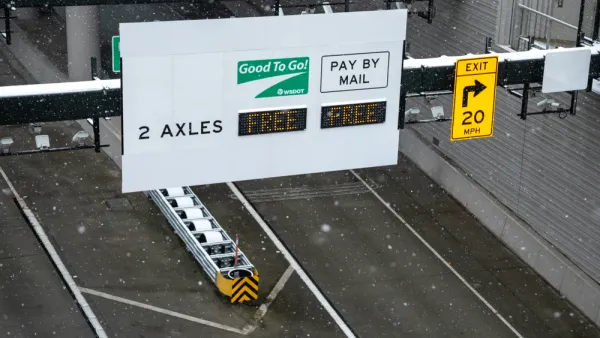
Seattle’s SR 99 Tunnel Seeking State Bailout
The beleaguered project is not bringing in the expected toll revenue, leaving the Washington Transportation Commission on the hook for construction costs.

Planetizen Federal Action Tracker
A weekly monitor of how Trump’s orders and actions are impacting planners and planning in America.

Eastern Nebraska is running out of electricity
Data centers and electrification are straining eastern Nebraska’s grid, throttling economic development.

Washington state to charge fee to drivers with fuel-efficient cars
Revenue from the fee will go towards supporting the state’s highways.

Instead of building new housing, LA developers are turning mansions into mega-mansions
In the richest areas, the number of houses valued at $30 million with demolition permits has skyrocketed since 2018.

Illinois considers spending $1 billion in taxpayer money on data center
A quantum computing campus and data center are currently under construction in Chicago.

As development costs rise, Boston moves to lessen affordable housing requirements
The Boston Zoning Commission and the City Council still need to approve Boston Mayor Michelle Wu’s proposed changes

FREE Course: Walkable City 1: Why Walkability?
After describing his path towards focusing on walkability as the essence of good planning, Jeff Speck marches through his five principal reasons for making more walkable places.
Reinventing Malls: Planning Alchemy—Turning Gray Fields Into Gold
The course focuses on the opportunities and imperatives that shape reinvention of mall sites.

City of Charlotte
City of Rosemead
Rutgers University, Edward J. Bloustein School of Planning and Public Policy
University of Michigan School for Environment and Sustainability (SEAS)
Hunter College, City University of New York (CUNY)
The Architects Foundation
University District Partnership
City of Cambridge
The Pocatello Development Authority