As heat waves intensify, bus riders in Los Angeles are forced to wait at bus stops that offer little shade or seating, putting vulnerable residents at risk of heat stroke and other health impacts.


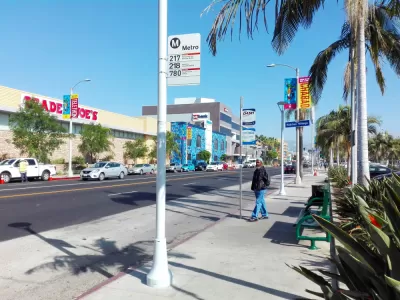
According to an article by Rachel Uranga in the Los Angeles Times, “Of the 12,200 bus stops served by the Los Angeles County Metropolitan Transportation Authority, only a quarter have some kind of shade or rain shelter, and only half have a seat for those waiting.”
As heat waves become increasingly deadly, Uranga asks, when will L.A. bus riders finally have adequate facilities to protect them while they wait for the city’s (often late) buses?
“While the average trip on a Metro bus is less than five miles, about half the time of that journey is spent looking down the road for signs of a bus.” As Uranga points out, “The searing weather is yet another setback for largely low-income bus riders who often face long, difficult commutes.” The city is working on a contract to add more shelters to bus stops in its jurisdiction, but the project could take years.
While Los Angeles may be known for historically mild weather, those days are essentially over. Juan Matute, deputy director of the UCLA Institute of Transportation Studies, says “Climate change is changing the baseline of all these past decisions.” To protect vulnerable residents, “Transit advocates say the agencies need to look to desert cities like Phoenix, where bus stop canopies equipped with misters and fans to cool riders have been installed.”
FULL STORY: Heat waves are getting worse. When will L.A. get around to offering bus riders more shade?

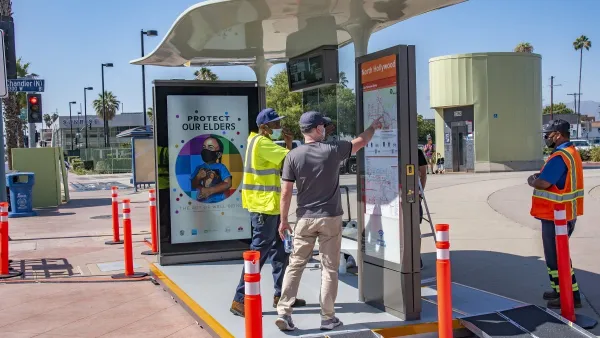
LA Begins Adding New Bus Shelters
The program, years in the works, pledges to add 3,000 new bus shelters and 450 shade structures to protect riders from extreme heat and weather.
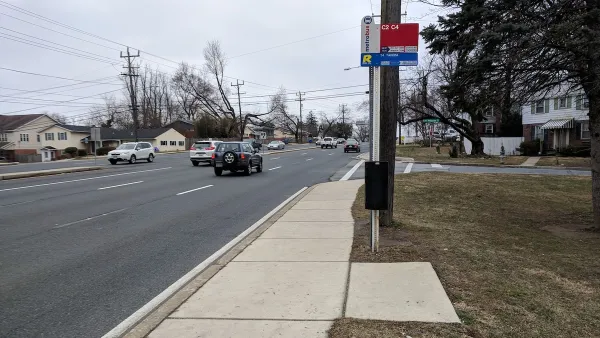
DC’s Hottest Neighborhoods Have the Least Shade
Areas most exposed to extreme heat also tend to lack bus shelters and benches at bus stops.
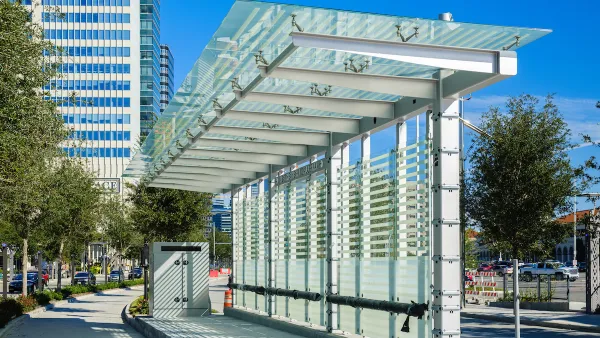
Houston Metro Prototypes Bus Shelter Fans
The agency is working on designs for a bus stop shelter with built-in solar-powered fans to keep waiting riders cool.

Planetizen Federal Action Tracker
A weekly monitor of how Trump’s orders and actions are impacting planners and planning in America.

The state-sanctioned urbicide of Austin
People don’t kill cities. Freeways do.

US to reduce Colorado River water deliveries to Mexico
A new Colorado Treaty amendment reduces Mexico’s Colorado River water allocation by 250,000 acre feet.

5 New England states march closer to 800 megawatt wind energy project
Securing federal approval for the project may be complicated under the Trump administration, which has historically been hostile towards domestic wind power.

Baltimore to break ground on $50 million Transit Priority Project
The project will bring faster bus trips, safer streets and better bike connections to Baltimore.

Airbnb launches $250 million 'last-dollar financing' housing accelerator, makes first investment in Austin
The company will put $6.4 million towards affordable housing development in Texas’ capital.

FREE Course: Walkable City 1: Why Walkability?
After describing his path towards focusing on walkability as the essence of good planning, Jeff Speck marches through his five principal reasons for making more walkable places.
Reinventing Malls: Planning Alchemy—Turning Gray Fields Into Gold
The course focuses on the opportunities and imperatives that shape reinvention of mall sites.

Eagle County Government
Harvard University Graduate School of Design
Nashville Planning Department
The Architects Foundation
University of Cincinnati Online
The Pocatello Development Authority
The Urban Renewal Agency of the City of Pocatello
Journal of the American Planning Association