The California Air Resources Board voted unanimously on August 25 to begin a phased ban on the sale of passenger vehicles powered by gasoline or diesel beginning in 2026 when over a third of new vehicles sold in California must be zero-emissions.


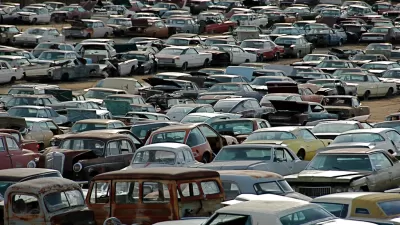
“The new policy, detailed Wednesday morning in a news conference, is widely expected to accelerate the global transition toward electric vehicles,” reported Coral Davenport, Lisa Friedman and Brad Plumer for The New York Times on August 24.
“The rule establishes a year-by-year roadmap so that by 2035, 100% of new cars and light trucks sold in California will be zero-emission vehicles, including plug-in hybrid electric vehicles,” states the August 25 press release by the California Air Resources Board (CARB), regulators charged with improving the state's worst-in-the-nation air quality and adopting regulations to meet the state's rigorous greenhouse gas reduction standards.
The regulation realizes and codifies the light-duty vehicle goals set out in Governor Newsom’s Executive Order N-79-20.
[Related post: Gone by 2035: Gas-Powered Car Sales Have an Expiration Date in California, September 24, 2020]
What Happens in California Doesn't Stay There
“Not only is California the largest auto market in the United States, but more than a dozen other states typically follow California’s lead when setting their own auto emissions standards,” add Davenport, Friedman and Plumer.
Known as Section 177 states for that section of the U.S. Clean Air Act that deals with tailpipe emissions, all but two of the fifteen states can adopt California's Zero-Emission Vehicle Program. [See related tag.]
If those states follow through, and most are expected to adopt similar rules, the restrictions would apply to about a third of the United States auto market.
“This is huge,” said Margo Oge, an electric vehicles expert who headed the Environmental Protection Agency’s transportation emissions program under Presidents Bill Clinton, George W. Bush and Barack Obama. As additional states put in place their own versions of these policies, “they will drive the market, and drive innovation,” she said.
Power Grid Challenge Ahead
Appearing on CNN on Saturday morning, anchor Amara Walker asked Oge:
“I'm sure you are hearing...from experts who say California's infrastructure is not prepared to handle an influx of electric cars, especially with an electric grid already strained by record heat. What about significant investments of the grid infrastructure, because you're going to have now millions of battery electric or even fuel cell electric vehicles on the roads?”
Oge acknowledged the existing strain which has caused Gov. Newsom to consider extending the life of the state's sole remaining nuclear powered plant that had been slated to close in 2025 and four older natural gas-powered plants.
“What I'm hearing from the experts, it's not as much as how many electric cars will be charged on a daily basis but rather what time of the day those charges will take place,” replied Oge.
"For example, I live in Los Angeles, and Southern California Edison was giving me a great rate if I charged my car at any time of the day except from 4:00 to 9:00. So for me it's like the equivalent of spending $2 for gasoline..."
[Average price of gasoline in California on Aug. 28: $5.28 per gallon.]
What About Enforcement?
What if auto consumers don't cooperate? Friedman and Plumer of the Times wrote on Aug. 26 that the plan sets "strict limits on what automakers can and can’t sell. Failure to meet those targets carries the threat of stiff penalties."
Targets, per CARB: "The new regulation accelerates requirements that automakers deliver an increasing number of zero-emission light-duty vehicles each year beginning in model year 2026. Sales of new ZEVs and PHEVs will start with 35% that year, build to 68% in 2030, and reach 100% in 2035."
"If automakers fail to comply, they will face a $20,000 fine for each new vehicle sold in violation of the targets," add Friedman and Plumer.
Since that amount far exceeds the profit margin of the typical passenger vehicle, it is unlikely that companies would choose to pay the penalty, experts said.
“California is good at enforcing its rules,” said Dan Becker, director of the Safe Climate Transport Campaign at the Center for Biological Diversity. “Companies at their peril violate those rules.”
Related:
Read the full story: California to Ban the Sale of New Gasoline Cars

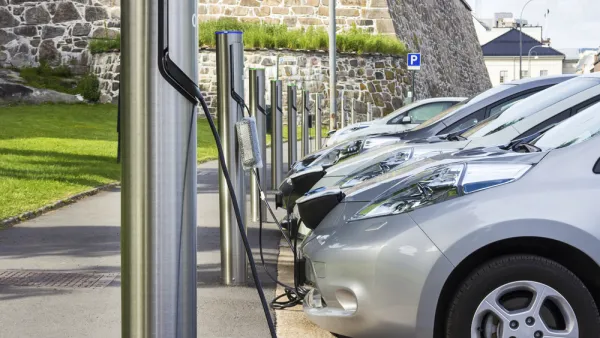
Will California's EV Rule Spread to Other States?
Last month California banned the sale of new light duty vehicles powered by internal combustion engines by 2035. Over a dozen other states have the ability to adopt the same rule, but will they? The Associated Press investigates nine of them.
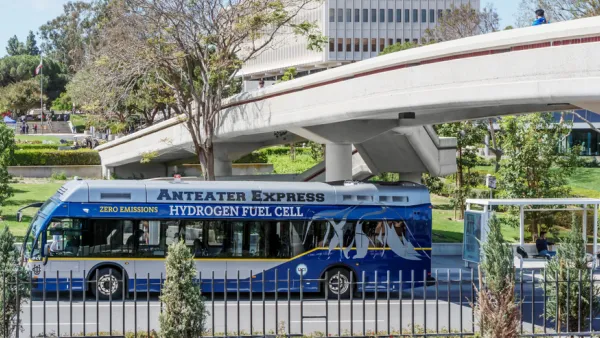
Can Hydrogen Make a Comeback?
While hydrogen fuel cell electric vehicles are much less popular than their battery-powered siblings, California remains committed to the zero-emission technology, with three state agencies investing in and monitoring its progress.
California’s Energy Emergency: Fodder for Democrats and Republicans
What are the lessons to be learned from California's 10-day power grid emergency this month? Democrats and Republicans in Congress have their own takeaways, and both may be right.

Planetizen Federal Action Tracker
A weekly monitor of how Trump’s orders and actions are impacting planners and planning in America.

Amtrak, CN end decades-long dispute with eight-year agreement
The new operating agreement establishes an updated framework for the companies to work together, including processes to resolve disputes.

Northwest rail fans eager for Sept. 30 debut of Amtrak’s Airo fleet
Get ready for that new train smell and more seats. But they won’t go faster or run more frequently on the Cascades route in Washington and Oregon.

Atlanta City Council unanimously backs $3.5 billion Beltline light rail project
The resolution was drafted after Atlanta Mayor Andre Dickens pulled support for the Atlanta Streetcar extension last year.

SEPTA to bring nearby frequent transit to over 1 million new riders as part of decade-long plan
The agency's Accelerate plan will also bring frequent transit to twice the amount of jobs that are currently located near it.

NYC plants over 18,000 trees, the most new foliage in a decade
Many of the trees were planted in communities vulnerable to extreme heat.

FREE Course: Walkable City 1: Why Walkability?
After describing his path towards focusing on walkability as the essence of good planning, Jeff Speck marches through his five principal reasons for making more walkable places.
Reinventing Malls: Planning Alchemy—Turning Gray Fields Into Gold
The course focuses on the opportunities and imperatives that shape reinvention of mall sites.

City of Thousand Oaks
City of Wisconsin Rapids
Harvard University Graduate School of Design
The Architects Foundation
University of Cincinnati Online
The Pocatello Development Authority
The Urban Renewal Agency of the City of Pocatello