Without more immediate, long-term reductions in water demand, Lake Mead and Lake Powell, the West’s most important reservoirs, face imminent collapse.


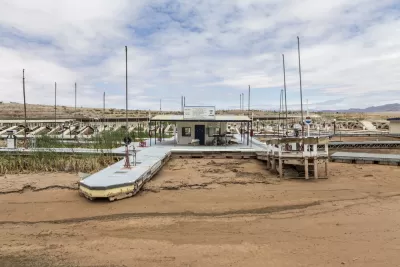
If Western states don’t make more drastic cuts to water use, Lake Powell and Lake Mead could “collapse,” writes Zak Podmore in the Salt Lake Tribune. “That’s according to a new, peer-reviewed paper published in the journal Science this week that analyzed how current agreements between basin users would fare if the 23-year trend of below-average runoff in the basin continues.”
According to the report, it “is clear that the current drought planning measures won’t cut it alone since the federal government had to enact emergency actions last April to send more water than usual into Lake Powell.”
The paper offers some recommendations based on an analysis of several scenarios. “One of many possible solutions the team identified looked at what would happen to the reservoirs if the Upper Basin states of Utah, Colorado, Wyoming and New Mexico agreed to give up water development ambitions, while the Lower Basin states of California, Arizona and Nevada, along with northwest Mexico, agreed to reductions.” If the Upper Basin limits its water use to 4 million acre-feet per year and the Lower Basin agreed to 2 million acre-feet in cuts per year, the water system could be stabilized.
Kevin Wheeler, lead author of the study, noted that if low-runoff years continue, the situation will become more dire, fast. “Last month, Bureau of Reclamation Commissioner Camille Touton announced that the seven basin states had 60 days to present plans to protect reservoir levels by making between 2 and 4 million acre-feet in water cuts by next year. Touton added that the federal government is prepared to make the reductions if the states cannot agree to a plan.”
The situation has led to tension between regions. While Lower Basin states use twice as much water as their northern neighbors, numerous projects proposed in Upper Basin states would increase their water demand. According to Wheeler, “water managers should be planning for a possible continuation of the Millennium Drought, which has reduced Colorado River flows by an average of 20% compared to the previous century’s average.”
Earlier this year, experts warned that the water level in Lake Powell had dropped to within 33 feet of the critical minimum needed to continue producing electricity.

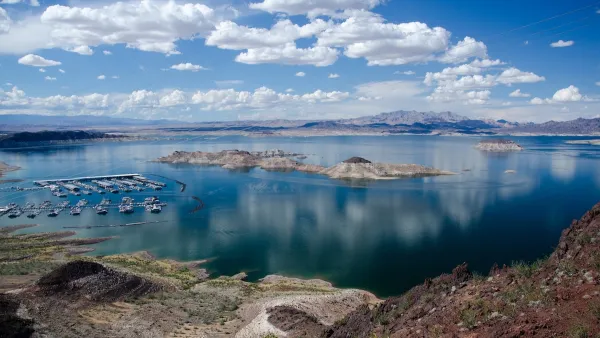
Colorado River States Inch Closer to Agreement
Upper Basin and Lower Basin states each say their plan for conserving the Colorado River’s water is the most sustainable.
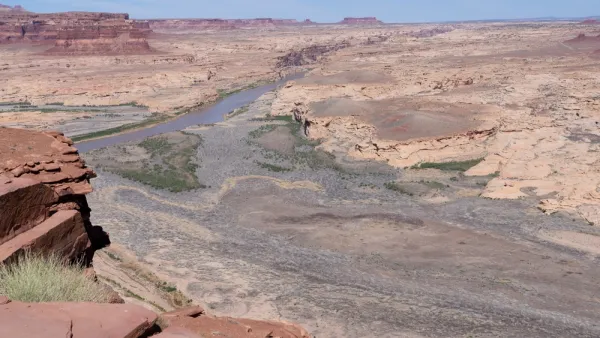
Federal Program Provides Direct Payments for Colorado River Water Conservation
A water buyback program will pay farmers who reduce their water use in an effort to sustain the West’s reservoirs, which are at historically low levels.
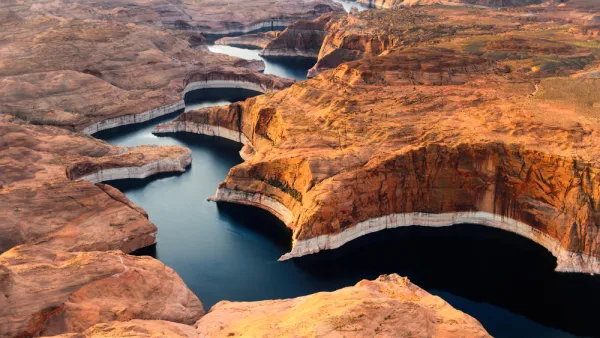
States Agree to Drastic Water Cuts From Colorado River
In the throes of a historic megadrought, three Southwestern states will make deep reductions in their water usage to preserve diminishing resources.

The state-sanctioned urbicide of Austin
People don’t kill cities. Freeways do.

US to reduce Colorado River water deliveries to Mexico
A new Colorado Treaty amendment reduces Mexico’s Colorado River water allocation by 250,000 acre feet.

New Jersey’s second-largest city bans standalone data centers
Jersey City will continue to allow co-location facilities, such as those meant for research institutions that store their own data.

Amtrak not solely to blame for New Jersey commuter rail's unreliability, report finds
A new study from the Garden State Initiative found that NJ Transit’s budget grew 20% across a 4 year period, but reliability declined significantly over the same period.

EPA erases limits on planet-warming pollution from power plants
Under Monday’s plan, power plants would still have some limits on how much mercury, arsenic and other contaminants they can emit.

Phoenix announces new on-demand transit service, more frequent RAPID buses
Both new services will launch in October, and are part of Phoenix's Project Effective Access Solutions for Easing Congestion.

FREE Course: Walkable City 1: Why Walkability?
After describing his path towards focusing on walkability as the essence of good planning, Jeff Speck marches through his five principal reasons for making more walkable places.
Reinventing Malls: Planning Alchemy—Turning Gray Fields Into Gold
The course focuses on the opportunities and imperatives that shape reinvention of mall sites.

Eagle County Government
Harvard University Graduate School of Design
Nashville Planning Department
The Architects Foundation
University of Cincinnati Online
The Pocatello Development Authority
The Urban Renewal Agency of the City of Pocatello
Journal of the American Planning Association