Upper Basin and Lower Basin states each say their plan for conserving the Colorado River’s water is the most sustainable.


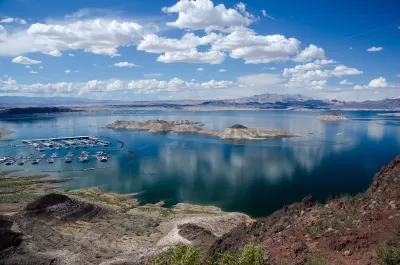
The two groups of states that rely on water from the Colorado River still can’t quite agree on how to make cuts in water usage to conserve the river’s resources. According to The Land Desk’s Jonathan P. Thompson, “If the river users don’t make some major cuts and soon, the reservoirs will dry up and leave the Southwest’s cities, towns, and farms to fight over the diminishing scraps.”
Thompson adds that the discussion is complicated by a lack of clarity in the 1922 Colorado River Compact. “Until those definitions are agreed upon, we won’t really know whether the Lower Basin is using the amount of water allocated to it in the Compact (8.5 million acre-feet), or significantly more than that (10.1 million acre-feet).”
The two regions have each developed plans that agree on some key items, but disagree on how to restrict water supplies when reservoirs reach critically low levels. “Both basins’ alternatives mention and acknowledge that many tribal nations’ water rights remain unfulfilled, and yet say little about how the situation might be rectified.”
FULL STORY: As the Colorado River shrinks, states continue to tussle over cuts

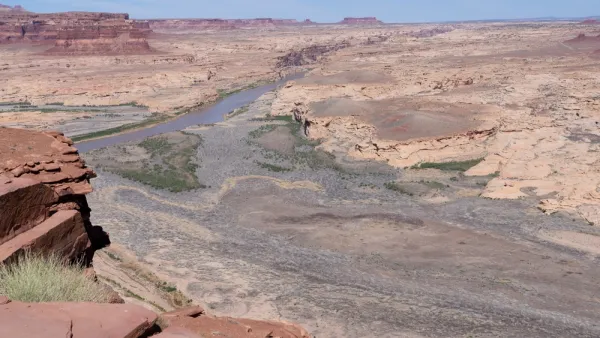
Federal Program Provides Direct Payments for Colorado River Water Conservation
A water buyback program will pay farmers who reduce their water use in an effort to sustain the West’s reservoirs, which are at historically low levels.
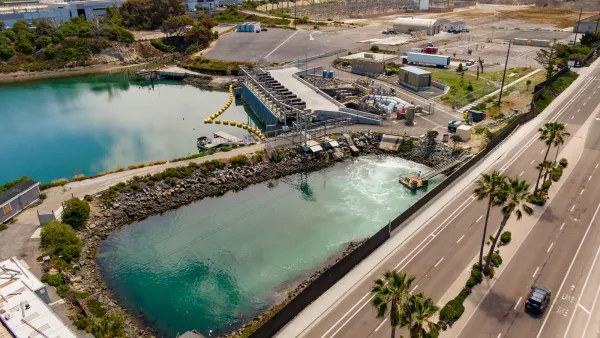
New agreement would let Arizona, Nevada use water from California desalination plant
The plan will help reduce strain on Lake Mead during extreme drought periods.
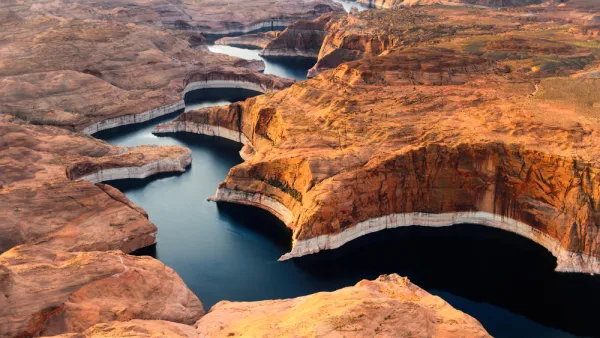
California Rejects Six-State Colorado River Plan, Proposes Its Own
State officials claim a proposal agreed upon by the other six states using Colorado River water disproportionately impacts California farmers.

The state-sanctioned urbicide of Austin
People don’t kill cities. Freeways do.

US to reduce Colorado River water deliveries to Mexico
A new Colorado Treaty amendment reduces Mexico’s Colorado River water allocation by 250,000 acre feet.

New Jersey’s second-largest city bans standalone data centers
Jersey City will continue to allow co-location facilities, such as those meant for research institutions that store their own data.

Amtrak not solely to blame for New Jersey commuter rail's unreliability, report finds
A new study from the Garden State Initiative found that NJ Transit’s budget grew 20% across a 4 year period, but reliability declined significantly over the same period.

EPA erases limits on planet-warming pollution from power plants
Under Monday’s plan, power plants would still have some limits on how much mercury, arsenic and other contaminants they can emit.

Phoenix announces new on-demand transit service, more frequent RAPID buses
Both new services will launch in October, and are part of Phoenix's Project Effective Access Solutions for Easing Congestion.

FREE Course: Walkable City 1: Why Walkability?
After describing his path towards focusing on walkability as the essence of good planning, Jeff Speck marches through his five principal reasons for making more walkable places.
Reinventing Malls: Planning Alchemy—Turning Gray Fields Into Gold
The course focuses on the opportunities and imperatives that shape reinvention of mall sites.

Eagle County Government
Harvard University Graduate School of Design
Nashville Planning Department
The Architects Foundation
University of Cincinnati Online
The Pocatello Development Authority
The Urban Renewal Agency of the City of Pocatello
Journal of the American Planning Association