The agency’s detailed list of actions highlights the many changes needed to truly implement Complete Streets principles into California road construction and maintenance.


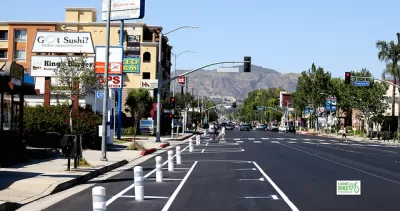
The California Department of Transportation has issued a Complete Streets Action Plan detailing the efforts the agency will undertake to promote more equitable and safe transportation. As Melanie Curry reports for Streetsblog California, “The actions are categorized into general areas such as data collection, policies, and guidance, and includes which division or district is responsible and when the task is to be completed. This action plan focuses on tasks to be done within 2022 and 2023.”
In an introduction to the plan, Caltrans director Tony Tavares writes, “As a Department, we recognize that investments in walking, biking, transit, and passenger rail can produce meaningful and transformative projects that can help to address legacy impacts on underserved communities that have been historically segmented and harmed by our state’s transportation network.”
According to Curry, actions planned for 2022 include “Developing minimum expectations for complete streets facilities,” “Developing an active transportation benefit/cost tool that can be used for project evaluations statewide,” and “Creating a database of active transportation projects on the state highway system that are ready for funding.” Because Caltrans districts across the state are at different stages in developing their Complete Streets plan, the document outlines different actions based on a district’s specific needs.
Curry notes that “some of the tasks are extremely basic first steps towards building capacity at Caltrans to make this policy switch,” pointing out that “The detailed task list also shows just how far the state needs to go before Caltrans can claim that Complete Streets are fully incorporated into its work.”
FULL STORY: Caltrans’ Plan for Making Complete Streets a Priority

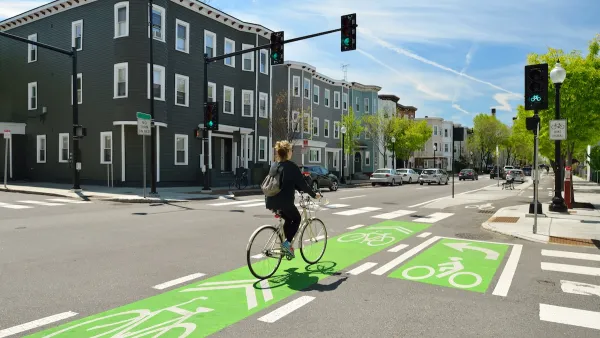
NACTO Releases Updated Urban Bikeway Guide
The third edition of the nationally recognized road design guide includes detailed design advice for roads that prioritize safety and accessibility for all users.
Southeast LA Road Safety Advocates Call for Improved Infrastructure
Streets in southeastern Los Angeles County have a severe lack of protected bike lanes and traffic safety measures, leading to high numbers of fatalities in a community where many residents depend on walking and biking for daily needs.

Jacksonville Takes Action on Vision Zero
The city is implementing its first-ever Vision Zero Action Plan in an effort to reduce pedestrian and cyclist deaths and serious injuries.

The state-sanctioned urbicide of Austin
People don’t kill cities. Freeways do.

US to reduce Colorado River water deliveries to Mexico
A new Colorado Treaty amendment reduces Mexico’s Colorado River water allocation by 250,000 acre feet.

New Jersey’s second-largest city bans standalone data centers
Jersey City will continue to allow co-location facilities, such as those meant for research institutions that store their own data.

Amtrak not solely to blame for New Jersey commuter rail's unreliability, report finds
A new study from the Garden State Initiative found that NJ Transit’s budget grew 20% across a 4 year period, but reliability declined significantly over the same period.

EPA erases limits on planet-warming pollution from power plants
Under Monday’s plan, power plants would still have some limits on how much mercury, arsenic and other contaminants they can emit.

Phoenix announces new on-demand transit service, more frequent RAPID buses
Both new services will launch in October, and are part of Phoenix's Project Effective Access Solutions for Easing Congestion.

FREE Course: Walkable City 1: Why Walkability?
After describing his path towards focusing on walkability as the essence of good planning, Jeff Speck marches through his five principal reasons for making more walkable places.
Reinventing Malls: Planning Alchemy—Turning Gray Fields Into Gold
The course focuses on the opportunities and imperatives that shape reinvention of mall sites.

Eagle County Government
Harvard University Graduate School of Design
Nashville Planning Department
The Architects Foundation
University of Cincinnati Online
The Pocatello Development Authority
The Urban Renewal Agency of the City of Pocatello
Journal of the American Planning Association