An analysis of asphalt art around the country indicates that painted intersections and roads can dramatically improve pedestrian safety.


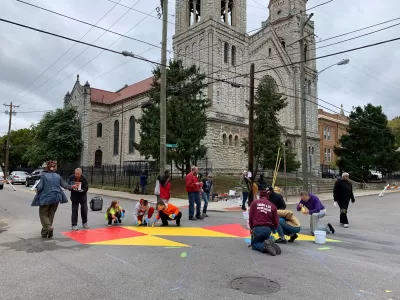
According to a new study reported on by Kea Wilson, “Installing asphalt art on roads and intersection can cut crashes between motorists and other road users by a staggering 50%,” showing that this relatively inexpensive intervention can save a significant number of lives. “In a new report from Bloomberg Philanthropies, researchers analyzed crash rates and driver behavior before and after traffic-calming art projects were added to the 17 US roads and intersections for which the best possible data and imagery was available.”
Not only did the projects slash crashes involving vulnerable road users in half, they also lessened injury-causing crashes by an average of 37%, and cut overall crashes by 17%, too. Drivers even yielded to pedestrians in colorful crosswalks 27% more often, even though many intersections featured high-visibility paint before.
Unfortunately, many policymakers haven’t recognized the utility of asphalt art. “The most recent proposed edition of the Manual of Uniform Traffic Control Devices — the document which sets the standard for most of the signs, signals and street markings that annotate the right of way— warned against colorful crosswalks, in part, advocates say, because existing AV technology struggles to recognize them as places where people walk.” Other concerns include whether pedestrians with vision impairments can safely navigate colorful art, and how cities can maintain street murals.
Janette Sadik-Khan, former New York City transportation commissioner and principal at Bloomberg, “stresses that researchers are just beginning to understand the power of public art to transform public safety — and that the cost of trying it is shockingly low.” According to Sadik-Khan, “Bloomberg’s initiative provides a blueprint that cities around the world can follow, and hopes the safety study will fuel more such art.”
FULL STORY: How asphalt art can protect vulnerable road users

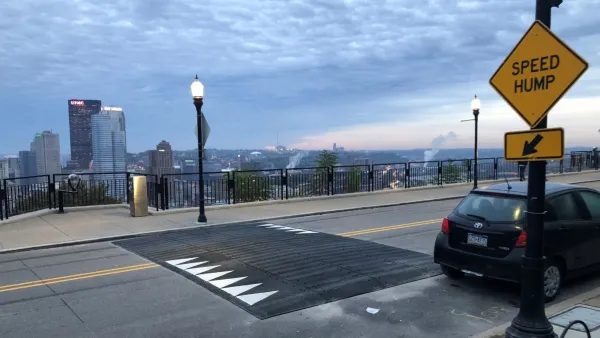
Pittsburgh Excels at Low-Cost, Quick-Build Traffic Calming
The city’s traffic calming initiative has led to a 6 percent average reduction in speeds on corridors with recent interventions.
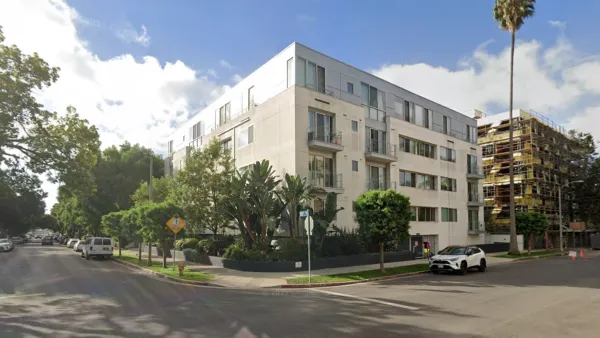
LA Cites Guerilla Crosswalk Painter With Vandalism
The LA Police Department stopped a group of volunteers who was painting missing crosswalks in a Westwood intersection.
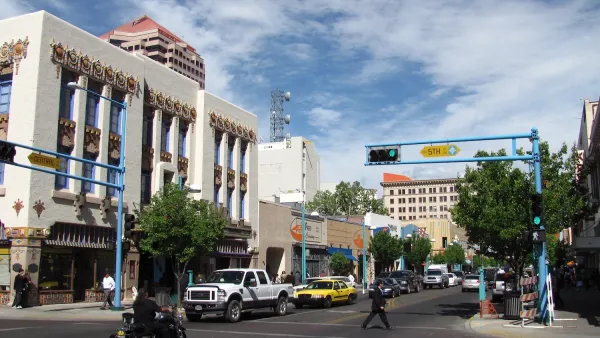
In the Nation’s Deadliest State for Pedestrians, Albuquerque Drivers Must Now Stop at Crosswalks for all Pedestrians
The city updated its traffic code for the first time in 50 years.

Planetizen Federal Action Tracker
A weekly monitor of how Trump’s orders and actions are impacting planners and planning in America.

The state-sanctioned urbicide of Austin
People don’t kill cities. Freeways do.

US to reduce Colorado River water deliveries to Mexico
A new Colorado Treaty amendment reduces Mexico’s Colorado River water allocation by 250,000 acre feet.

Mamdani overhauls NYC's Vision Zero plan with 100 new policy goals
The overhaul aims to reduce traffic deaths and make streets safer for pedestrians, cyclists and drivers through lower speed limits, new safety infrastructure and more.

Amtrak not solely to blame for New Jersey commuter rail's unreliability, report finds
A new study from the Garden State Initiative found that NJ Transit’s budget grew 20% across a 4 year period, but reliability declined significantly over the same period.

EPA erases limits on planet-warming pollution from power plants
Under Monday’s plan, power plants would still have some limits on how much mercury, arsenic and other contaminants they can emit.

FREE Course: Walkable City 1: Why Walkability?
After describing his path towards focusing on walkability as the essence of good planning, Jeff Speck marches through his five principal reasons for making more walkable places.
Reinventing Malls: Planning Alchemy—Turning Gray Fields Into Gold
The course focuses on the opportunities and imperatives that shape reinvention of mall sites.

Eagle County Government
Harvard University Graduate School of Design
Nashville Planning Department
The Architects Foundation
University of Cincinnati Online
The Pocatello Development Authority
The Urban Renewal Agency of the City of Pocatello
Journal of the American Planning Association