Pittsburgh’s Smithfield Street could gain wider sidewalks, a bike lane, and more green space.


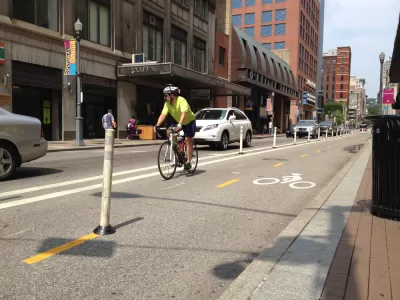
As Ed Blazina reports, “Pittsburgh’s preliminary plan to reduce and narrow traffic lanes, widen sidewalks and create a more pedestrian-friendly environment along Smithfield Street in Downtown generally received favorable marks from a small group at a virtual public hearing Wednesday.” The city is holding public meetings to determine the best design for a safer street.
“The preliminary design calls for widening sidewalks by varying amounts on each side of the street; narrowing and limiting traffic lanes to one lane for general traffic northbound for all three blocks and buses only on the southbound side between Oliver and Forbes.” According to the article, “The wider sidewalks would be used for benches, trees, planters and outdoor dining. Bikers will be able to use the southbound bus lane with the expectation that a northbound lane will be established on another parallel street.”
“Because of the extensive nature of the work and the cost, the project is being broken into three phases, and even the first phase will be done in sections.” If approved, the first phase of the three-phase project is expected to cost around $9 million and be complete in the fall of 2025.
FULL STORY: Pittsburgh presents plans for making Smithfield Street better for pedestrians

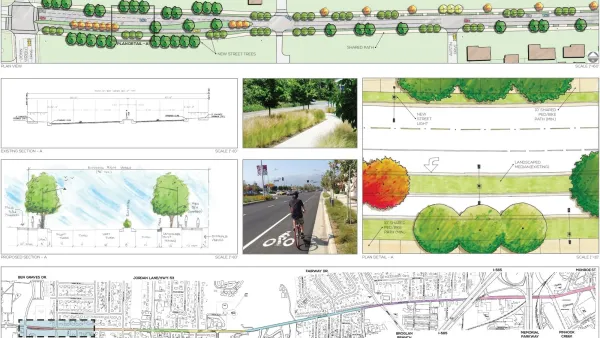
Huntsville, Alabama Launches $30M Complete Streets Project
A redesign of Holmes Avenue will bring new sidewalks, bike lanes, lighting, and street furniture to the corridor.
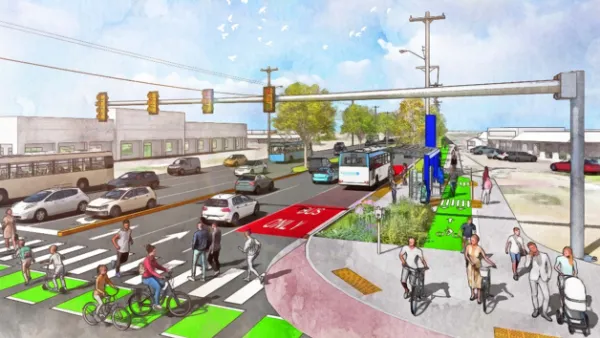
WSDOT Offers Ambitious Multimodal Vision for Dangerous SR 99 Corridor
The proposal includes dedicated bike and bus lanes as well as pedestrian improvements.
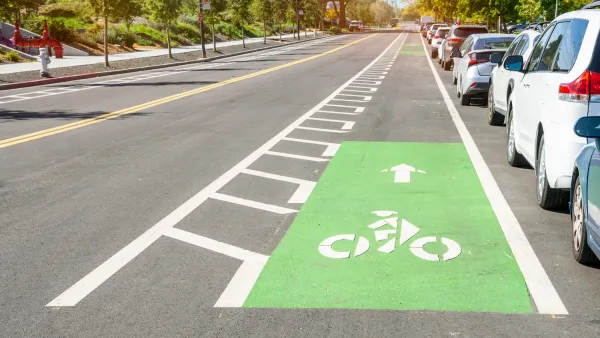
Why Bike Lanes Are Good: An Explainer for the US Transportation Secretary
Sean Duffy says there’s no evidence that bike lanes have benefits. Streetsblog — and federal agencies’ own data — beg to differ.

The state-sanctioned urbicide of Austin
People don’t kill cities. Freeways do.

US to reduce Colorado River water deliveries to Mexico
A new Colorado Treaty amendment reduces Mexico’s Colorado River water allocation by 250,000 acre feet.

New Jersey’s second-largest city bans standalone data centers
Jersey City will continue to allow co-location facilities, such as those meant for research institutions that store their own data.

Amtrak not solely to blame for New Jersey commuter rail's unreliability, report finds
A new study from the Garden State Initiative found that NJ Transit’s budget grew 20% across a 4 year period, but reliability declined significantly over the same period.

EPA erases limits on planet-warming pollution from power plants
Under Monday’s plan, power plants would still have some limits on how much mercury, arsenic and other contaminants they can emit.

Phoenix announces new on-demand transit service, more frequent RAPID buses
Both new services will launch in October, and are part of Phoenix's Project Effective Access Solutions for Easing Congestion.

FREE Course: Walkable City 1: Why Walkability?
After describing his path towards focusing on walkability as the essence of good planning, Jeff Speck marches through his five principal reasons for making more walkable places.
Reinventing Malls: Planning Alchemy—Turning Gray Fields Into Gold
The course focuses on the opportunities and imperatives that shape reinvention of mall sites.

Eagle County Government
Harvard University Graduate School of Design
Nashville Planning Department
The Architects Foundation
University of Cincinnati Online
The Pocatello Development Authority
The Urban Renewal Agency of the City of Pocatello
Journal of the American Planning Association