A group claiming the city of Los Angeles fails to protect pedestrians is taking action on their own, painting a set of crosswalks at a busy residential intersection.


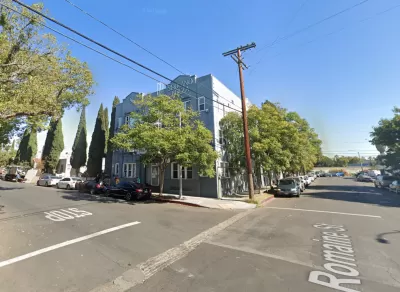
In a nod to tactical urbanism, an anonymous group calling itself Crosswalk Collective LA is taking on the pedestrian safety crisis by painting crosswalks themselves, reports Vanessa Romo. "A series of striped crosswalks suddenly appeared at a busy residential intersection, and the secretive group that claims it's behind the do-it-yourself project says it has more in the works."
"'We are a small group of community members who have tried for years to request crosswalks and other safe streets infrastructure the official way,' they told NPR in a statement." According to the Collective, "At every turn, we've been met with delays, excuses, and inaction from our city government, as well as active hostility to safe streets projects from sitting councilmembers."
With one pedestrian killed every three days in Los Angeles, the city's death rate is "four times the national average," the article states. The Collective's actions have spurred requests for guidance from activists in other cities.
City officials, meanwhile, aren't as thrilled. "LA Department of Transportation spokesman Colin Sweeney said the public's best bet to ensure safety measures are properly installed, is to go through the proper channels." As Romo notes, "The city has a history of quickly buffing out painted street and sidewalk DIY modifications, whether they're guerilla bike lanes or more artistic safety projects that highlight the city's deteriorating infrastructure." LADOT also claims that no requests for crosswalks at the intersection in question have been submitted to the department, and that requests are evaluated and installed where appropriate, but admit that the process can be excruciatingly slow.
FULL STORY: A secretive LA group has a new mission: paint untouched crosswalks

Tactical Urbanism Makes Strides in L.A.
A DIY urbanism group in Los Angeles has successfully prompted the city to install permanent crosswalks at dangerous intersections, despite the city’s insistence that the group’s do-it-yourself work is illegal.
How Tactical Urbanism Succeeds Where Bureaucracy Fails
Making the case for do-it-yourself infrastructure.
LA Cites Guerilla Crosswalk Painter With Vandalism
The LA Police Department stopped a group of volunteers who was painting missing crosswalks in a Westwood intersection.

The state-sanctioned urbicide of Austin
People don’t kill cities. Freeways do.

US to reduce Colorado River water deliveries to Mexico
A new Colorado Treaty amendment reduces Mexico’s Colorado River water allocation by 250,000 acre feet.

New Jersey’s second-largest city bans standalone data centers
Jersey City will continue to allow co-location facilities, such as those meant for research institutions that store their own data.

Amtrak not solely to blame for New Jersey commuter rail's unreliability, report finds
A new study from the Garden State Initiative found that NJ Transit’s budget grew 20% across a 4 year period, but reliability declined significantly over the same period.

EPA erases limits on planet-warming pollution from power plants
Under Monday’s plan, power plants would still have some limits on how much mercury, arsenic and other contaminants they can emit.

Phoenix announces new on-demand transit service, more frequent RAPID buses
Both new services will launch in October, and are part of Phoenix's Project Effective Access Solutions for Easing Congestion.

FREE Course: Walkable City 1: Why Walkability?
After describing his path towards focusing on walkability as the essence of good planning, Jeff Speck marches through his five principal reasons for making more walkable places.
Reinventing Malls: Planning Alchemy—Turning Gray Fields Into Gold
The course focuses on the opportunities and imperatives that shape reinvention of mall sites.

Eagle County Government
Harvard University Graduate School of Design
Nashville Planning Department
The Architects Foundation
University of Cincinnati Online
The Pocatello Development Authority
The Urban Renewal Agency of the City of Pocatello
Journal of the American Planning Association