Some states and cities are citing personal liberty and constitutional rights to oppose automated traffic enforcement and other road safety measures.


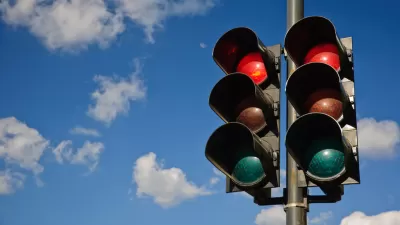
With traffic fatalities on the rise in many states, it would seem natural for state leaders to tap into the $15 billion in federal funding available for road safety projects. But 'liberty politics' could hinder efforts to improve traffic safety, writes Matthew Brown, as illustrated by this quote from a Utah resident: "This country was founded on freedom and liberty, this country was not founded for safety or security," said Dalane England, adding that "People are going to die if we drive automobiles."
For example, while the U.S. Department of Transportation recommends automated traffic enforcement, only 16 states have speed camera programs, and six states explicitly prohibit both speed cameras and red light cameras. Utah, for example, banned red-light cameras in the 1990s. "While local leaders, law enforcement and some residents argued at the time that the technology would save lives, opponents won the day by framing the issue around personal liberty." More recently, Florida governor Ron DeSantis expressed a similar sentiment about proposed speed cameras in his state.
"Those arguments may surface again as states and localities decide how they want to use their share of funding set aside for road safety measures," writes Brown. "Federal guidance also requires at least 15% of a state’s highway safety improvement program funding targets pedestrians, bicyclists and other nonmotorized road users if those groups make up 15% or more of the state’s crash fatalities."
FULL STORY: How personal liberty politics could prevent states from addressing traffic fatalities

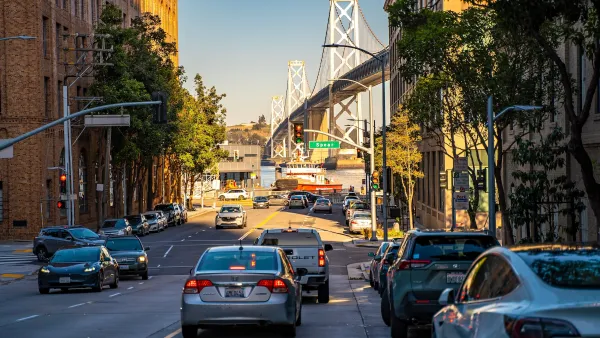
After San Francisco installed traffic cameras, speeding dropped by 80%
The city was allowed to install speed cameras as part of a five-year pilot program approved by California in 2023.
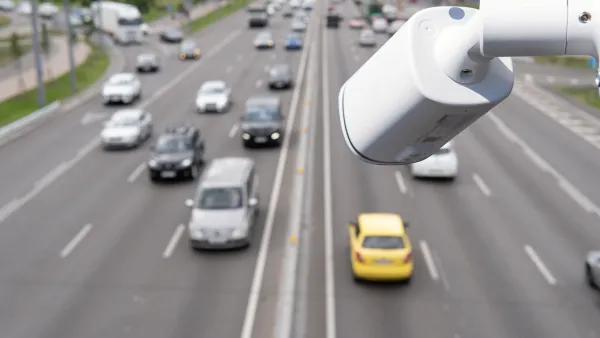
USDOT Blocks Federal Funding for Traffic Cameras
Applicants to the Safe Streets and Roads for All grant program will not be allowed to use funds for automated traffic enforcement.
San Francisco Turns On California’s First Speed Cameras
The city is the first in the state to use automated traffic enforcement to reduce speeding and traffic deaths.

Planetizen Federal Action Tracker
A weekly monitor of how Trump’s orders and actions are impacting planners and planning in America.

The state-sanctioned urbicide of Austin
People don’t kill cities. Freeways do.

US to reduce Colorado River water deliveries to Mexico
A new Colorado Treaty amendment reduces Mexico’s Colorado River water allocation by 250,000 acre feet.

Mamdani overhauls NYC's Vision Zero plan with 100 new policy goals
The overhaul aims to reduce traffic deaths and make streets safer for pedestrians, cyclists and drivers through lower speed limits, new safety infrastructure and more.

Amtrak not solely to blame for New Jersey commuter rail's unreliability, report finds
A new study from the Garden State Initiative found that NJ Transit’s budget grew 20% across a 4 year period, but reliability declined significantly over the same period.

EPA erases limits on planet-warming pollution from power plants
Under Monday’s plan, power plants would still have some limits on how much mercury, arsenic and other contaminants they can emit.

FREE Course: Walkable City 1: Why Walkability?
After describing his path towards focusing on walkability as the essence of good planning, Jeff Speck marches through his five principal reasons for making more walkable places.
Reinventing Malls: Planning Alchemy—Turning Gray Fields Into Gold
The course focuses on the opportunities and imperatives that shape reinvention of mall sites.

Eagle County Government
Harvard University Graduate School of Design
Nashville Planning Department
The Architects Foundation
University of Cincinnati Online
The Pocatello Development Authority
The Urban Renewal Agency of the City of Pocatello
Journal of the American Planning Association