New Virginia Governor Glenn Youngkin made promises on the campaign trail to reverse the state's commitment to climate reductions.


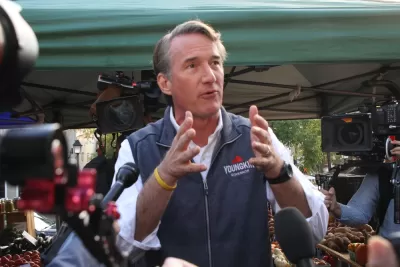
An opinion piece by Ivy Main, written for the Virginia Mercury, reports "unfortunate signs" that new Virginia Governor Glenn Youngkin is preparing to be less the moderate Republican he promised to be, and more a "burn-the-house-down extremist" on environmental policy.
The first piece of evidence for these strong words are the governor's decision on day one of his tenure to sign an executive order notifying the Virginia Department of Environmental Quality of his intention to withdraw Virginia from the Regional Greenhouse Gas Initiative. According to Main, and as detailed in a separate article by Patrick Wilson for the Richmond Times-Dispatch, Gov. Youngkin might require legislative approval from a still-Democrat-controlled State legislature to accomplish that goal.
Here's how Wilson describes the RGGI program:
Energy producers in states that participate in RGGI trade emission reductions for credits, or buy credits to emit carbon dioxide past a cap. The revenue the state gets from the program is directed to programs that help low-income people reduce energy usage — thereby lowering their cost of electricity — and for programs combating sea level rise in coastal areas.
Main's other evidence is Gov. Youngkin's decision to nominate Trump-era EPA chief Andrew Wheeler as the state's secretary of natural resources—a move that would also require approval from the State Legislature.
The source article notes that GOP legislators are following the new governor's lead, filing new legislation that would work against efforts to reduce greenhouse gas emissions in the state.
FULL STORY: The GOP offensive against climate action begins

Report Addresses Climate Change and Equity in New Orleans
A new report details steps the city can take to help prevent climate change and protect its most vulnerable residents.
Carbon Pricing Strategies Under Consideration in Seven States
Several states, and even the federal government, are considering adopting carbon pricing plans.
EPA Guts Emissions Regulations
The agency is eliminating the endangerment finding that underpins the agency’s authority to regulate greenhouse gas emissions.

Planetizen Federal Action Tracker
A weekly monitor of how Trump’s orders and actions are impacting planners and planning in America.

The state-sanctioned urbicide of Austin
People don’t kill cities. Freeways do.

US to reduce Colorado River water deliveries to Mexico
A new Colorado Treaty amendment reduces Mexico’s Colorado River water allocation by 250,000 acre feet.

5 New England states march closer to 800 megawatt wind energy project
Securing federal approval for the project may be complicated under the Trump administration, which has historically been hostile towards domestic wind power.

Baltimore to break ground on $50 million Transit Priority Project
The project will bring faster bus trips, safer streets and better bike connections to Baltimore.

Airbnb launches $250 million 'last-dollar financing' housing accelerator, makes first investment in Austin
The company will put $6.4 million towards affordable housing development in Texas’ capital.

FREE Course: Walkable City 1: Why Walkability?
After describing his path towards focusing on walkability as the essence of good planning, Jeff Speck marches through his five principal reasons for making more walkable places.
Reinventing Malls: Planning Alchemy—Turning Gray Fields Into Gold
The course focuses on the opportunities and imperatives that shape reinvention of mall sites.

Eagle County Government
Harvard University Graduate School of Design
Nashville Planning Department
The Architects Foundation
University of Cincinnati Online
The Pocatello Development Authority
The Urban Renewal Agency of the City of Pocatello
Journal of the American Planning Association