Several states, and even the federal government, are considering adopting carbon pricing plans.


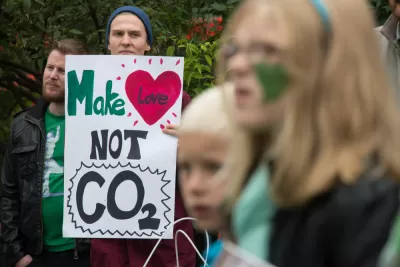
Seven or more states are close to enacting or expanding carbon pricing within the next year, Marianne Lavelle reports in InsideClimate News. Together with the states that already price fossil fuels, "they would account for 22 percent of U.S. carbon emissions, 34 percent of the U.S. population, and 41 percent of U.S. GDP."
The states considering a price on carbon—including Oregon, Massachusetts, and New York—already have relatively low-carbon economies, and also face "clear, pressing economic and human risks from climate change," like sea-level rise, drought, and fire.
The fate of a national plan to tax carbon, introduced in Congress by a bipartisan group of legislators, may depend on whether state-level programs continue to gather momentum, Lavelle writes.
FULL STORY: A Carbon Tax Wave? 7 States Considering Carbon Pricing to Fight Climate Change

FTA Kills ‘Social Cost of Carbon’ in Transit Grant Criteria
The Capital Investments Grant program will no longer factor in the future impacts of carbon emissions.
Study: D.C. Region Must Take Aggressive Steps To Reach Climate Goal
To achieve its stated emissions reduction goal, the Greater Washington area must sharply reduce driving and speed up the adoption of electric vehicles.
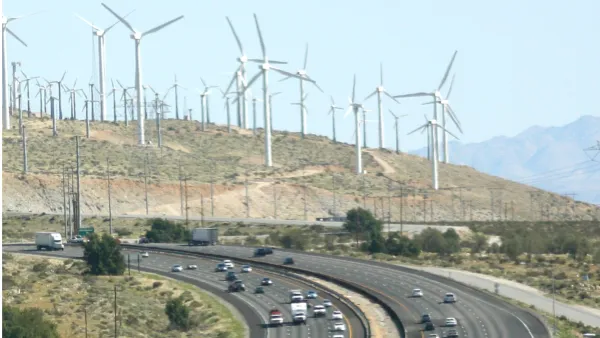
Can Emissions Reductions Last Beyond the Pandemic?
The dramatic reductions in carbon emissions during the last year only highlight how drastically humans must change behavior to meet climate goals.

Planetizen Federal Action Tracker
A weekly monitor of how Trump’s orders and actions are impacting planners and planning in America.

The state-sanctioned urbicide of Austin
People don’t kill cities. Freeways do.

US to reduce Colorado River water deliveries to Mexico
A new Colorado Treaty amendment reduces Mexico’s Colorado River water allocation by 250,000 acre feet.

Guerilla urbanists are building DIY bus stop benches in Chicago
A before-and-after of one of the bus stops with a new bench. The new benches are not officially sanctioned or permitted, but the residents who placed them hope they will be the start of a network of DIY benches across the city.

Mamdani overhauls NYC's Vision Zero plan with 100 new policy goals
The overhaul aims to reduce traffic deaths and make streets safer for pedestrians, cyclists and drivers through lower speed limits, new safety infrastructure and more.

Amtrak not solely to blame for New Jersey commuter rail's unreliability, report finds
A new study from the Garden State Initiative found that NJ Transit’s budget grew 20% across a 4 year period, but reliability declined significantly over the same period.

FREE Course: Walkable City 1: Why Walkability?
After describing his path towards focusing on walkability as the essence of good planning, Jeff Speck marches through his five principal reasons for making more walkable places.
Reinventing Malls: Planning Alchemy—Turning Gray Fields Into Gold
The course focuses on the opportunities and imperatives that shape reinvention of mall sites.

Eagle County Government
Harvard University Graduate School of Design
Nashville Planning Department
The Architects Foundation
University of Cincinnati Online
The Pocatello Development Authority
The Urban Renewal Agency of the City of Pocatello
Journal of the American Planning Association