A new report details steps the city can take to help prevent climate change and protect its most vulnerable residents.


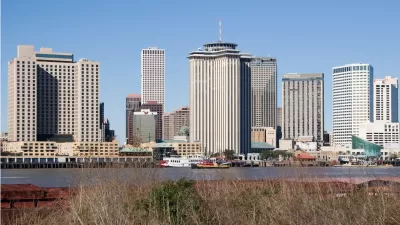
A new climate action equity report from the city of New Orleans outlines strategies to reduce energy use and carbon emissions, writes Della Hasselle. "In New Orleans, one of the U.S. cities most at risk from climate change, residents' energy usage contributes to half of the city's annual output of 3.6 million metric tons of greenhouse gases linked to rising temperatures."
The report’s recommendations focus on modernizing energy use, improving transportation options, and fostering awareness and action to achieve equitable outcomes. Of particular concern are the more extreme threats facing residents in the poorer neighborhoods of New Orleans.
"Work on the report began in March 2018, when an advisory group of residents, nominated by community organizations, developed steps for how the city could implement a strategy for meeting [the] Paris Agreement goal," says Hasselle.
FULL STORY: With New Orleans at risk for stronger storms, more flooding, climate report urges these changes


Data Center Emissions Far Outpace Tech Company Claims
In-house data centers owned by several major tech companies likely produce over six times as many greenhouse gas emissions as their owners estimate.
Carbon Pricing Strategies Under Consideration in Seven States
Several states, and even the federal government, are considering adopting carbon pricing plans.

FTA Kills ‘Social Cost of Carbon’ in Transit Grant Criteria
The Capital Investments Grant program will no longer factor in the future impacts of carbon emissions.

Planetizen Federal Action Tracker
A weekly monitor of how Trump’s orders and actions are impacting planners and planning in America.

The state-sanctioned urbicide of Austin
People don’t kill cities. Freeways do.

US to reduce Colorado River water deliveries to Mexico
A new Colorado Treaty amendment reduces Mexico’s Colorado River water allocation by 250,000 acre feet.

Airbnb launches $250 million 'last-dollar financing' housing accelerator, makes first investment in Austin
The company will put $6.4 million towards affordable housing development in Texas’ capital.

Guerilla urbanists are building DIY bus stop benches in Chicago
A before-and-after of one of the bus stops with a new bench. The new benches are not officially sanctioned or permitted, but the residents who placed them hope they will be the start of a network of DIY benches across the city.

Mamdani overhauls NYC's Vision Zero plan with 100 new policy goals
The overhaul aims to reduce traffic deaths and make streets safer for pedestrians, cyclists and drivers through lower speed limits, new safety infrastructure and more.

FREE Course: Walkable City 1: Why Walkability?
After describing his path towards focusing on walkability as the essence of good planning, Jeff Speck marches through his five principal reasons for making more walkable places.
Reinventing Malls: Planning Alchemy—Turning Gray Fields Into Gold
The course focuses on the opportunities and imperatives that shape reinvention of mall sites.

Eagle County Government
Harvard University Graduate School of Design
Nashville Planning Department
The Architects Foundation
University of Cincinnati Online
The Pocatello Development Authority
The Urban Renewal Agency of the City of Pocatello
Journal of the American Planning Association