It's back to the drawing board for the I-5 Rose Quarter Improvement Project.


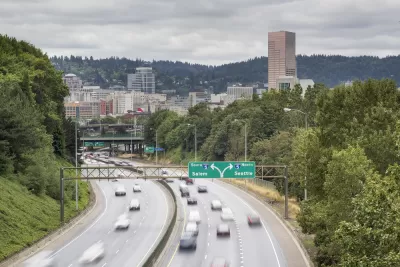
The Oregon Department of Transportation (ODOT) will have to again review the environmental impacts of a proposed freeway widening project on Interstate 5 in the Rose Quarter near Downtown Portland, reports Jayati Ramakrishnan for The Oregonian.
"In a letter to ODOT, made public by the climate activist group No More Freeways, Federal Highway Administration administrator Phillip Ditzler said he rescinded his approval of the environmental assessment because of modifications ODOT made to the I-5 freeway project since he approved the findings in 2020," according to Ramakrishnan.
The modifications in question are a freeway cap:
Those modifications include a freeway cover that would reconnect several blocks in the Albina neighborhood, a historically Black community that was partially razed in the 1960s to build I-5. That plan was approved by the Oregon Transportation Commission in September following a long disagreement between ODOT and local entities, including the community nonprofit Albina Vision Trust, as well as the city and Multnomah County. Those groups had said ODOT’s original plan for freeway covers was inadequate.
The I-5 Rose Quarter Improvement Project, as the freeway widening proposal is called, has been a poster child for the highway widening status quo in recent years, attracting focused criticism after ODOT released an environmental impact assessment in February 2019 that promised the project would deliver air quality and traffic safety improvements.
The source article includes insight into the decision by the Federal Highway Administration and potential next steps for local groups fighting the project.
FULL STORY: ODOT must redo environmental study for Rose Quarter freeway project after feds rescind approval

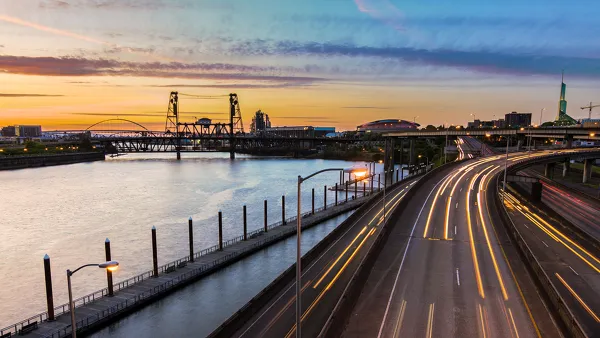
Plan to Widen I-5 in Portland Loses Critical Local Support
The I-5 Rose Quarter project has proven controversial throughout the study and planning process, and now it's losing key local political support.
Environmental Assessment for I-5 Improvement Project in Portland Promises Air, Traffic, Safety Benefits
The environmental assessment for the I-5 Rose Quarter Improvement Project, released on February 15, 2019, promises to be controversial.
Study: Wider Highways Won't Reduce Congestion
Widening highways won't reduce congestion—that's the conclusion of a report paid for by the state agency proposing several highway widening projects in Oregon.

Planetizen Federal Action Tracker
A weekly monitor of how Trump’s orders and actions are impacting planners and planning in America.

The state-sanctioned urbicide of Austin
People don’t kill cities. Freeways do.

US to reduce Colorado River water deliveries to Mexico
A new Colorado Treaty amendment reduces Mexico’s Colorado River water allocation by 250,000 acre feet.

Mamdani overhauls NYC's Vision Zero plan with 100 new policy goals
The overhaul aims to reduce traffic deaths and make streets safer for pedestrians, cyclists and drivers through lower speed limits, new safety infrastructure and more.

Amtrak not solely to blame for New Jersey commuter rail's unreliability, report finds
A new study from the Garden State Initiative found that NJ Transit’s budget grew 20% across a 4 year period, but reliability declined significantly over the same period.

EPA erases limits on planet-warming pollution from power plants
Under Monday’s plan, power plants would still have some limits on how much mercury, arsenic and other contaminants they can emit.

FREE Course: Walkable City 1: Why Walkability?
After describing his path towards focusing on walkability as the essence of good planning, Jeff Speck marches through his five principal reasons for making more walkable places.
Reinventing Malls: Planning Alchemy—Turning Gray Fields Into Gold
The course focuses on the opportunities and imperatives that shape reinvention of mall sites.

Eagle County Government
Harvard University Graduate School of Design
Nashville Planning Department
The Architects Foundation
University of Cincinnati Online
The Pocatello Development Authority
The Urban Renewal Agency of the City of Pocatello
Journal of the American Planning Association