Emissions prevented by new tailpipe standards announced by the Biden administration in December 2021 will be measured in the billions.


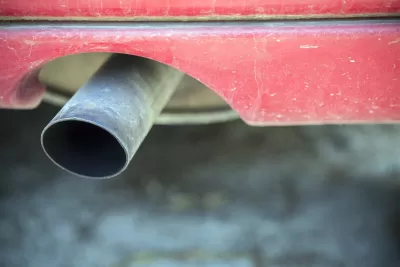
The news broke that the U.S. Environmental Protection Agency had finalized new greenhouse gas emission standards for passenger car and light trucks on December 20, reversing standards imposed by the previous Trump administration and resetting to emissions standards put into place by the Obama administration.
Planetizen picked up the news at the time, focusing on the new standards (i.e., cars, SUVs, and pickup trucks must release an average of 161 grams of carbon dioxide per mile by 2026) and provided a brief recap of how the emissions standards administrations have seesawed between recent administrations, but another article by Emily Pontecorvo for Grist focuses on the environmental consequences of the new standards. Here, Pontecorvo summarizes the new rule at length:
The agency says the new standards will prevent 3 billion tons of carbon dioxide from entering the atmosphere over the next 30 years and will reduce gasoline consumption by 360 billion gallons. By reducing the amount of fuel burned, the standards will also lower emissions of other pollutants that harm public health, like microscopic particle pollution and nitrous oxides. The EPA expects the standards to generate $190 billion in benefits for Americans by improving public health, saving drivers money at the pump, and lessening the potential impacts of climate change.
Pontecorvo also reports additional details of how the Biden EPA arrived at the new standards and more of the political milieu into which the new standards emerge.
FULL STORY: EPA cuts through the smog with the strongest-ever clean car standards


Biden's New Tailpipe Emissions Rule Resets to Obama Administration Standards
The Biden administration finalized greenhouse gas (GHG) emissions standards for passenger cars and light trucks that almost fully erased changes by the Trump administration that, in turn, erased a rule finalized by the Obama administration.

Biden Administration Hits Automotive Emissions Reset Button
The U.S. Environmental Protection Agency has rolled back Trump administration reductions of auto emission standards enacted by the Trump administration, and is taking first steps toward a new emissions agreement with automakers.
A Win for ‘Keep it in the Ground’
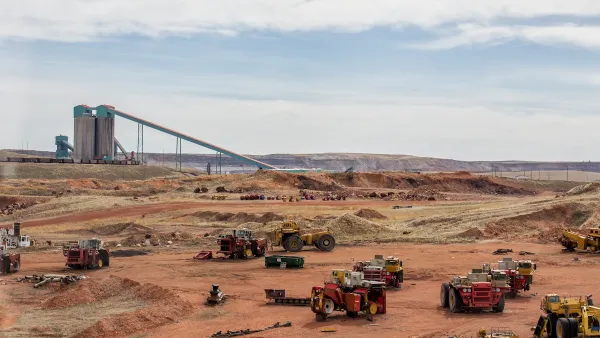
Coal mining in Wyoming will take a major hit as a result of a U.S. Department of Interior plan to cease future leasing of coal mines in the nation's most productive coal mining basin. The decision casts a spotlight on the presidential election.

The state-sanctioned urbicide of Austin
People don’t kill cities. Freeways do.

US to reduce Colorado River water deliveries to Mexico
A new Colorado Treaty amendment reduces Mexico’s Colorado River water allocation by 250,000 acre feet.

New Jersey’s second-largest city bans standalone data centers
Jersey City will continue to allow co-location facilities, such as those meant for research institutions that store their own data.

Amtrak not solely to blame for New Jersey commuter rail's unreliability, report finds
A new study from the Garden State Initiative found that NJ Transit’s budget grew 20% across a 4 year period, but reliability declined significantly over the same period.

EPA erases limits on planet-warming pollution from power plants
Under Monday’s plan, power plants would still have some limits on how much mercury, arsenic and other contaminants they can emit.

Phoenix announces new on-demand transit service, more frequent RAPID buses
Both new services will launch in October, and are part of Phoenix's Project Effective Access Solutions for Easing Congestion.

FREE Course: Walkable City 1: Why Walkability?
After describing his path towards focusing on walkability as the essence of good planning, Jeff Speck marches through his five principal reasons for making more walkable places.
Reinventing Malls: Planning Alchemy—Turning Gray Fields Into Gold
The course focuses on the opportunities and imperatives that shape reinvention of mall sites.

Eagle County Government
Harvard University Graduate School of Design
Nashville Planning Department
The Architects Foundation
University of Cincinnati Online
The Pocatello Development Authority
The Urban Renewal Agency of the City of Pocatello
Journal of the American Planning Association