A proposed bill in the California State Legislature would bar the state from funding road construction in communities at risk for displacement and health impacts.


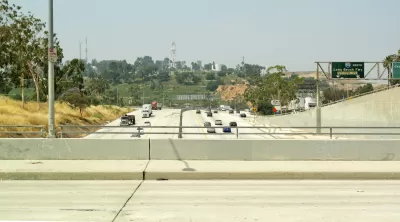
A California Assemblymember is proposing a bill that "would prohibit the state from funding or permitting highway projects in areas with high rates of pollution and poverty and where residents have suffered negative health effects from living near freeways." According to a Los Angeles Times article by Liam Dillon and Ben Poston, Assemblymember Cristina Garcia (D-Bell Gardens), the bill's sponsor, has consistently fought against the expansion of the 710 Freeway, citing evidence of the negative health impacts of living near freeways. With the bill, Garcia hopes to stop the displacement of communities and increased pollution brought on by freeway construction.
The proposed bill joins a growing chorus of voices calling on policymakers to acknowledge and begin to redress the detrimental effects of highway projects. At the federal level, the Infrastructure Investment and Jobs Act provides $1 billion (reduced from a proposed $20 billion) for reconnecting neighborhoods harmed by freeway construction.
Per the article, "L.A. transportation officials say they’ve paused separate efforts to expand the 710 and 605 freeways — in part because plans would displace hundreds of families in Latino neighborhoods." But Garcia believes state legislation is still necessary to limit the threat of displacement in communities where powerful interests often override the voices of residents.
FULL STORY: Proposed state law seeks to ban freeway expansions in underserved communities

Colorado DOT To Study Air Quality Near I-270 Project—Residents Are Skeptical
The Colorado Department of Transportation has pledged to evaluate direct mitigation measures to reduce the impact of construction projects on nearby communities.

Santa Monica Offers Affordable Housing to Residents Displaced by Freeway Construction
A new program seeks to make restitution for the damage inflicted on Black communities by highway construction and urban renewal.
Transportation Secretary Orders Review of Fresno Highway Project
The decision follows a lawsuit by local groups who say Caltrans should not have exempted two interchange expansions from environmental review.

Planetizen Federal Action Tracker
A weekly monitor of how Trump’s orders and actions are impacting planners and planning in America.

The state-sanctioned urbicide of Austin
People don’t kill cities. Freeways do.

US to reduce Colorado River water deliveries to Mexico
A new Colorado Treaty amendment reduces Mexico’s Colorado River water allocation by 250,000 acre feet.

5 New England states march closer to 800 megawatt wind energy project
Securing federal approval for the project may be complicated under the Trump administration, which has historically been hostile towards domestic wind power.

Baltimore to break ground on $50 million Transit Priority Project
The project will bring faster bus trips, safer streets and better bike connections to Baltimore.

Airbnb launches $250 million 'last-dollar financing' housing accelerator, makes first investment in Austin
The company will put $6.4 million towards affordable housing development in Texas’ capital.

FREE Course: Walkable City 1: Why Walkability?
After describing his path towards focusing on walkability as the essence of good planning, Jeff Speck marches through his five principal reasons for making more walkable places.
Reinventing Malls: Planning Alchemy—Turning Gray Fields Into Gold
The course focuses on the opportunities and imperatives that shape reinvention of mall sites.


Eagle County Government
Harvard University Graduate School of Design
Nashville Planning Department
The Architects Foundation
University of Cincinnati Online
The Pocatello Development Authority
The Urban Renewal Agency of the City of Pocatello
Journal of the American Planning Association