New York City launched its first ever environmental justice study just before the Covid-19 pandemic turned the world upside down. The study took on a new urgency throughout the months and years that followed.


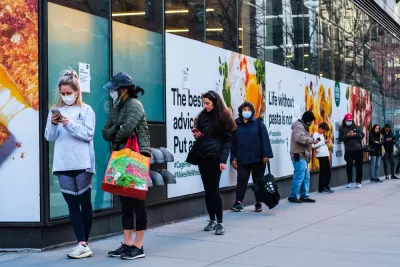
Danielle Muoio Dunn checks in with an environmental justice effort that launched in New York City just before the onset of the stay-at-home orders and shutdowns of the early pandemic.
Backing up the beginning, Mayor Bill de Blasio hired Adriana Espinoza at the beginning of 2020 to lead New York City’s first environmental justice study. A few weeks later, Covid-19 would give the study a whole new meaning, according to Dunn.
Communities of color that have long lived in the shadow of power plants, highways and waste transfer stations were among the hardest hit by the pandemic. Black and Latino residents have had significantly higher death rates than their white counterparts — often due to higher rates of preexisting respiratory conditions that trace their root, in part, to living in highly polluted areas of the city.
Dunn reports that the report will be released within months. Along the pandemic way, Espinoza says the work took on "newfound urgency to not only expose the environmental injustices that exist throughout New York, but [also to] create new standards for the government agencies she works with to undo them."
The source article also discusses examples of other jurisdictions around the country working to account for the effects of environmental injustice. The federal government has its own effort. "The Biden administration has similarly increased its focus on environmental justice communities through the Justice40 initiative — a program meant to ensure at least 40 percent of federal investments in climate and clean energy go to disadvantaged communities," writes Dunn.
Read the full story: An ‘urgent’ crisis: City's study of environmental inequities gains new momentum amid Covid

Future of Justice40 Initiative Hinges on Election
The program requires that 40 percent of some federal funds be used to benefit historically disadvantaged communities.
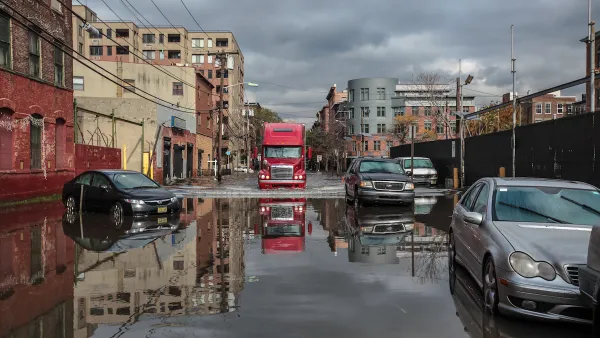
Nearly Half of New York City Burdened by Pollution
Communities of color make up the majority of people harmed by pollution, as well as heat and flooding, says the study, which is New York City’s first comprehensive survey of environmental injustices.
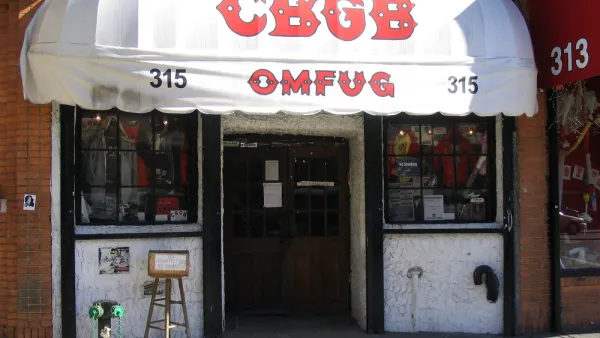
Opinion: Lower Rents Will Give Downtown Spaces Back to the ‘Weirdos’
Introducing the “CBGB theory of city planning.”

Planetizen Federal Action Tracker
A weekly monitor of how Trump’s orders and actions are impacting planners and planning in America.

Amtrak, CN end decades-long dispute with eight-year agreement
The new operating agreement establishes an updated framework for the companies to work together, including processes to resolve disputes.
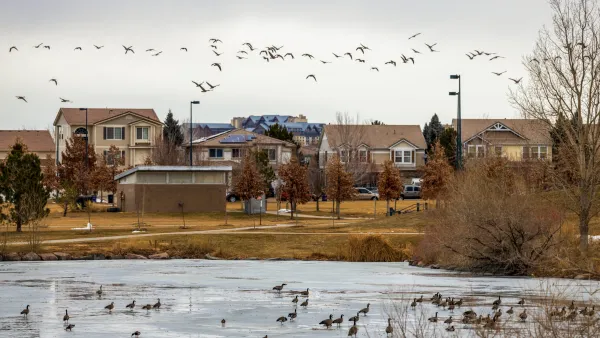
Colorado’s Largest Data Center Could Rise Next to Homes — Without a Public Hearing
The proposed campus would consume 11 times the power of Denver International Airport; as it has across the country, opposition mounts.

'This is going to be painful:’ Virginia stares down $1.7 billion funding gap for highway maintenance
The state may address the deficit by shifting $290 million from its construction budget to maintenance projects.

Judges permit Denver to divert 77,000 acre feet from the Colorado River for reservoir expansion
Overuse and climate change have caused the Colorado River’s water levels to plummet.

Amtrak, CN end decades-long dispute with eight-year agreement
The new operating agreement establishes an updated framework for the companies to work together, including processes to resolve disputes.

FREE Course: Walkable City 1: Why Walkability?
After describing his path towards focusing on walkability as the essence of good planning, Jeff Speck marches through his five principal reasons for making more walkable places.
Reinventing Malls: Planning Alchemy—Turning Gray Fields Into Gold
The course focuses on the opportunities and imperatives that shape reinvention of mall sites.

KFH Group Inc.
Greater Baltimore Committee
Eagle County Government
The Architects Foundation
University of Cincinnati Online
The Pocatello Development Authority
The Urban Renewal Agency of the City of Pocatello