The calculator can help transportation advocates and agencies project how many additional miles and emissions a highway widening project would create.


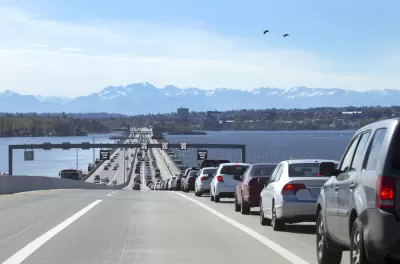
A new tool from nonprofit RMI and a consortium of partners including Transportation for America and the National Resources Defense Council "draws on formulas sourced from decades of proven scientific literature to deliver detailed, community-specific induced demand forecasts with the click of a button." The State Highway Induced Frequency of Travel (SHIFT) Calculator "gives advocates the tools they need to instantly show the real impacts of proposed highway expansions in their communities," writes Kea Wilson, providing a valuable resource for showing the real-world impact of the well-documented but poorly understood phenomenon of induced demand.
"Sustainable transportation advocates and forward-thinking professionals alike have known since at least 1932 that expanding highways to cure congestion almost always has the opposite effect," writes Wilson, but "many of them haven’t been able to quickly quantify exactly how much additional driving a specific project would encourage, or exactly how much all those new vehicle miles traveled will exacerbate the climate crisis — until now."
The tool comes at a crucial time, with billions of dollars for road funding promised in the federal infrastructure bill. The calculator's creators hope it will help state DOTs develop more accurate projections that show the true costs and impacts of road widening.
FULL STORY: New ‘Induced Demand’ Calculator Shows Exactly How Much Driving Your City’s Highway Expansion Will Encourage

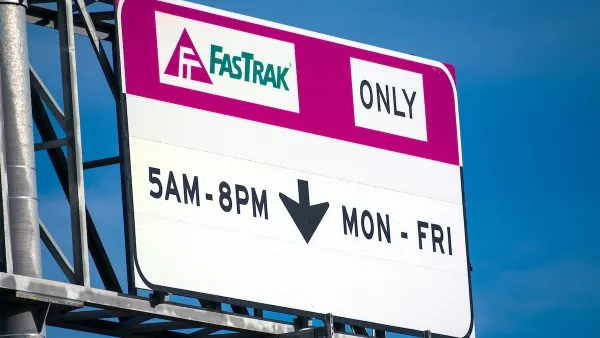
Report: Traffic Slower Near Bay Area Express Lanes
Highway 101 was expanded to add express lanes with the promise of reducing congestion for all of the roadway’s users.
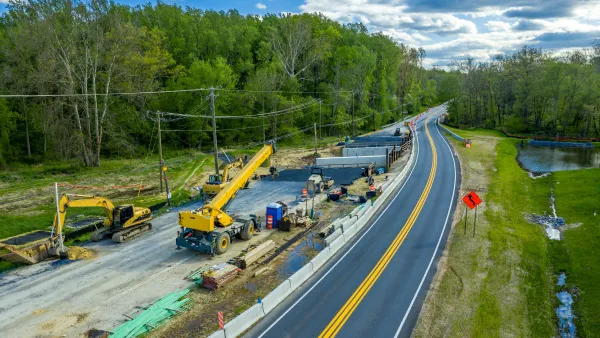
Study: Cost of Expanding Roads Outweighs Benefits
New research shows that the economic benefits of roadbuilding projects don’t come close to exceeding most projects’ costs.

Critics Say New York Highway Expansion Plans Oppose Climate Goals
Plans to widen some roads are drawing backlash from transit advocates who say they will lead to an increase in congestion and truck traffic.

The state-sanctioned urbicide of Austin
People don’t kill cities. Freeways do.

US to reduce Colorado River water deliveries to Mexico
A new Colorado Treaty amendment reduces Mexico’s Colorado River water allocation by 250,000 acre feet.

New Jersey’s second-largest city bans standalone data centers
Jersey City will continue to allow co-location facilities, such as those meant for research institutions that store their own data.

Amtrak not solely to blame for New Jersey commuter rail's unreliability, report finds
A new study from the Garden State Initiative found that NJ Transit’s budget grew 20% across a 4 year period, but reliability declined significantly over the same period.

EPA erases limits on planet-warming pollution from power plants
Under Monday’s plan, power plants would still have some limits on how much mercury, arsenic and other contaminants they can emit.

Phoenix announces new on-demand transit service, more frequent RAPID buses
Both new services will launch in October, and are part of Phoenix's Project Effective Access Solutions for Easing Congestion.

FREE Course: Walkable City 1: Why Walkability?
After describing his path towards focusing on walkability as the essence of good planning, Jeff Speck marches through his five principal reasons for making more walkable places.
Reinventing Malls: Planning Alchemy—Turning Gray Fields Into Gold
The course focuses on the opportunities and imperatives that shape reinvention of mall sites.

Eagle County Government
Harvard University Graduate School of Design
Nashville Planning Department
The Architects Foundation
University of Cincinnati Online
The Pocatello Development Authority
The Urban Renewal Agency of the City of Pocatello
Journal of the American Planning Association