Plans to widen some roads are drawing backlash from transit advocates who say they will lead to an increase in congestion and truck traffic.


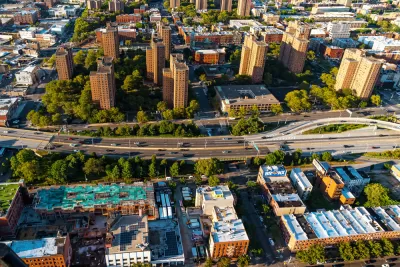
New York state officials are planning to expand highways in all five of the city’s boroughs, prompting criticism from transit advocates who say the plans counteract the state’s climate and traffic reduction goals.
As Evan Simko-Bednarski explains in the New York Daily News, a report by advocates Riders Alliance with Vocal-NY claims that proposed projects will bring more traffic to the Hunts Point market in the Bronx, where the state plans to widen the Bruckner Expressway. “Despite a stated goal of keeping trucks off surface streets on their way to the Hunts Point market, the report’s authors said the project would create more room for vehicular traffic overall, encouraging more automobile use in the borough.”
A spokesperson for the MTA said the proposals are designed to “enhance customer safety, reduce traffic congestion, pollution and benefit local communities.” Governor Hochul’s office added that some projects include mitigations like bike lanes and new trees and landscaping while performing necessary maintenance work.
FULL STORY: Transit advocates slam New York State for planned larger highways

NYC Congestion Pricing Under Threat — Again
President Trump is attempting to make good on a campaign promise to kill New York City’s congestion pricing program, but the mechanism for ending it remains unclear.
Report: Traffic Slower Near Bay Area Express Lanes
Highway 101 was expanded to add express lanes with the promise of reducing congestion for all of the roadway’s users.
New York Congestion Pricing Approved by MTA Board
The program took another step forward as the board approved a proposed pricing scheme, but lawsuits still stand in the way of full implementation.

Planetizen Federal Action Tracker
A weekly monitor of how Trump’s orders and actions are impacting planners and planning in America.

The state-sanctioned urbicide of Austin
People don’t kill cities. Freeways do.

US to reduce Colorado River water deliveries to Mexico
A new Colorado Treaty amendment reduces Mexico’s Colorado River water allocation by 250,000 acre feet.

Baltimore to break ground on $50 million Transit Priority Project
The project will bring faster bus trips, safer streets and better bike connections to Baltimore.

Airbnb launches $250 million 'last-dollar financing' housing accelerator, makes first investment in Austin
The company will put $6.4 million towards affordable housing development in Texas’ capital.

Guerilla urbanists are building DIY bus stop benches in Chicago
A before-and-after of one of the bus stops with a new bench. The new benches are not officially sanctioned or permitted, but the residents who placed them hope they will be the start of a network of DIY benches across the city.

FREE Course: Walkable City 1: Why Walkability?
After describing his path towards focusing on walkability as the essence of good planning, Jeff Speck marches through his five principal reasons for making more walkable places.
Reinventing Malls: Planning Alchemy—Turning Gray Fields Into Gold
The course focuses on the opportunities and imperatives that shape reinvention of mall sites.

Eagle County Government
Harvard University Graduate School of Design
Nashville Planning Department
The Architects Foundation
University of Cincinnati Online
The Pocatello Development Authority
The Urban Renewal Agency of the City of Pocatello
Journal of the American Planning Association